


Listen to the article
Taiwan’s Tech Boom Rides AI Wave, but Risks Loom on Horizon
In Taipei’s northern district, real estate agent Jason Sung anticipates a surge in property values near a high-tech industrial park—all because of chip giant Nvidia. The area will soon host Nvidia’s new Taiwan headquarters as the company aggressively expands its presence on the island, positioning itself to surpass Apple as the largest customer of Taiwan Semiconductor Manufacturing Company (TSMC).
Nvidia CEO Jensen Huang has described Taiwan as the “center of the world’s computer ecosystem,” a statement that reflects the island’s critical role in the global AI revolution. Taiwan’s economy grew at an impressive 8.6% annual pace last year, bolstered by a recent trade deal with the United States that reduced tariffs on Taiwanese goods from 20% to 15%.
“We have been lucky,” acknowledges Wu Tsong-min, an emeritus economics professor at National Taiwan University and former central bank board member. However, he cautions that Taiwan’s heavy dependence on the technology sector—particularly semiconductor manufacturing—carries significant risks if the AI boom proves to be another tech bubble.
The threat of escalating tensions with Beijing adds another layer of uncertainty, despite Taiwan’s crucial position in global technology supply chains.
Taiwan’s exports jumped nearly 35% year-on-year in 2025, with shipments to the U.S. surging by 78%, primarily driven by expanding AI demand. This remarkable growth stems largely from TSMC and electronics giant Foxconn, which manufactures AI servers for Nvidia and serves as a major supplier to Apple.
Over the decades, Taiwan has transformed its economy from labor-intensive industries like textiles and plastics to advanced manufacturing, with semiconductor fabrication at the forefront. The AI boom has propelled TSMC into the ranks of the world’s ten most valuable companies, with profits leaping 46% last year to $54 billion.
TSMC is investing heavily both at home and abroad, including new factories in Arizona. The company produces over 90% of the world’s most advanced chips, making it an irreplaceable link in the global technology supply chain.
Meanwhile, Foxconn—formally known as Hon Hai Precision Industry Co.—has doubled its market value since 2023. Beyond manufacturing Apple’s iPhones and iPads, the company now produces AI servers and has formed a strategic partnership with OpenAI to supply data center equipment.
Industry experts warn that Taiwan’s economic trajectory is “very highly contingent on the AI boom and tech race continuing,” according to Lynn Song, chief economist for Greater China at ING Bank.
Concerns about a potential AI bubble reminiscent of the 2000 dot-com crash have raised alarms throughout Taiwan’s business community. Even TSMC’s chairman C.C. Wei expressed apprehension during a January earnings call: “I’m also very nervous about it. Because we have to invest about $52-$56 billion this year… If we did not do it carefully, that will be a big disaster to TSMC for sure. I want to make sure that my customers’ demands are real.”
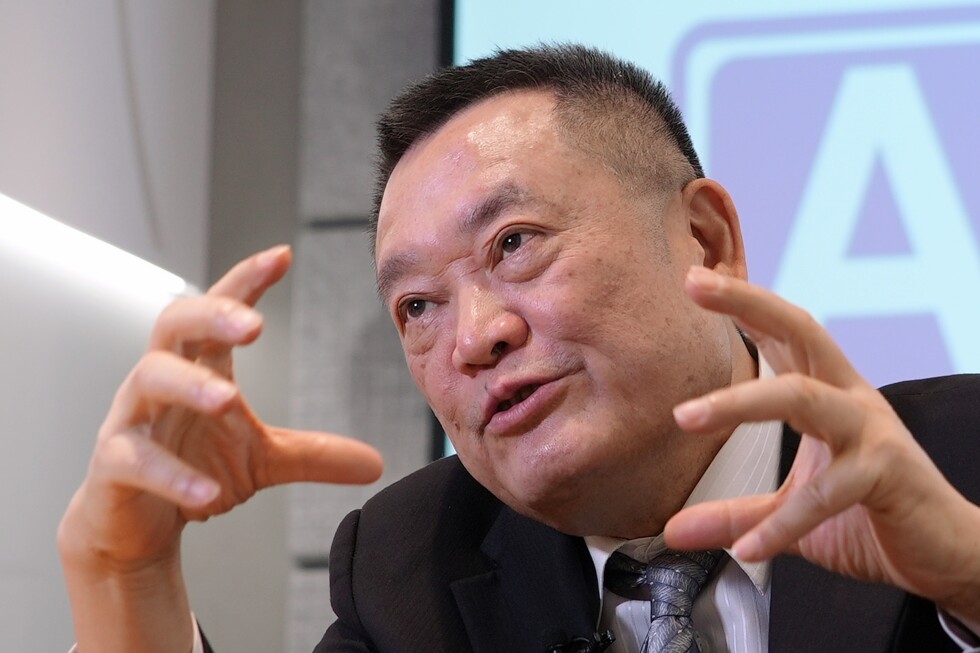
However, some industry players remain optimistic. Spencer Shen, chairman of Asia Vital Components—a key supplier of liquid cooling systems for Nvidia—told the Associated Press that he sees no signs of slowing demand. His company is already designing thermal solutions for AI servers projected for 2028 release.
“We do not believe this is a bubble,” Shen stated. “AI is driven by companies with real products and massive cash flows, like Amazon, Microsoft, Google and Meta. In fact, AI infrastructure is still in short supply.”
Many Taiwanese believe their semiconductor prowess provides what some call a “silicon shield” against potential aggression from Beijing, which considers Taiwan part of Chinese territory and has vowed reunification—by force if necessary. The two governments split during a civil war in 1949, and China has recently intensified pressure with military drills that included live rounds landing closer to the island than in previous exercises.
While the risk of conflict remains uncertain, the global repercussions would be severe. “Both global tech companies and Chinese industries would suffer from massive disruptions of the chip supply chain,” explained Wu.
As a precaution, technology firms have been developing contingency plans. TSMC has expanded production overseas with facilities in China, Japan, the United States, and upcoming plants in Germany. Foxconn maintains about 65% of its manufacturing in China but has diversified with factories in India, Mexico, and the U.S.
Despite calls for economic diversification, some argue that Taiwan should leverage its technological dominance. “It is our greatest strength,” Shen emphasized.
The AI boom has significantly boosted Taiwan’s stock exchange, with the benchmark Taiex climbing nearly 250% over the past decade. However, prosperity remains unevenly distributed. Official data shows that Taiwan’s wealth gap has quadrupled over three decades, with tech workers enjoying skyrocketing salaries while traditional industries lag behind.
“It can be tough to make a living,” said Jean Lin, who manages a takeaway restaurant in a Taipei neighborhood near Foxconn’s office. “Many of the younger generation still can’t afford to buy an apartment. A lot of young people still feel they don’t have much money.”
As Taiwan rides the AI wave, its economic future hinges on navigating technological shifts, geopolitical tensions, and internal inequality—challenges that will test the resilience of its tech-centric model in the years ahead.
Fact Checker
Verify the accuracy of this article using The Disinformation Commission analysis and real-time sources.

11 Comments
The article highlights the double-edged sword of Taiwan’s tech-driven growth. While the AI boom has fueled rapid expansion, the island’s heavy dependence on semiconductors is a vulnerability that requires careful management.
Absolutely. Taiwan would be wise to learn from the lessons of past tech bubbles and take steps to diversify its economic base to mitigate future risks.
Taiwan’s AI-powered growth is impressive, but the article rightly highlights the potential risks of overreliance on semiconductors and the threat of a tech bubble. Diversification is crucial for long-term stability.
Taiwan’s tech-driven economic growth is impressive, but it’s crucial to manage the risks of overreliance on the semiconductor sector and potential AI bubble. Diversifying the economy would help build resilience.
Agreed. Balancing expansion in AI and tech with broader economic development will be key for Taiwan’s long-term prosperity, especially given the geopolitical tensions in the region.
The article raises valid concerns about Taiwan’s heavy dependence on the tech sector and the risks of a potential AI bubble. Prudent economic planning and diversification will be key to building a more resilient economy.
Agreed. Taiwan should leverage its tech strengths while also investing in other industries to create a more balanced and sustainable economic model.
Taiwan’s economic success is impressive, but the article rightly points out the risks of overreliance on the tech sector and the potential for an AI bubble. Diversification should be a key policy focus.
The Taiwan-US trade deal is a positive step, but the island’s heavy dependence on TSMC and the tech industry leaves it vulnerable. Prudent economic planning is needed to mitigate bubble risks.
Excellent point. Taiwan would do well to learn from the lessons of previous tech booms and busts to build a more diversified and sustainable economic model.
Taiwan’s tech boom is impressive, but the risks of overreliance on semiconductors and AI are real. Diversifying the economy and preparing for potential downturns should be a priority for policymakers.