


Listen to the article
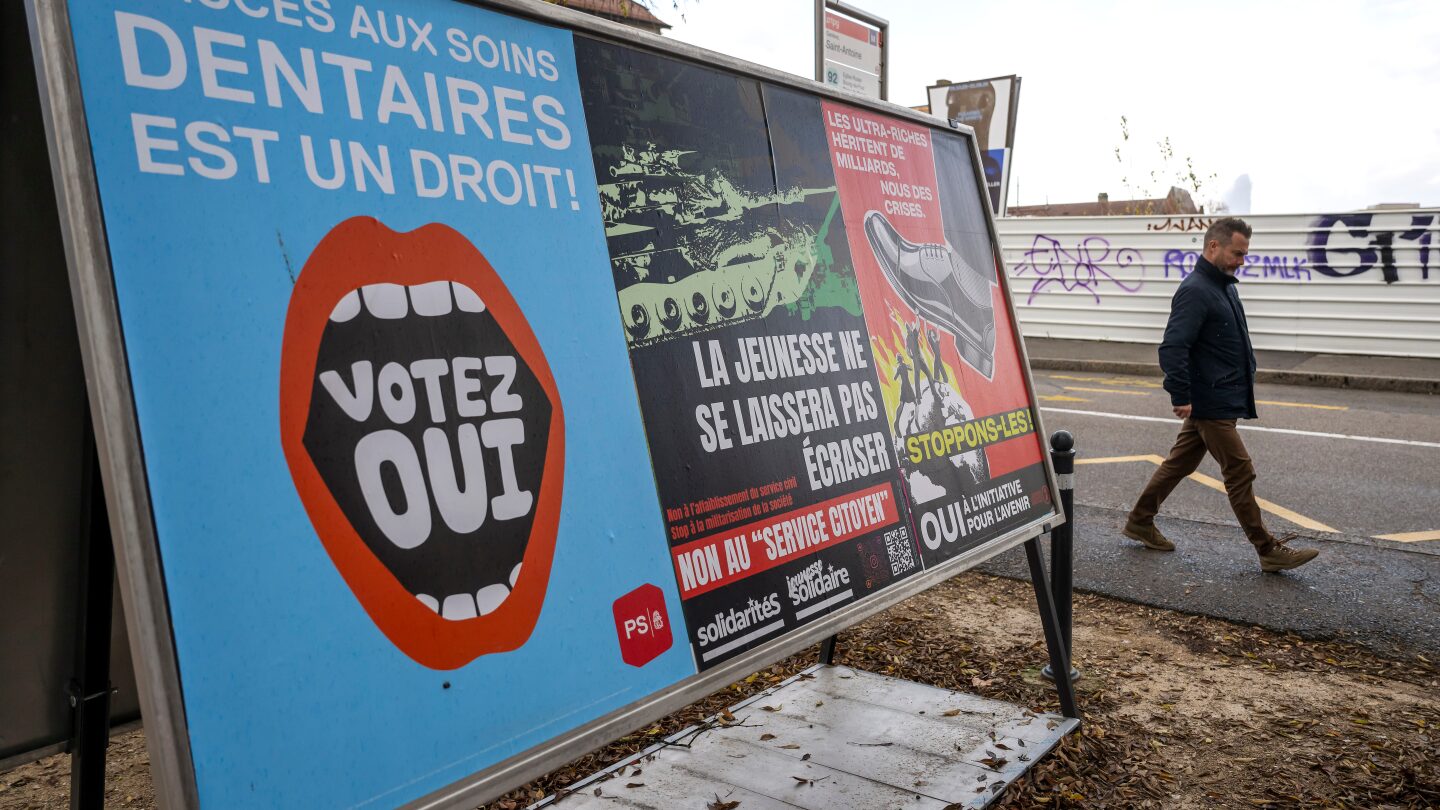
Swiss voters headed to the polls Sunday to decide on a controversial proposal that would expand mandatory national service to include women. The “citizen service initiative” represents a significant potential shift in Switzerland’s approach to civic duty and national security.
Currently, all Swiss men must complete military service, join civil protection teams, or pay an exemption fee if they opt out. Women can participate voluntarily, but are not required to do so. The referendum seeks to make this obligation universal, extending beyond traditional military roles to include areas like environmental protection, food security, and elderly care.
Supporters of the initiative argue that the measure would strengthen social cohesion at a time of increasing challenges. “Clouds are gathering in the skies of a fragmenting Switzerland,” they stated in campaign materials, citing threats ranging from natural disasters to cyberattacks and the war in Ukraine. The proposal, they contend, would ensure “that everybody takes responsibility to work for a stronger Switzerland that’s able to stand up to crises.”
The Swiss government and parliament, however, have expressed strong opposition to the initiative. Their concerns center primarily around the substantial financial implications and potential economic disruption. Each year, approximately 35,000 men participate in mandatory service at a cost of nearly 1 billion Swiss francs (about $1.25 billion). If passed, the measure would roughly double both the number of participants and the associated costs.
Critics also question whether forcing women into service would truly advance gender equality. The government noted that while mandatory service for women might appear to be “a step toward gender equality,” it would actually “place an extra burden on many women, who already shoulder a large part of the unpaid work of raising and caring for children and relatives, as well as household tasks.”
“Because equality in the workplace and in society is still not a reality, requiring women to perform civic service would not constitute progress in terms of equality,” the government added in its statement opposing the measure.
The referendum comes amid growing security concerns across Europe following Russia’s invasion of Ukraine. Many European nations have been reassessing their defense capabilities and civil preparedness, with some considering or implementing changes to their own national service requirements.
Beyond expanding service to women, the initiative would also broaden the concept of national service beyond traditional defense roles. This reflects a more comprehensive view of security that includes environmental protection and social welfare. The proposal would also give parliament the option to require foreign residents to participate in public service.
Switzerland has a long tradition of direct democracy, with citizens regularly voting on policy proposals through referendums. This particular vote touches on fundamental questions about civic obligation, gender roles, and how the country should prepare for various threats.
The outcome will be closely watched by neighboring countries, many of which have their own debates about national service requirements. Finland, Norway, and Sweden have all moved toward more gender-neutral approaches to military service in recent years, though with varying models of implementation.
For Switzerland, a country with a long-standing militia system, the referendum represents not just a practical policy decision but also a statement about shared responsibility and national values in an increasingly uncertain world. Whether voters embrace this expanded vision of civic duty or reject it on practical or philosophical grounds will likely influence similar debates across Europe.
As polling stations closed Sunday evening, the country awaited results that could fundamentally reshape how Switzerland approaches national security and civic obligation for generations to come.
Fact Checker
Verify the accuracy of this article using The Disinformation Commission analysis and real-time sources.

14 Comments
I’m curious to see how Swiss voters respond to this proposal. Expanding civic duty obligations to women is a significant shift, and the public debate will likely be vigorous.
Yes, it will be interesting to see if the public sees this as an equitable measure or a concerning infringement on personal freedom.
The “citizen service initiative” in Switzerland touches on fundamental questions about the relationship between the state and its people. It will be illuminating to see how this plays out in the referendum.
Absolutely. This is the kind of issue that gets to the heart of the social contract and the balance of rights and responsibilities in a democracy.
Expanding national service obligations to women could foster greater social cohesion, but it also raises concerns about individual liberty. The Swiss government’s opposition suggests there are significant hurdles to overcome.
Mandatory national service is a complex issue. While it could promote social cohesion, it raises questions about individual liberty and whether it’s the best approach to address modern security threats.
This referendum taps into ongoing debates about the role of government, the obligations of citizenship, and evolving security threats. It will be fascinating to see how Swiss voters navigate these complex tradeoffs.
This proposal reflects the evolving nature of national security and civic engagement. Whether it’s the best approach is debatable, but it’s a thoughtful attempt to address modern challenges.
Mandatory national service is a polarizing issue, and I’m curious to see how the Swiss public responds. There are valid arguments on both sides that deserve a thoughtful, nuanced discussion.
Absolutely. This is the kind of issue where reasonable people can disagree, so it will be intriguing to see how the public discourse unfolds.
An interesting proposal to expand national service in Switzerland. Requiring both men and women to contribute could strengthen community ties and resilience, though the details would need careful consideration.
This initiative highlights the evolving role of national service in the 21st century. Beyond traditional military functions, it seeks to engage citizens in a broader range of public needs. It’s a novel approach worth watching.
A universal national service program could bolster Switzerland’s preparedness, but the details around implementation and exemptions will be crucial. Balancing civic duty and individual liberty is a delicate challenge.
Agreed. The specific requirements and avenues for participation will be key to ensuring the program is viewed as fair and effective.