


Listen to the article
Turkey Shortage Drives Wholesale Prices Up While Grocers Offer Holiday Discounts
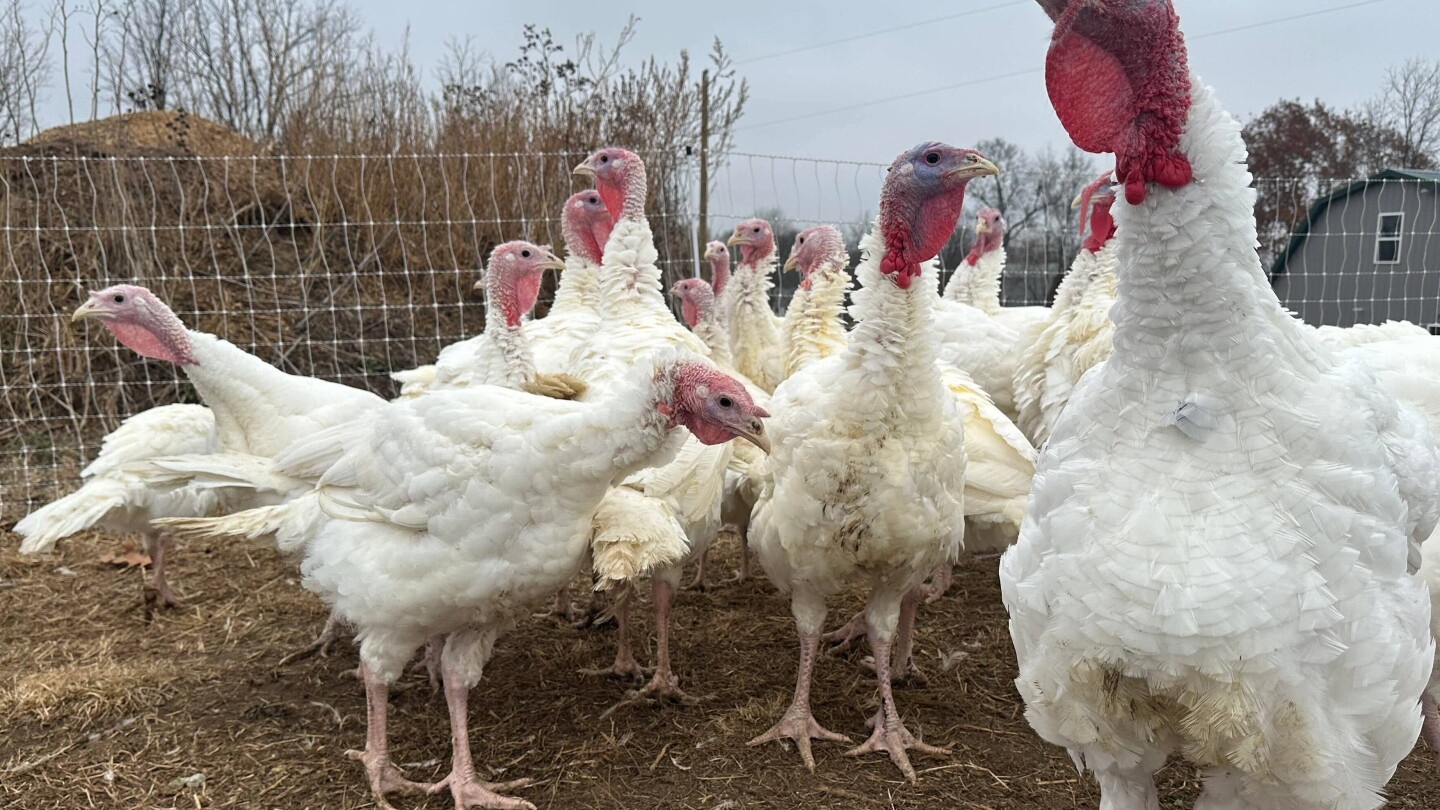
Old Brick Farm in Chelsea, Michigan has been fortunate this Thanksgiving season. Owner Larry Doll, whose family has operated the farm for five generations, managed to avoid the bird flu outbreak that decimated turkey flocks nationwide, killing more than 2 million birds in the last three months alone.
“I try to keep the operation as clean as possible, and not bringing other animals in from other farms helps mitigate that risk as well,” Doll explained, standing among his turkeys just days before they would be delivered to an Amish butcher.
Despite his careful management, Doll still felt the impact of the nationwide shortage. The hatchery that supplies his turkey chicks had fewer available this year, prompting him to place his next order months in advance. “If you don’t get your order in early, you’re not going to get it,” he said.
The U.S. turkey flock has shrunk to a 40-year low in 2023, primarily due to avian influenza and avian metapneumovirus, which reduces egg production in turkeys. This population decline has driven wholesale turkey prices up dramatically – the USDA projects a 44% increase this year.
Mark Jordan, executive director of Leap Market Analytics, confirms this trend. In mid-November, frozen 8-16 pound turkey hens averaged $1.77 per pound, up 81% from the same period last year. Jordan points to both avian viruses and increased consumer demand as contributing factors.
“For a big chunk of the population, they look at steak cuts and say, ‘I can’t or I don’t want to pay $30 a pound,'” Jordan said, noting that beef prices have risen 14% since last September.
Paul Nadeau, a retired consultant from Austin, Texas, exemplifies this consumer shift. He’s smoking a turkey this year instead of his usual brisket, which would now cost over $100. “I don’t know of anything that’s down in price since last year except for eggs,” Nadeau observed.
Despite wholesale increases, many retailers are absorbing these costs to attract holiday shoppers. Major grocery chains are offering heavily discounted or even free turkeys as loss leaders. Aldi advertises a complete Thanksgiving meal for 10 people priced at just $40, while Kroger promises a comparable feast using store-brand products for under $50.
The overall cost of Thanksgiving dinner varies depending on who’s doing the calculation. Datasembly, which surveys prices at 150,000 U.S. stores, found that a basket of 11 Thanksgiving staples cost $58.81 as of November 17 – a 4.1% increase from last year. This exceeds the average price increase for home-consumed food, which rose 2.7% in September according to the Bureau of Labor Statistics.
However, the American Farm Bureau Federation’s annual survey reported that Thanksgiving dinner for 10 would cost $55.16 this year, representing a 5% decrease from 2022. The Wells Fargo Agri-Food Institute estimated the cost at $80 when using store-brand products, which is 2-3% lower than last year.
David Ortega, a professor of food economics and policy at Michigan State University, explains the seemingly contradictory pricing: “We’re seeing some promotions being implemented in an effort to draw customers into the store.”
Beyond turkey, other Thanksgiving staples face their own price pressures. Jellied cranberry sauce costs 38% more than last year, partly due to a 9% decline in U.S. cranberry production caused by drought conditions in Massachusetts. Trump-era tariffs on imported steel and aluminum have increased canned good prices, adding 10 to 40 cents per can according to Farok Contractor, a distinguished professor at Rutgers Business School.
One bright spot is pumpkin, with canned pumpkin pie mix priced 5% lower than last year. Raghela Scavuzzo from the Illinois Farm Bureau explains that dry weather in Illinois, where most canning pumpkins are grown, actually helped the crop avoid common wet-weather diseases.
Back at Old Brick Farm, Doll sold all 92 turkeys he raised this year at $6.50 per pound. His customers willingly pay the premium for what many tell him is the best turkey they’ve ever tasted. Beyond the modest profit, Doll finds satisfaction in his contribution to the holiday tradition.
“I just love it, to think that, you know, not only are we providing them food, but the centerpiece of their Thanksgiving dinner,” he said.
Fact Checker
Verify the accuracy of this article using The Disinformation Commission analysis and real-time sources.

15 Comments
The article highlights the complex balancing act for producers, retailers, and consumers when it comes to Thanksgiving food costs and availability. Navigating these challenges can’t be easy.
It’s good to hear that some farms like Old Brick Farm were able to avoid the turkey shortage this year. Managing biosecurity and operations carefully can make a big difference in mitigating risks from avian illnesses.
Advance planning for turkey orders is key given the supply challenges. Glad to see some farms were proactive in securing their stock.
Thanksgiving is such an important part of American culture, so it’s good to see stores trying to keep turkey prices accessible. But the underlying challenges in the poultry industry are concerning.
I’m curious to see how the turkey shortage and price spikes impact consumer behavior and traditions this holiday season. Will people switch up their menus or find creative ways to manage the higher costs?
It will be important for the poultry industry to closely examine how to improve disease prevention and preparedness. Resilience is key for avoiding future supply shocks.
It’s good that stores are trying to keep turkey prices down for consumers, even if their profit margins get squeezed. Thanksgiving is an important holiday, and affordability matters.
Kudos to the farms like Old Brick that have been able to maintain cleaner operations and avoid the worst of the bird flu outbreak. Their careful management is paying off this Thanksgiving.
The 40-year low in the US turkey flock is an alarming statistic. Avian flu and other illnesses really seem to be taking a heavy toll on poultry production. I hope the industry can find ways to better protect their flocks going forward.
Five generations running a farm like Old Brick is an impressive legacy. Their long experience likely gives them an edge in navigating challenges like avian disease outbreaks.
Advance ordering for turkey chicks is a smart move. Securing supply early is crucial when facing tight inventory across the industry.
The turkey shortage and price spikes are just another example of how supply chain disruptions and animal diseases can impact our food system. Diversifying production and improving biosecurity seem crucial.
I wonder if higher costs for other holiday foods could lead more consumers to switch to alternative proteins or plant-based options this year.
The 44% increase in wholesale turkey prices is quite significant, even if stores are trying to keep consumer costs down. I wonder how this will impact profit margins for retailers and producers this holiday season.
It will be interesting to see if shoppers notice higher prices for other Thanksgiving staples like side dishes and desserts, even if turkeys themselves are discounted.