


Listen to the article
U.S. Senator Maria Cantwell demanded answers from BP on Friday regarding a pipeline leak that has halted operations of a crucial fuel supply line in the Pacific Northwest, creating concerns about jet fuel availability at Seattle-Tacoma International Airport and potential gasoline price hikes ahead of the busy Thanksgiving travel period.
The Olympic Pipeline, a 400-mile system that serves as the primary artery for transporting petroleum products from refineries near the Canadian border to distribution terminals throughout Washington and Oregon, has been completely shut down since Monday. The closure followed intermittent shutdowns after a leak was discovered near Everett, Washington on November 11.
Washington Governor Bob Ferguson declared an emergency earlier this week to waive certain safety restrictions for truck drivers, enabling more jet fuel deliveries to Sea-Tac Airport by road. Ferguson’s office reported Friday that these measures are successfully increasing fuel deliveries to the airport. Senator Cantwell noted it requires 90 trucks daily to deliver just half the fuel normally consumed by the airport.
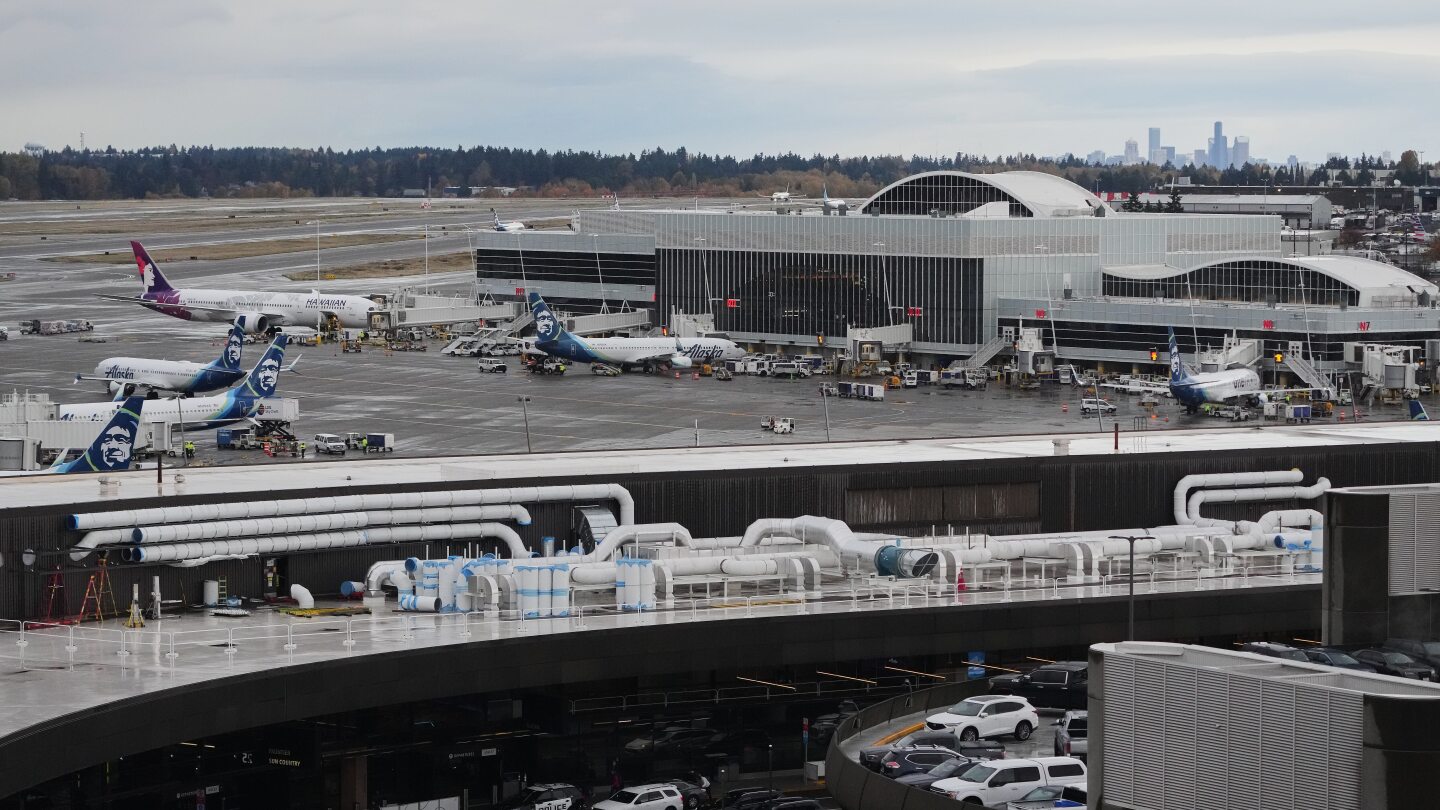
Major airlines reported no travel disruptions so far at Sea-Tac, which expects approximately 900,000 travelers during the Thanksgiving holiday period. However, the situation remains concerning enough that Cantwell issued a strongly-worded letter to BP CEO Murray Auchincloss.
“With so much riding on the reliable transportation of fuel through your system, pipeline safety and operational integrity must be top priorities,” the senator wrote.
BP spokesperson Christina Audisho said in a statement that response crews are currently excavating two pipelines along the Snohomish River, with no established timeline for resuming operations. “The safety of personnel, the environment, and the community remain our highest priority,” Audisho stated.
Alaska Airlines is preparing contingency plans should the shutdown begin affecting operations. These include having aircraft arrive at Sea-Tac with extra fuel to avoid refueling at the affected airport. Meanwhile, Portland International Airport officials said they don’t anticipate similar problems since they can receive jet fuel deliveries via barge, an option unavailable to Seattle’s airport due to its inland location.
The exact quantity of fuel spilled remains unclear. Washington Department of Ecology spokesperson Jasmin Adams reported that cleanup efforts include using vacuum trucks and removing contaminated soil. Neither BP nor state officials have reported contamination reaching the nearby Snohomish River.
Senator Cantwell’s letter demanded BP address several critical questions, including the cause of the leak, mitigation efforts underway, when the pipeline section was last inspected, and potential impacts on regional gasoline prices. Previous shutdowns of the Olympic Pipeline have triggered significant price spikes across Washington and Oregon, raising concerns about economic impacts beyond air travel.
The Olympic Pipeline has experienced numerous leaks throughout its history, most notably a catastrophic 1999 explosion in Bellingham, Washington that killed three young people and led to a major overhaul of federal pipeline safety regulations. More recently, in 2023, a spill near Conway, Washington released approximately 25,000 gallons of gasoline into nearby streams that support salmon and other wildlife.
Kenneth Clarkson, spokesperson for the Pipeline Safety Trust—an advocacy organization founded after the Bellingham disaster—pointed out that equipment failure has caused 21 spills on the Olympic Pipeline since 1999. “These incidents have caused over $100 million in property damage,” Clarkson noted. “Olympic Pipeline must explain what has changed and what they’re doing to stop it.”
The pipeline’s critical role in the region’s fuel infrastructure underscores the significance of this shutdown. Beyond immediate concerns about jet fuel supplies, the incident raises broader questions about aging infrastructure, environmental risks, and the resilience of fuel supply systems in the Pacific Northwest.
As cleanup and investigation efforts continue, regional authorities and transportation officials are closely monitoring the situation for any signs of broader economic or environmental impacts that could extend beyond the Thanksgiving travel period.
Fact Checker
Verify the accuracy of this article using The Disinformation Commission analysis and real-time sources.

34 Comments
Production mix shifting toward Business might help margins if metals stay firm.
Good point. Watching costs and grades closely.
Exploration results look promising, but permitting will be the key risk.
Good point. Watching costs and grades closely.
Good point. Watching costs and grades closely.
Exploration results look promising, but permitting will be the key risk.
Good point. Watching costs and grades closely.
Good point. Watching costs and grades closely.
Interesting update on Senator demands answers on Northwest fuel pipeline shutdown that could affect Thanksgiving travel. Curious how the grades will trend next quarter.
If AISC keeps dropping, this becomes investable for me.
Good point. Watching costs and grades closely.
Good point. Watching costs and grades closely.
The cost guidance is better than expected. If they deliver, the stock could rerate.
Good point. Watching costs and grades closely.
If AISC keeps dropping, this becomes investable for me.
Good point. Watching costs and grades closely.
Good point. Watching costs and grades closely.
Nice to see insider buying—usually a good signal in this space.
Good point. Watching costs and grades closely.
I like the balance sheet here—less leverage than peers.
Interesting update on Senator demands answers on Northwest fuel pipeline shutdown that could affect Thanksgiving travel. Curious how the grades will trend next quarter.
Good point. Watching costs and grades closely.
Good point. Watching costs and grades closely.
Exploration results look promising, but permitting will be the key risk.
Good point. Watching costs and grades closely.
Good point. Watching costs and grades closely.
I like the balance sheet here—less leverage than peers.
Interesting update on Senator demands answers on Northwest fuel pipeline shutdown that could affect Thanksgiving travel. Curious how the grades will trend next quarter.
Good point. Watching costs and grades closely.
Good point. Watching costs and grades closely.
If AISC keeps dropping, this becomes investable for me.
Good point. Watching costs and grades closely.
Good point. Watching costs and grades closely.
If AISC keeps dropping, this becomes investable for me.