


Listen to the article
Ancient Meets Modern: Rome Unveils Archaeological Subway Stations
Rome has opened two new subway stations that seamlessly blend modern transportation technology with ancient archaeological treasures, offering commuters and tourists a unique journey through time beneath the city’s historic center.
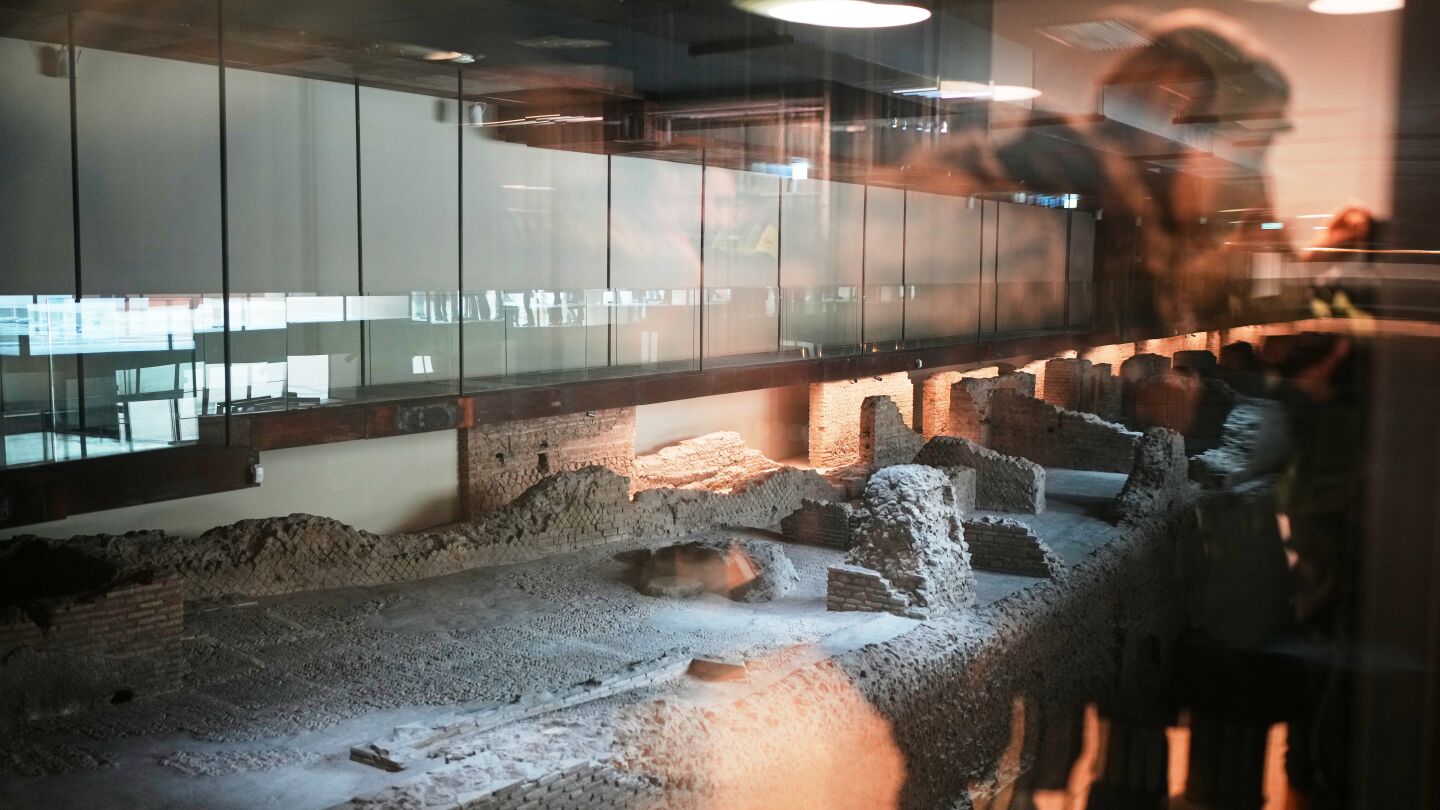
The station adjacent to the Colosseum, one of Rome’s most iconic landmarks, now serves as both a transit hub and an archaeological museum. Passengers descending into the station can view displays of ceramic vases, stone wells, and suspended buckets dating back centuries. The exhibits also showcase the ruins of a first-century dwelling, complete with a cold plunge pool and thermal bath. Digital screens throughout the station document the excavation process, providing context for the discoveries while subtly explaining the decades-long construction timeline.
“The challenge was building it under such a large amount of groundwater and at the same time preserving all the archaeological finds that we found during the excavation, and all this while preserving everything that is above,” explained Marco Cervone, construction manager for the consortium led by Webuild that is building the subway line.
The multibillion-euro Metro C line has been under construction for two decades, with progress consistently hampered by bureaucratic delays, funding issues, and the painstaking archaeological work required to preserve Rome’s underground heritage. The subway line traverses layers of imperial Roman and medieval civilizations that lie beneath the modern city.
The second newly opened station, Porta Metronia, located one stop away from the Colosseum station, sits 30 meters (approximately 100 feet) below ground level. This station features a nearly 80-meter (260-foot) military barracks dating back to the early second century, discovered at a depth between 7 and 12 meters (22 and 39 feet).
Simona Moretta, the scientific director of the excavation, noted a fascinating architectural detail that confirmed the military purpose of the structure: “Surety that it was a military building is given by the fact that the entrances to the rooms are not facing each other, but are offset, so that the soldiers could leave the rooms and get in line without colliding in the corridor.” The soldiers stationed there likely served either as part of the emperor’s guard or handled city security duties.
The Porta Metronia station also features a remarkably well-preserved home with intact frescoes and mosaics. Officials have announced plans to open a dedicated museum within the station in the future to showcase these finds properly.
The excavation and construction project has been a massive archaeological undertaking. According to Webuild, the consortium has unearthed more than 500,000 artifacts during the construction of Line C. Working in such archaeologically sensitive areas required innovative construction techniques, including freezing the ground to stabilize soil and using “sacrificial diaphragms” — concrete walls built perpendicular to perimeter walls that are demolished as excavation progresses.
When completed, the Metro C line will stretch 29 kilometers (18 miles), with 20 kilometers (12 miles) running underground. The line will eventually include 31 stations, with three-quarters already operational. According to the city-owned company overseeing the project, the total cost will reach approximately 7 billion euros ($8.3 billion), with completion expected by 2035.
The subway’s next phase will take it beneath even more culturally significant sites, including Trajan’s Column and the Basilica of Maxentius (the largest building in the Roman Forum), as well as Renaissance palaces, churches, and eventually the Vatican. The Piazza Venezia station, situated at the heart of Rome’s historic center, will be built at an impressive depth of 48 meters (157 feet) and is scheduled to open in 2033.
Once fully operational, Line C is projected to transport up to 800,000 passengers daily, offering visitors and locals alike an efficient alternative to Rome’s notoriously congested surface traffic — which has been further complicated in recent years by the subway construction itself.
For tourists planning to visit the Colosseum and other historic sites in central Rome, these new stations represent not just improved transportation infrastructure but an opportunity to experience the city’s rich archaeological heritage in a uniquely immersive way.
Fact Checker
Verify the accuracy of this article using The Disinformation Commission analysis and real-time sources.

8 Comments
Building infrastructure while preserving historical treasures is no easy feat. Rome seems to have struck a nice balance with this project, showcasing its past while improving modern connectivity.
Agreed. The ability to seamlessly integrate the old and new is truly impressive and speaks to Rome’s commitment to honoring its heritage.
The digital screens providing context on the excavation process are a nice touch. It’s great that Rome is using this project to educate people about its past while improving transit infrastructure.
Fascinating to see how Rome is blending modern transportation with ancient history and artifacts. The Colosseum subway station sounds like a unique experience for commuters and tourists alike.
Preserving archaeological finds while constructing a major subway project must have been an incredible engineering challenge. Kudos to the team for finding a way to showcase the city’s rich history.
I wonder if the subway station will become a popular tourist attraction in its own right, with people wanting to view the ancient artifacts on display. Combining transportation and archaeology is a clever idea.
You raise a good point. The station could very well become a must-see destination for visitors to Rome, adding another layer to the city’s rich cultural offerings.
It’s encouraging to see cities finding ways to highlight their archaeological assets as part of larger infrastructure projects. This Colosseum subway station sets a great example that other places could follow.