


Listen to the article
Chile’s Pristine Astronomy Haven Threatened by Renewable Energy Project
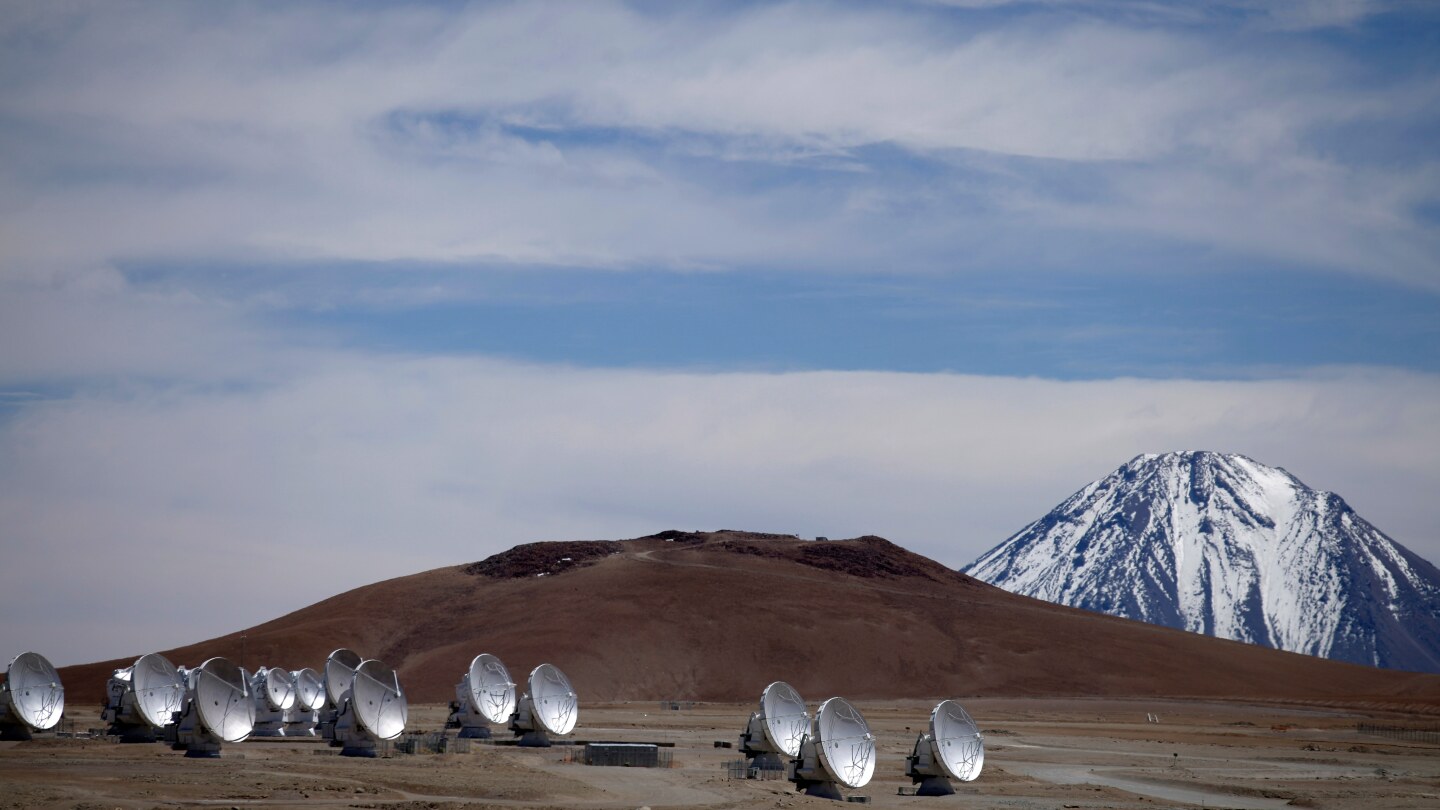
The Atacama Desert in Chile, one of the world’s darkest places and a premier location for astronomical research, faces an unprecedented threat from industrial development that could permanently alter scientists’ ability to study the cosmos.
A group of 30 prominent international astronomers, including 2020 Nobel laureate in astrophysics Reinhard Genzel, released an open letter Tuesday warning that a planned renewable energy complex could jeopardize the future of astronomical research at the world-renowned Paranal Observatory.
“The damage would extend beyond Chile’s borders, affecting a worldwide scientific community that relies on observations made at Paranal to study everything from the formation of planets to the early universe,” the scientists stated in their letter to the Chilean government.
The Atacama Desert has long been considered astronomy’s crown jewel due to a rare combination of factors that make it ideal for celestial observation: exceptionally dry climate, high altitude, and minimal light pollution. These conditions have attracted some of the most sophisticated astronomical projects on Earth, making Chile home to approximately 40% of the world’s astronomy infrastructure.
“It’s a perfect cocktail for astronomy,” explained Daniela González, executive director of the Skies of Chile Foundation, a nonprofit dedicated to preserving the quality of the country’s night skies.
The controversial project is being developed by AES Andes, a subsidiary of U.S.-based multinational AES Corp. The plan, currently under environmental review, includes 3,000 hectares (7,400 acres) of wind and solar energy farms, a desalination plant, and a new port—all just 3 kilometers (1.9 miles) from the Paranal Observatory’s high-powered telescopes.
According to the European Southern Observatory (ESO), which operates the Paranal facility, the development would increase light pollution by 35%. But the concerns extend beyond artificial light. The project would generate additional dust, ground vibrations, and atmospheric turbulence that could severely compromise the precision of astronomical observations.
“At the best sites in the world for astronomy, stars don’t twinkle. They are very stable, and even the smallest artificial turbulence would destroy these characteristics,” said Andreas Kaufer, ESO’s director of operations. “If the sky is becoming brighter from artificial light around us, we cannot do these observations anymore. They’re lost. And, since we have the biggest and most sensitive telescopes at the best spot in the world, if they’re lost for us, they’re lost for everyone.”
In response to requests for comment, AES Corp. defended its project, stating that their technical studies indicated full compatibility with astronomical observations and compliance with Chile’s strict regulations on light pollution. “We encourage trust in the country’s institutional strength, which for decades has guaranteed certainty and environmental protection for multiple productive sectors,” the company said.
The situation in Chile illustrates a growing global tension between astronomical research and development pressures. Light pollution worldwide is increasing at an alarming rate, making the night sky approximately 10% brighter each year, according to research.
“Major observatories have been chased out to remote locations, and essentially now they’re chased out to some of the last remaining dark sky locations on Earth, like the Atacama Desert, the mountain peaks of Hawaii, areas around Tucson, Arizona,” explained Ruskin Hartley, executive director of DarkSky International, a Tucson-based nonprofit founded by astronomers. “All of them are now at risk from encroaching development and mining. It’s happening everywhere.”
The astronomers’ letter emphasizes that their objections aren’t anti-development. “We are convinced that economic development and scientific progress can and must coexist to the benefit of all people in Chile, but not at the irreversible expense of one of Earth’s unique and irreplaceable windows to the universe,” it states.
As Chile’s government weighs its decision, the outcome could have profound implications for humanity’s ability to study the cosmos and make future astronomical breakthroughs. For scientists and conservationists alike, the message is clear: once lost, these pristine dark skies cannot be restored.
Fact Checker
Verify the accuracy of this article using The Disinformation Commission analysis and real-time sources.

25 Comments
I like the balance sheet here—less leverage than peers.
Exploration results look promising, but permitting will be the key risk.
Good point. Watching costs and grades closely.
Good point. Watching costs and grades closely.
If AISC keeps dropping, this becomes investable for me.
Good point. Watching costs and grades closely.
If AISC keeps dropping, this becomes investable for me.
Good point. Watching costs and grades closely.
Nice to see insider buying—usually a good signal in this space.
Good point. Watching costs and grades closely.
Silver leverage is strong here; beta cuts both ways though.
Exploration results look promising, but permitting will be the key risk.
Good point. Watching costs and grades closely.
The cost guidance is better than expected. If they deliver, the stock could rerate.
Good point. Watching costs and grades closely.
If AISC keeps dropping, this becomes investable for me.
Good point. Watching costs and grades closely.
I like the balance sheet here—less leverage than peers.
Exploration results look promising, but permitting will be the key risk.
Good point. Watching costs and grades closely.
Good point. Watching costs and grades closely.
The cost guidance is better than expected. If they deliver, the stock could rerate.
Interesting update on Renowned astronomers push to protect Chile’s cherished night sky from an industrial project. Curious how the grades will trend next quarter.
Good point. Watching costs and grades closely.
Good point. Watching costs and grades closely.