


Listen to the article
Federal regulators have approved a significant change that will allow U.S. freight railroads to reduce the frequency of in-person track inspections while relying more heavily on automated technology.
The Federal Railroad Administration (FRA) announced Friday that railroads may now conduct human inspections once weekly, rather than the previous requirement of twice weekly, when utilizing automated track inspection systems. The decision follows a formal waiver request from the Association of American Railroads (AAR), the industry’s primary trade group.
Railroad companies had sought even greater flexibility, requesting permission to reduce in-person inspections to as infrequently as twice monthly—a substantial reduction from the standards established in 1971. The industry also requested up to three days to repair defects identified by automated systems, but regulators instead mandated that serious defects must be addressed immediately, with all defects to be fixed within 24 hours.
“The technology has proven to be far more sensitive and effective at detecting geometry defects on BNSF’s network than the regime of manual visual inspections mandated by the historic regulations,” BNSF Railroad stated during the approval process. The company cited testing data showing that automated systems identified 4.54 defects per 100 miles, compared to just 0.01 defects per 100 miles detected by manual inspections alone.
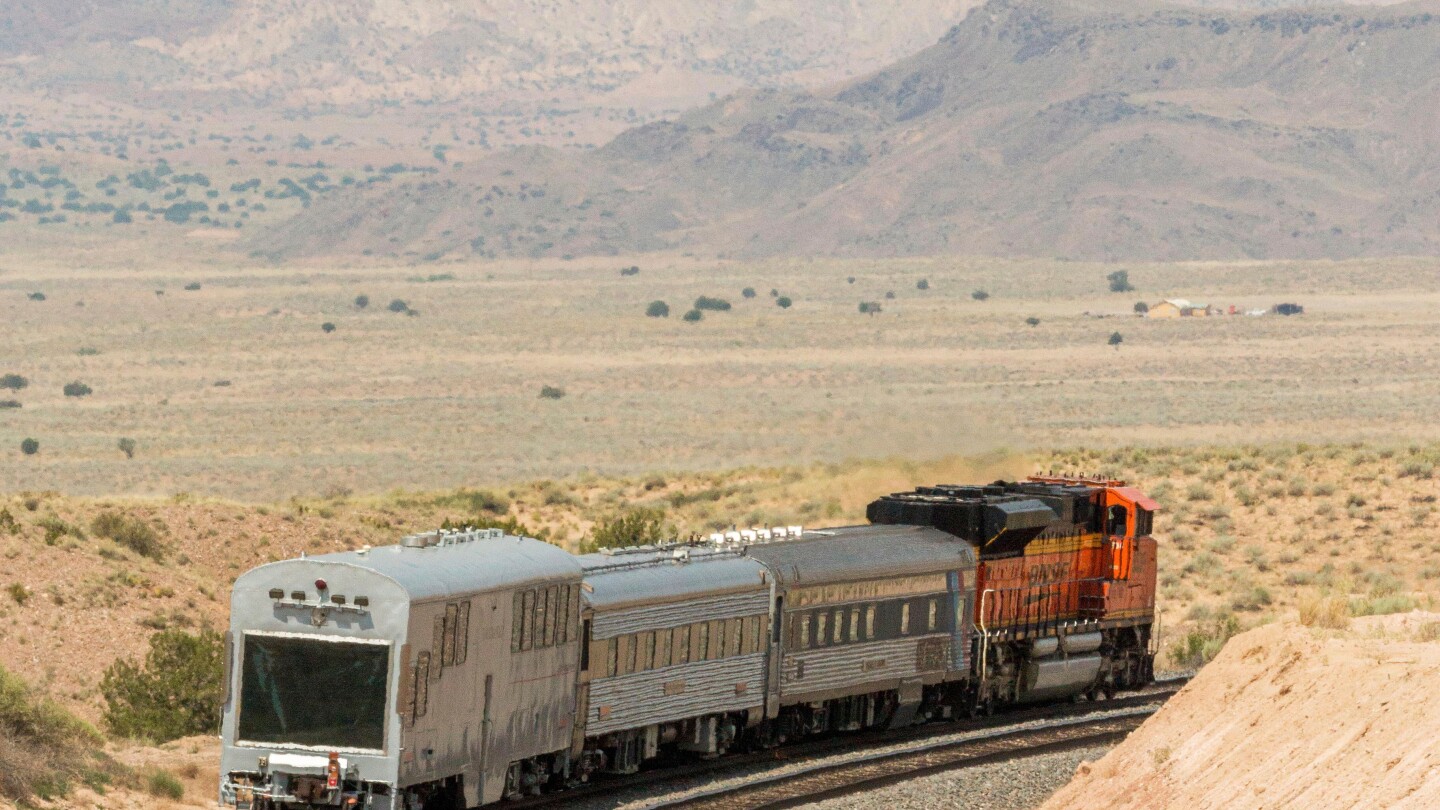
The automated inspection technology employs cameras and lasers mounted on locomotives or specialized railcars that measure and analyze track geometry, alignment, and other potential issues while traveling along the rail network. Railroad companies point to extended tests conducted by BNSF and Norfolk Southern as evidence that the technology not only maintains but potentially improves safety standards.
Norfolk Southern reported that during its 18-month pilot program, inspectors were able to focus more attention on critical components like switches and other equipment that require manual inspection, leading to safety improvements in areas not covered by automated systems.
However, the Brotherhood of Maintenance of Way Employes Division, the union representing track inspectors, has voiced strong opposition to the changes. Union President Tony Cardwell contends that the technology has significant limitations and should supplement, not replace, human inspections.
“This is everyday defects across the entire country that we find through visual inspections that cannot be detected by this machinery,” Cardwell said. “The technology is not there. It has been here for 30 years. It hasn’t really advanced much at all. It’s a glorified tape measure.”
The union argues that automated systems cannot detect numerous critical issues including shifting rock beneath tracks, encroaching vegetation, rail cracks, or rotting railroad ties. Additionally, they contend experienced inspectors can identify combinations of minor defects that together might cause derailments, whereas automated systems might not flag such nuanced problems.
Roy Morrison, the union’s safety director, highlighted the value of inspector familiarity with territories. “A track inspector who’s out on his mainline track twice a week, he knows that track inside out, and a lot of times he’ll spot a defect without even knowing what he’s looking at yet,” Morrison explained.
The railroad industry counters that even if automated systems cannot directly see ballast shifting or ties rotting, they will detect the resulting symptoms through track geometry measurements.
“What it is looking at is the ultimate performance. If those components are doing their job, then the track geometry is being maintained. If they’re not doing their job, the track geometry is not being maintained,” said Mike Rush, AAR’s senior vice president of safety and operations.
The regulatory change comes amid ongoing industry efforts to modernize operations and improve efficiency. Major freight railroads have emphasized that special inspections will still be conducted following significant weather events such as major storms or flooding to ensure track integrity.
This decision represents one of the most significant changes to rail inspection protocols in decades and will be closely watched by safety advocates, industry analysts, and regulators for its impact on the nation’s rail safety record.
Fact Checker
Verify the accuracy of this article using The Disinformation Commission analysis and real-time sources.

23 Comments
Exploration results look promising, but permitting will be the key risk.
Nice to see insider buying—usually a good signal in this space.
Good point. Watching costs and grades closely.
If AISC keeps dropping, this becomes investable for me.
Good point. Watching costs and grades closely.
Good point. Watching costs and grades closely.
Exploration results look promising, but permitting will be the key risk.
Good point. Watching costs and grades closely.
Good point. Watching costs and grades closely.
Uranium names keep pushing higher—supply still tight into 2026.
Interesting update on Railroads will be allowed to reduce inspections and rely more on technology to spot track problems. Curious how the grades will trend next quarter.
Good point. Watching costs and grades closely.
Exploration results look promising, but permitting will be the key risk.
Good point. Watching costs and grades closely.
The cost guidance is better than expected. If they deliver, the stock could rerate.
Good point. Watching costs and grades closely.
Good point. Watching costs and grades closely.
Nice to see insider buying—usually a good signal in this space.
I like the balance sheet here—less leverage than peers.
Good point. Watching costs and grades closely.
Good point. Watching costs and grades closely.
I like the balance sheet here—less leverage than peers.
Good point. Watching costs and grades closely.