


Listen to the article
A federal judge has blocked the Trump administration’s efforts to dismantle New York’s pioneering congestion pricing program, delivering a significant victory for the state in its battle to preserve the traffic-reduction initiative.
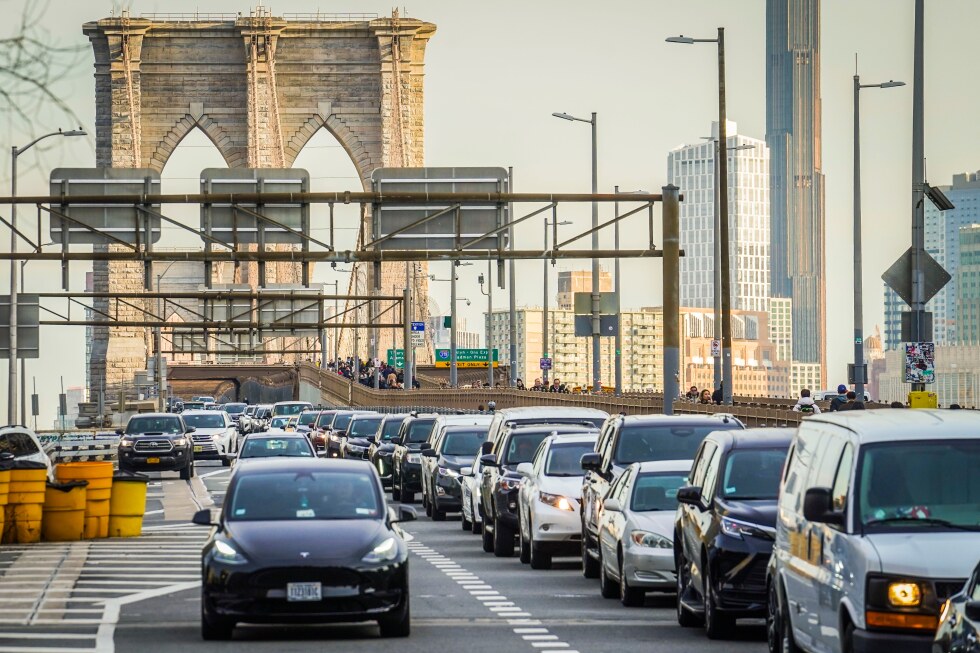
U.S. District Judge Lewis Liman ruled Tuesday that the Department of Transportation overstepped its authority when it attempted to rescind approval for the $9 toll that charges vehicles entering Manhattan below 60th Street. The program, which began operating on January 5, 2025, is the first of its kind in the United States.
In his 149-page ruling, Liman determined that Transportation Secretary Sean Duffy’s actions were “arbitrary and capricious, an abuse of discretion, and not in accordance with law.” The judge emphasized that New York’s congestion pricing program had followed proper democratic procedures, having been passed by the state legislature, signed by the governor, and granted necessary federal approvals before implementation.
“The democratic process worked,” Liman wrote, though he left open the possibility for the Trump administration to pursue other avenues to challenge the program in the future.
New York Governor Kathy Hochul celebrated the decision as vindication of a “once-in-a-lifetime success story” that has already demonstrated tangible benefits during its first year of operation.
“The judge’s decision is clear: Donald Trump’s unlawful attempts to trample on the self-governance of his home state have failed spectacularly,” Hochul stated. “Congestion pricing is legal, it works, and it is here to stay.”
The Department of Transportation responded that it is reviewing legal options, including a potential appeal. The agency criticized Hochul’s policies as imposing “a massive tax on every New Yorker” that harms working-class Americans.
The congestion toll varies by vehicle type and time of day, generally costing around $9 for most vehicles entering the designated zone. These fees are additional to existing tolls drivers pay for bridges and tunnels into Manhattan. The concept, while new to America, has long been implemented in global cities like London, Stockholm, Milan, and Singapore as a means to reduce traffic congestion and pollution while encouraging public transit use.
Former President Donald Trump, whose Trump Tower and other properties fall within the congestion zone, has been a vocal opponent of the program. During his presidential campaign, he pledged to eliminate the toll immediately upon taking office. In February, Secretary Duffy followed through by rescinding the program’s federal approval, describing it as “a slap in the face to working-class Americans and small business owners” and threatening to withhold federal funding for New York projects if the toll continued.
Judge Liman had temporarily blocked those threats pending his final decision. This ruling follows his previous dismissal of multiple lawsuits from local opponents, including New Jersey Governor Phil Murphy, New York City’s teachers’ union, trucking industry representatives, and suburban leaders.
The congestion pricing program has had a complicated political journey. Governor Hochul initially paused its planned 2024 implementation, widely viewed as an attempt to shield suburban Democrats in tight congressional races where the toll was controversial. Following the election, she reinstated the program but reduced the fee from the originally planned $15 to $9.
As the program completed its first year in January, the Metropolitan Transportation Authority released data highlighting its benefits. According to their report, congestion pricing has resulted in 27 million fewer vehicles entering central Manhattan, leading to a 22% reduction in air pollution and 23% faster commute times for those choosing to drive and pay the fee.
The toll has also generated over $550 million in revenue for the region’s transit system, exceeding initial projections. The MTA reports that contrary to concerns about economic harm, sales tax revenues, office leases, and foot traffic within the congestion zone have all increased since implementation.
“Traffic is down, business is up, and we’re making crucial investments in a transit system that moves millions of people a day,” said Janno Lieber, the MTA’s CEO. “New York is winning.”
The case underscores the tension between federal and state authority in implementing urban transportation policies and highlights the challenges of introducing European-style congestion management strategies in American cities.
Fact Checker
Verify the accuracy of this article using The Disinformation Commission analysis and real-time sources.

14 Comments
This ruling is a significant victory for New York, but the political battle is likely to continue. I’m interested to see how the congestion pricing program is implemented and whether it leads to the desired outcomes.
You’re right, this is just the beginning. The real test will be in how the program is rolled out and whether it can balance the needs of commuters, businesses, and residents effectively.
Congestion pricing is a complex and often controversial issue, but it’s encouraging to see the courts upholding the state’s efforts to reduce traffic in Manhattan. I wonder how the program will evolve and impact commuters and businesses in the long run.
The judge’s emphasis on the democratic process behind this initiative is an important point. These types of policy decisions shouldn’t be subject to political meddling without proper justification.
The judge’s emphasis on the democratic process behind this initiative is encouraging. However, the ongoing political opposition suggests that there are still many challenges ahead for the implementation of congestion pricing in New York.
Agreed. While the legal hurdle has been cleared for now, the program’s success will ultimately depend on how well it is designed and executed to address the diverse concerns of stakeholders.
As someone who commutes into the city, I have mixed feelings about the congestion toll. On one hand, it could help ease traffic, but on the other, it may place an unfair burden on lower-income residents. I’ll be watching closely to see how it’s implemented.
You raise a valid concern about potential equity issues with congestion pricing. Policymakers will need to carefully consider mitigation measures to ensure the program doesn’t disproportionately impact disadvantaged communities.
Congestion pricing is a complex issue with valid arguments on both sides. I’m curious to see how the program evolves and whether it achieves its intended goals of reducing traffic and raising revenue for infrastructure improvements.
It’s an interesting experiment, and the outcome could have implications for other cities considering similar measures. I’ll be following the results closely to see if it’s an effective solution.
This ruling is a win for New York, but the fight is likely not over. The Trump administration may find other ways to challenge the program, so it will be crucial for the state to continue defending its position in court.
Agreed. While the judge has upheld the legality of the program for now, the door remains open for further legal battles down the road. Vigilance will be key as this issue progresses.
Interesting development in the ongoing battle over congestion pricing in New York. While the Trump administration’s objections have been overruled for now, I’m curious to see if they pursue other legal avenues to challenge the program in the future.
This ruling seems to uphold the democratic process behind the implementation of the congestion pricing scheme. It will be important to monitor how this plays out going forward.