


Listen to the article
Israel’s War with Iran Tests Netanyahu’s Alliance with US
Israel’s Prime Minister Benjamin Netanyahu has built his foreign policy around two critical pillars: an unwavering alliance with the United States and an unrelenting campaign against Iran’s leadership. Now, as Israel and the US engage jointly against Iran, these twin strategies risk colliding in ways that could reshape Middle Eastern geopolitics.
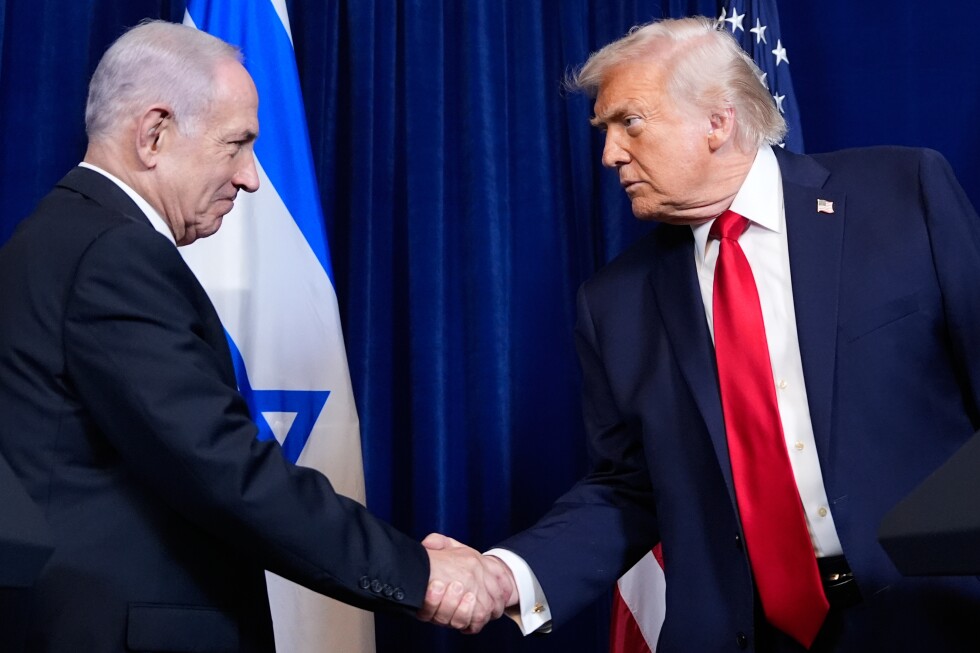
By securing US President Donald Trump’s participation in military action against Iran, Netanyahu has achieved what many consider a diplomatic triumph, underscoring the strong personal relationship between the two leaders. If successful, their coordinated effort could potentially topple the Iranian government and prevent a prolonged regional conflict.
However, military analysts and political observers warn that a protracted engagement could strain US-Israeli relations and erode American public support for Israel, which has already been declining in recent months.
“A large part of the American public will view it as the Israeli tail wagging the American dog and that it is dragging the United States to a war in the Middle East that isn’t theirs,” said Ofer Shelah, a research fellow at Tel Aviv’s Institute for National Security Studies. Shelah cautions that diminishing public support could prove “very harmful for Israel in the medium and long term,” though he suggests Netanyahu’s focus remains on short-term political considerations.
The Israeli leader has positioned himself throughout his career as a bridge between Israel and America, cultivating relationships across multiple US administrations and Congress. His fluent English and time spent in the United States during his youth have bolstered this image. Yet recent Gallup polling indicates a significant shift in American sympathies toward Palestinians, particularly among Democrats but increasingly across partisan lines.
Even among traditional Republican supporters, questions have emerged about the extent of US financial and diplomatic backing for Israel during its ongoing conflicts, especially following the Hamas attacks of October 7, 2023, and the subsequent war in Gaza that has generated devastating humanitarian images.
For Netanyahu, Iran represents an existential threat to Israel through its support of regional militias, ballistic missile program, and nuclear ambitions. He has made countering Iran a central mission throughout his political career, recently stating that US involvement now allows Israel “to do what I have been hoping to do for 40 years — to deliver a crushing blow to the terror regime.”
The initial phases of the military campaign have demonstrated seamless coordination between Israeli and US forces, from strikes against top Iranian leadership, including Supreme Leader Ayatollah Ali Khamenei, to achieving air supremacy over Iranian territory.
However, the conflict has already produced consequences reverberating beyond the Middle East. At least six US troops have been killed, regional travel disruptions have stranded hundreds of thousands of travelers, and global oil prices have surged, threatening to increase costs for American consumers already struggling with inflation.
Critical questions remain unanswered about the ultimate objectives of this war. Military experts question whether air power alone can topple Iran’s leadership structure, what governance would replace the current regime, and what roles Israel or the US would play in a post-conflict scenario.
“Many people will blame Israel if things go badly wrong,” noted Nadav Eyal, a commentator with Israeli newspaper Yediot Ahronoth. “Israel cannot afford to lose the American public’s support under any circumstances. That is more important than striking any individual military facility.”
For Netanyahu, however, the political calculus may favor continued engagement. With Israeli elections scheduled for this fall, the war provides an opportunity to redirect attention from the intelligence failures surrounding the October 7 attacks while burnishing his credentials as a wartime leader fulfilling a lifelong pledge to confront Iran.
Aaron David Miller, who advised multiple US administrations on Middle East policy, suggests Netanyahu has little to lose politically from the conflict but notes that Trump maintains ultimate control over American involvement. “If Trump feels as if it’s going south, he’ll find a way to de-escalate,” Miller observed, “and his good friend Benjamin Netanyahu will follow.”
The outcome of this high-stakes gamble will likely determine not just the future of Iran’s government but also the trajectory of US-Israeli relations for years to come.
Fact Checker
Verify the accuracy of this article using The Disinformation Commission analysis and real-time sources.

8 Comments
As an investor in mining and energy equities, I’ll be monitoring this situation closely. A prolonged conflict with Iran could disrupt supply chains and create volatility in commodity prices.
This feels like a high-risk, high-reward strategy from Netanyahu. If the US-Israel alliance can successfully take down Iran’s regime, it would be a major victory. But the potential downside risks are also significant.
This is a high-stakes gamble by Netanyahu. Striking Iran could rally support at home, but risks straining the US-Israel alliance and eroding American public backing for Israel. It’s a tricky balance to strike.
I’m curious to see how this plays out. Netanyahu’s aggressive stance against Iran has worked for him politically, but this latest move feels like a major gamble. The fallout could reshape the geopolitics of the Middle East.
Absolutely, the stakes are incredibly high. This could have far-reaching consequences for the entire region and global energy/commodity markets.
From a commodity markets perspective, a war with Iran could disrupt oil and gas supplies, drive up energy prices, and impact mining operations in the region. Investors will be closely watching developments.
Netanyahu seems to be counting on Trump’s personal loyalty, but a prolonged conflict could test that. The US public may start to see Israel as dragging America into a war that isn’t theirs.
You’re right, the public perception is crucial. If this comes across as Israel using the US for its own interests, it could seriously backfire.