


Listen to the article
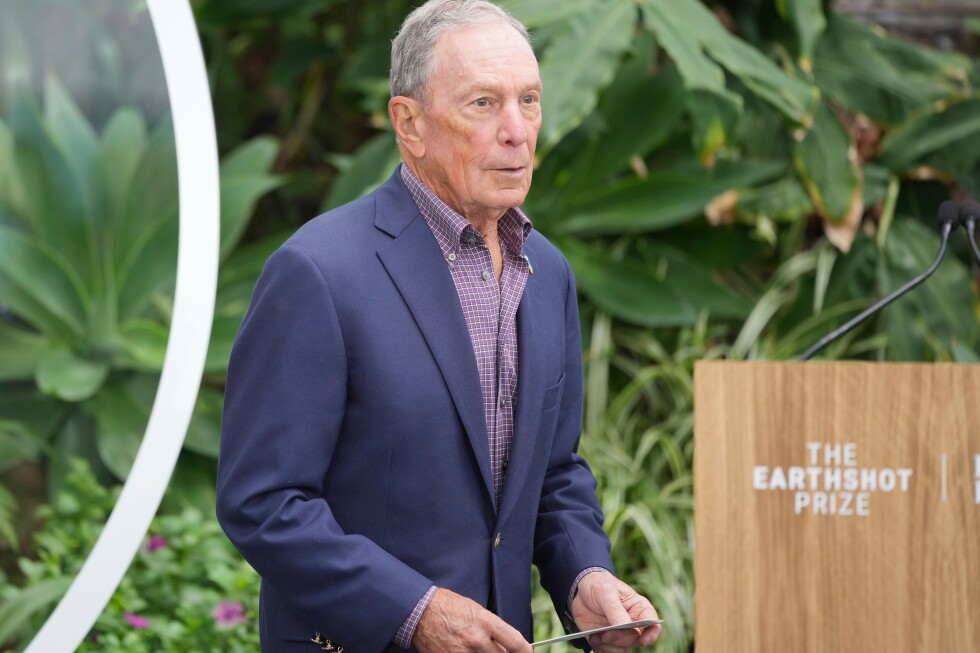
Michael Bloomberg has claimed the top position on the Chronicle of Philanthropy’s ranking of the 50 largest donors of 2025 for the third consecutive year. The financial news mogul and former New York mayor contributed a staggering $4.3 billion to various causes including arts, education, environmental initiatives, public health programs, and city government improvement projects.
The annual Philanthropy 50 list shows Bloomberg leading a small but powerful group of mega-donors. Following him are three philanthropists who each donated $1 billion or more last year. Microsoft co-founder Bill Gates ranked second with $3.7 billion in contributions to the Gates Foundation, while his late colleague Paul Allen secured the third spot with a $3.1 billion bequest establishing a foundation dedicated to science and technology advancements. Investor Warren Buffett rounded out the top tier with $1.3 billion distributed among four family foundations supporting diverse causes.
Collectively, the 50 donors on this prestigious list contributed $22.4 billion to charitable causes in 2025, with the median gift reaching $105 million.
The financial industry emerged as the dominant source of wealth among the philanthropists, with 20 donors from this sector contributing a combined $4.1 billion. Technology followed with 12 donors giving a total of $10 billion, while real estate ranked third with four donors contributing $466.7 million.
Geographic concentration is evident in the giving patterns, with New York and California housing more major donors than any other states. Consequently, nonprofits in these regions received the largest share of philanthropic dollars.
For many donors, personal connection drives their giving. Jon and Mindy Gray, who ranked 34th with $63.6 million in donations, primarily support research on BRCA-related inherited cancers—a cause deeply personal to Mindy, whose sister died of BRCA-related ovarian cancer at age 44. The couple also funds initiatives to empower young people in New York City, including scholarships for students attending historically Black colleges and universities.
“We’re very hands-on people—we enjoy it,” Mindy Gray explains. “Other people often come to us and say, ‘I want to do something, but what should I do?’ And it really is what you feel in your heart. You should not be doing this work in areas that don’t move you.”
Despite the impressive figures, the list reveals that relatively few of America’s wealthiest individuals engage in significant philanthropy. Only 19 members of the Forbes 400 list of richest Americans donated enough to appear in this year’s rankings.
Notably absent is MacKenzie Scott, who has donated approximately $26 billion since 2020. Sources suggest Scott likely made substantial contributions to donor-advised funds that would have qualified her for the list, but she and her representatives declined to disclose specific amounts.
The Philanthropy 50 also features several lower-profile donors making significant impacts. Robert and Karen Hale, founders of Granite Telecommunications, ranked 25th with nearly $111 million in donations, including a $100 million gift to Boston Children’s Hospital. Automotive consultant James Anderson and his wife Patricia gave $50 million to Wayne State University and over $8 million to charities serving the elderly and people with special needs. Los Angeles real estate investors Melanie and Richard Lundquist donated $50 million to Torrance Memorial Medical Center and an additional $3 million to cancer and youth support organizations.
Though the amounts these philanthropists give are extraordinary, their motivations mirror those of everyday donors. They gravitate toward organizations that seek their input, understand their passions, collaborate effectively, and demonstrate program success. Most importantly, they give to people and charities they have established trust with over extended periods.
The Chronicle found that more than 35 of the 51 donors listed had maintained relationships of five to ten years or longer with the organizations receiving their largest gifts in 2025.
“It’s about building relationships,” explains Jeff Schreifels, a fundraising consultant at Veritus Group. “It’s being that bridge between the donor and their desire to change the world and matching that up with everything that the nonprofit does. That’s what everyone is trying to do.”
Foundations, donor-advised funds, colleges, and universities were the primary beneficiaries of these major gifts, but donors also supported diverse causes including science and technology ($3 billion), healthcare and medical research ($1.5 billion), and athletics ($871 million).
Fact Checker
Verify the accuracy of this article using The Disinformation Commission analysis and real-time sources.

24 Comments
Interesting update on Michael Bloomberg, biggest donor of 2025, tops Philanthropy 50 list for third year in a row. Curious how the grades will trend next quarter.
Good point. Watching costs and grades closely.
Production mix shifting toward Business might help margins if metals stay firm.
Good point. Watching costs and grades closely.
Good point. Watching costs and grades closely.
Interesting update on Michael Bloomberg, biggest donor of 2025, tops Philanthropy 50 list for third year in a row. Curious how the grades will trend next quarter.
If AISC keeps dropping, this becomes investable for me.
Good point. Watching costs and grades closely.
Uranium names keep pushing higher—supply still tight into 2026.
Exploration results look promising, but permitting will be the key risk.
Good point. Watching costs and grades closely.
If AISC keeps dropping, this becomes investable for me.
Good point. Watching costs and grades closely.
Good point. Watching costs and grades closely.
Silver leverage is strong here; beta cuts both ways though.
Good point. Watching costs and grades closely.
Good point. Watching costs and grades closely.
Silver leverage is strong here; beta cuts both ways though.
Good point. Watching costs and grades closely.
The cost guidance is better than expected. If they deliver, the stock could rerate.
Good point. Watching costs and grades closely.
Good point. Watching costs and grades closely.
I like the balance sheet here—less leverage than peers.
Good point. Watching costs and grades closely.