


Listen to the article
MacKenzie Scott’s Personal Experience Shapes Her Approach to Educational Philanthropy
MacKenzie Scott, one of the world’s wealthiest women with a net worth of approximately $34 billion, traces her philanthropic philosophy back to a pivotal moment in her college years. As a Princeton University sophomore, Scott faced potentially dropping out when she couldn’t afford to pay $1,000 in tuition fees. Her roommate, Jeannie Tarkenton, found her crying and arranged for her father to loan Scott the money.
“I would have given MacKenzie my left kidney,” Tarkenton told the Associated Press in a recent interview. “Like, that’s just what you do for friends.”
This personal experience of receiving help has deeply influenced Scott’s approach to giving. Since her 2019 divorce from Amazon founder Jeff Bezos, Scott has donated more than $19 billion, often in the form of surprise grants with “no strings attached” to organizations focusing on equity, higher education, and economic security.
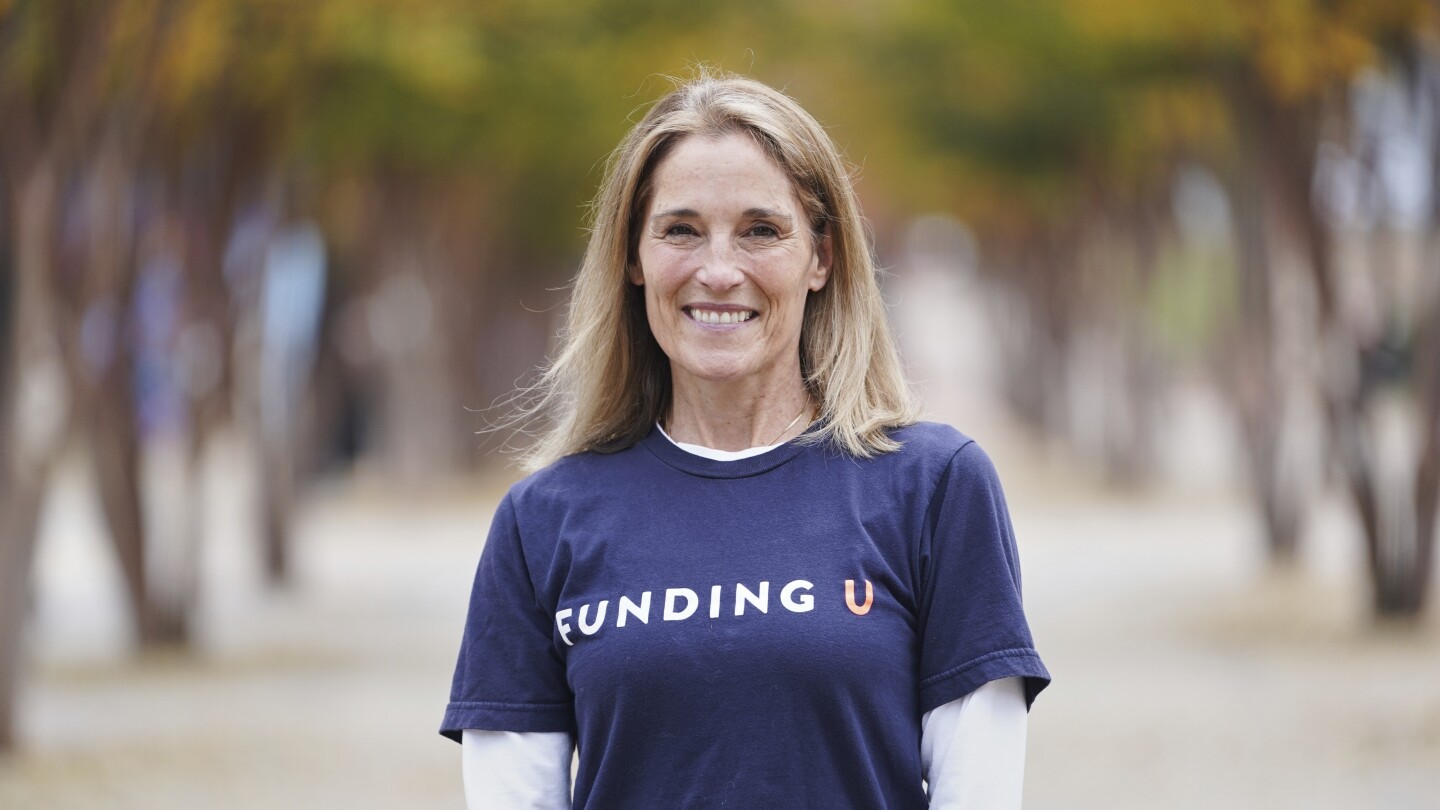
When Tarkenton later founded Funding U, a lending company providing merit-based loans to low-income students without co-signers, Scott eagerly supported the venture. The company represents a personal connection to Scott’s past and aligns with her mission to create opportunities for disadvantaged students.
“She’s looking for innovative ways to create opportunity for those that don’t have it,” said Marybeth Gasman, who runs Rutgers’ Center for Minority Serving Institutions and follows Scott’s donations. “I have to say, as somebody who went to school on a Pell Grant and who came from an extremely low-income family, that’s really meaningful.”
Funding U addresses a critical gap in higher education financing. Rather than relying on traditional credit history criteria that disadvantage low-income students, the company uses an algorithm that evaluates academic transcripts and internship experiences to determine loan eligibility. This approach predicts the likelihood that applicants will complete college, secure employment, and earn enough to repay their loans.
Scott provides much of the “junior debt” that Funding U uses to reduce risk for larger investors like Goldman Sachs. Along with a small group of philanthropists, she contributes 30 cents for every dollar Funding U loans, accepting concessionary rates that yield lower returns over longer periods. The remaining 70% comes from banks that participate partly to comply with federal anti-discrimination laws requiring community investment.
“I wanted to combine capital from people who were participating in this because they cared about the underlying person,” Tarkenton explained, “and also, knowing that scale of philanthropy wasn’t quite big enough, bring to the table some sort of market solution alongside that capital.”
This investment represents a glimpse into Scott’s broader strategy. In 2023, she wrote that she would invest in “mission-aligned ventures” led by “undercapitalized groups” focused on “for-profit solutions” to challenges her philanthropy addresses. Yet Funding U is among the few such investments confirmed publicly.
Tarkenton emphasizes that while the endeavor serves a social purpose, it isn’t strictly philanthropic. Scott will eventually recoup her investment—just as she repaid Tarkenton’s family’s loan years ago at Princeton. However, this approach represents a model that Tarkenton believes more philanthropists should embrace.
“I think philanthropists can get a little messier and do more with their money,” Tarkenton said. “I’m all about pushing philanthropists in a very aligned way.”
Tarkenton’s inspiration for Funding U came during her work at an Atlanta-based adult literacy nonprofit, where she observed persistent disparities in degree completion rates based on socioeconomic status. She concluded that the problem was too large for traditional philanthropy to solve but too small for most market players to address.
Scott described the Funding U loans as “generosity- and gratitude-powered” in an October essay about the ripple effects of kindness. Gabrielle Fitzgerald, founder of the social impact nonprofit Panorama which tracks Scott’s giving, notes that the investment aligns with Scott’s commitment to educational access.
“It shows that she’s using all the tools at her disposal to pursue her goals,” Fitzgerald said. “It’s a really lovely story in a time when we’re not seeing a lot of kindness and generosity. And just a reminder that helping your fellow humans is both a good thing to do at the time and something that could have a massive impact down the road.”
Fact Checker
Verify the accuracy of this article using The Disinformation Commission analysis and real-time sources.

10 Comments
It’s fascinating to see how MacKenzie Scott’s own struggles with affording college tuition have shaped her philanthropic strategy. Investing in organizations that provide access to higher education and economic security is a smart and meaningful way to pay it forward.
Absolutely, this kind of personal connection and lived experience can give donors a unique perspective on the challenges facing underserved communities. It’s great to see Scott leveraging her wealth to address these issues.
This story highlights the importance of community and how acts of kindness, even small ones, can have a profound impact. It’s inspiring to see how MacKenzie Scott’s personal experience has influenced her approach to philanthropy and investment.
Agreed, this is a great example of how personal connections and empathy can shape one’s approach to giving back. It’s wonderful to see wealth being used in such a thoughtful and impactful way.
This is a heartwarming story about the power of friendship and paying it forward. It’s inspiring to see how MacKenzie Scott’s personal experience has shaped her approach to philanthropy, focusing on equity and supporting those in need.
Absolutely, it’s wonderful to see someone in her position use their wealth to make a real difference, especially through unrestricted donations that empower organizations working on critical issues.
This story serves as a powerful reminder that even small acts of kindness can have a lasting impact. It’s heartening to see how MacKenzie Scott’s college experience has influenced her philanthropic approach, focusing on equity and supporting organizations that create opportunities for those in need.
You make a great point. This story shows how one person’s generosity can inspire another to pay it forward and create an uplifting cycle of support. It’s wonderful to see wealth being used in such a meaningful way.
MacKenzie Scott’s willingness to invest in her college roommate’s lending venture for low-income students is a thoughtful and impactful way to pay it forward. Providing access to higher education is crucial for economic mobility and opportunity.
You’re right, this type of strategic philanthropy can have far-reaching effects by supporting organizations that are addressing systemic barriers. It’s great to see billionaires use their wealth to drive positive social change.