


Listen to the article
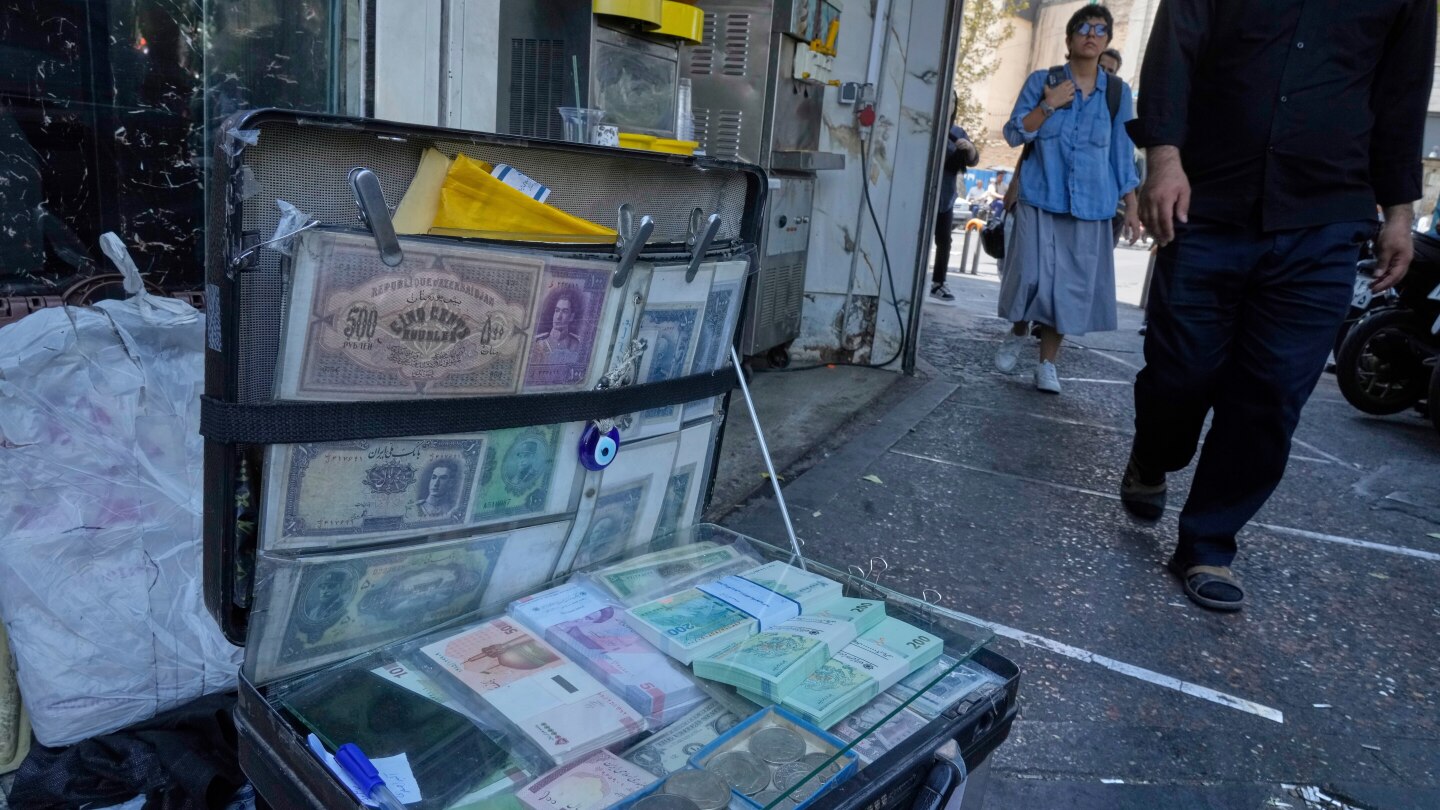
Iran’s currency plummeted to a historic low on Wednesday, reaching 1.2 million rials to the U.S. dollar as international nuclear sanctions continue to cripple the nation’s struggling economy.
The unprecedented exchange rate comes amid stalled efforts to revive negotiations between Washington and Tehran over Iran’s controversial nuclear program, further compounding economic hardship for ordinary Iranians who are facing rapidly increasing prices for essential goods.
The currency’s freefall has directly impacted food costs, with staples like meat and rice becoming increasingly unaffordable for many households. The economic strain has intensified public anxiety, which was already heightened by fears of potential military conflict following June’s 12-day war between Iran and Israel.
“Life will not only become more difficult for ordinary people, but it will also fuel public concern over whether the government — given the limited inflow of foreign currency caused by sanctions — has the resources to maintain and repair the country’s aging infrastructure,” said Ali Moshtagh, a 53-year-old electrical engineer.
The Iranian economy has been under mounting pressure since 2018, when then-President Donald Trump withdrew the United States from the 2015 nuclear deal and reimposed crippling sanctions. Prior to that withdrawal, Iran’s currency had been relatively stable at 32,000 rials to the dollar – nearly 38 times stronger than today’s value.
The 2015 agreement, formally known as the Joint Comprehensive Plan of Action (JCPOA), had offered Iran significant economic relief in exchange for substantial limitations on its uranium enrichment program and enhanced international monitoring. The deal represented a breakthrough in diplomatic efforts to contain Iran’s nuclear ambitions while integrating the country into the global economy.
However, with Trump’s return to the White House for a second term in January, his administration has reinstituted the “maximum pressure” campaign against Tehran. This policy specifically targets firms trading Iranian crude oil, including those purchasing discounted Iranian petroleum in China, one of Tehran’s few remaining major trading partners.
The economic isolation intensified in late September when the United Nations reimposed nuclear sanctions through what diplomats call the “snapback mechanism” – a controversial provision within the original nuclear deal that allows participants to unilaterally restore sanctions if they believe Iran is violating its commitments.
These reinstated sanctions have far-reaching consequences, freezing Iranian assets abroad, prohibiting arms deals with Tehran, and penalizing any development of Iran’s ballistic missile program, among other punitive measures.
Energy analysts note that Iran’s oil exports, traditionally the backbone of its economy, have been significantly curtailed by these sanctions. While Tehran has developed various methods to circumvent restrictions through shadow fleets and alternative payment systems, these workarounds provide only limited economic relief and often come at substantial discounts to market prices.
The currency crisis reflects deeper structural problems within Iran’s economy, including high inflation, limited foreign investment, and widespread corruption. The Central Bank of Iran has repeatedly attempted to stabilize the rial through various interventions, but these efforts have proved largely ineffective against the weight of international sanctions.
For everyday Iranians, the collapsing currency represents yet another hardship in a series of economic challenges that have eroded purchasing power and diminished quality of life over recent years. The situation has sparked sporadic protests across the country, though authorities have typically responded with swift crackdowns on public displays of dissent.
As diplomatic channels remain constricted and geopolitical tensions persist, economic forecasts for Iran remain bleak, with little prospect for meaningful currency stabilization without a significant shift in either domestic policy or international relations.
Fact Checker
Verify the accuracy of this article using The Disinformation Commission analysis and real-time sources.

8 Comments
Wow, the rial hitting a new low of 1.2 million to the dollar is staggering. Sanctions have clearly crippled Iran’s economy, with ordinary citizens bearing the brunt. This level of currency devaluation must be enormously disruptive for businesses and households.
This is a worrying development for Iran’s economy. The plummeting rial will have serious consequences for businesses, households, and the government’s ability to maintain critical infrastructure. Sanctions are clearly taking a heavy toll.
This is a dire situation for Iran’s economy. The sanctions have taken a heavy toll, and the plunge in the rial will only worsen the suffering of ordinary Iranians. I wonder what the long-term implications might be for Iran’s political and social stability.
The freefall of Iran’s currency is a clear sign of the damage done by sanctions. This will undoubtedly exacerbate the economic challenges facing ordinary Iranians. I’m curious to see if the government can find ways to mitigate the impact on the population.
Sanctions have certainly taken a toll on Iran’s economy. The rial’s plunge will only further strain ordinary Iranians who are already struggling with rising costs for essentials. Curious to see how the government responds to this growing economic crisis.
The collapse of Iran’s currency is a sobering reminder of the real-world impact of geopolitical tensions and sanctions. This will likely exacerbate the economic hardship faced by the Iranian people. I wonder if renewed nuclear negotiations could provide any relief.
The freefall of Iran’s currency is deeply concerning, especially the effect on food prices and infrastructure. I hope diplomacy can find a way to ease the sanctions and provide some economic relief for the Iranian people.
The economic hardship caused by the sanctions and currency collapse is deeply troubling. I hope a diplomatic solution can be found to provide some relief, as the Iranian people are bearing the brunt of these geopolitical tensions.