


Listen to the article
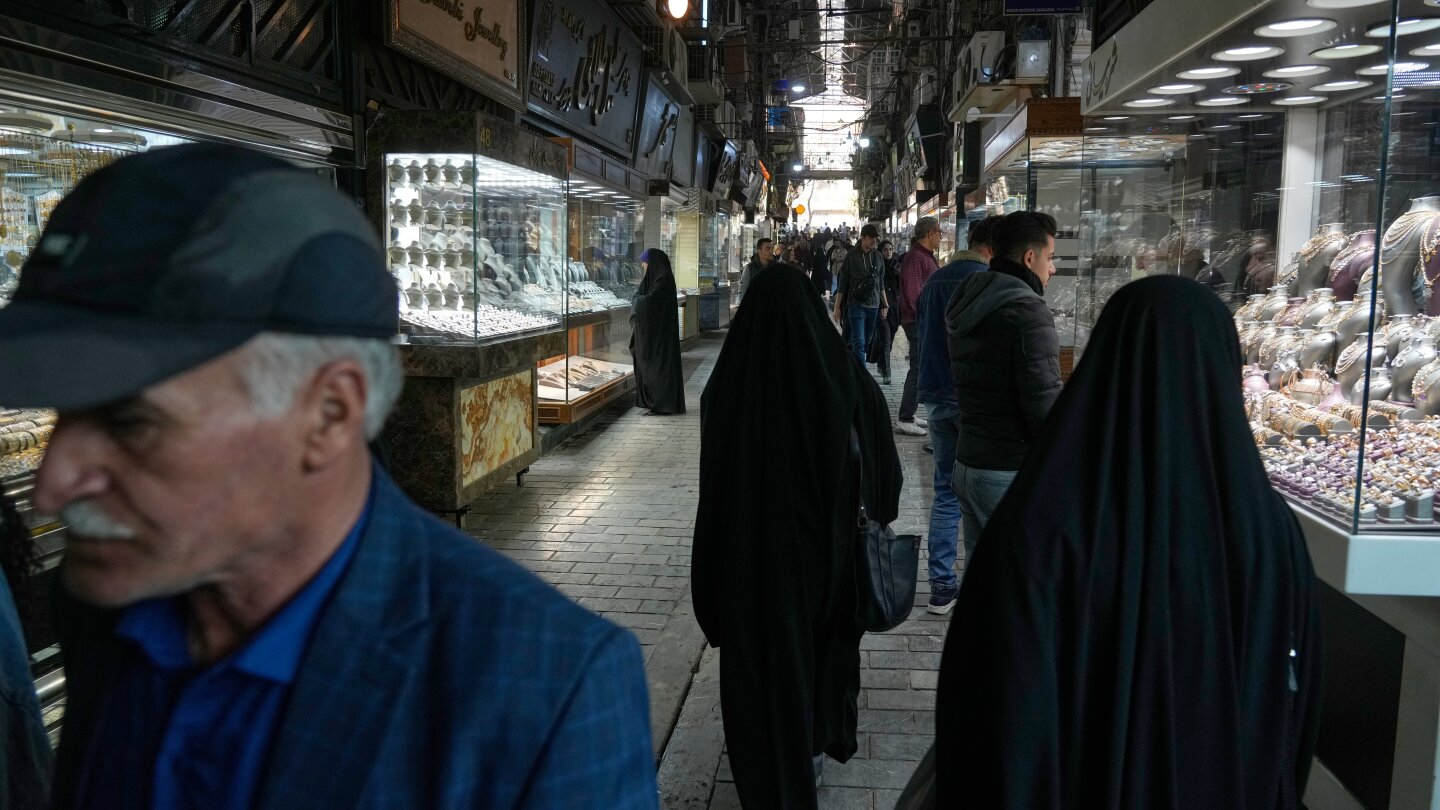
In a nation gripped by economic uncertainty, Iranians are increasingly turning to gold as their financial refuge amid rising inflation, international sanctions, and regional tensions. Following the 12-day conflict with Israel, Tehran’s gold merchants report unprecedented demand from citizens desperate to protect their savings.
“In the past two weeks I’ve sold 6 kilos of gold to ordinary people — a new experience for me,” said Mansour, a 28-year-old jewelry merchant in Tehran’s Grand Bazaar who requested his surname be withheld for safety concerns. “People are rushing to buy because they fear their savings will lose value.”
This gold rush represents a traditional Iranian response to financial insecurity, with citizens seeking portable assets that maintain value despite the country’s weakening currency. The Iranian rial has plummeted to historic lows, now trading at over 1 million to the U.S. dollar, making conventional savings increasingly worthless.
Behzad Rashvand, a 57-year-old grandfather, expressed a sentiment shared by many: “Right now, I see gold as the best way to preserve value. Whenever I make money, I turn it into gold.”
Price records are being shattered across precious metals markets in Iran. One-gram, 18-karat gold bars now trade at approximately 115 million rials (about $100). Last Saturday, gold coins exceeded 1.2 billion rials each for the first time in the country’s history, pushing their value over $1,000. Silver has emerged as an entry point for middle-class investors, with 1-kilogram ingots approaching $2,000.
This investment strategy extends beyond pure financial calculation. As regional tensions escalate, many Iranians prioritize asset portability. Tens of thousands fled Tehran during the recent conflict with Israel, retreating to rural areas or the Caspian coast, where they encountered cash shortages and non-functional ATMs. Having physical gold or silver provided immediate liquidity in crisis.
“I can’t convert my home or my car, but for the past two months I’ve been turning all my liquid assets into foreign currency and gold,” explained Ahmad, a 49-year-old fabric importer. “In an emergency, I need to be able to carry my assets with me if I have to leave.”
The phenomenon reflects deeper economic troubles plaguing Iran. Mass layoffs have been reported across sectors due to electricity shortages, diminished consumer demand, and the crushing weight of international sanctions. Amir Ramezani, a prominent Tehran gold trader, notes that even affluent families are liquidating assets to maintain their standard of living.
“Their incomes today don’t match the lives they built,” Ramezani said. “To sustain the same lifestyle, many are selling valuables — gold, jewelry — just to keep up.”
For some Iranians, this rush to tangible assets represents a missed opportunity elsewhere. Fatemeh Parsa, a 47-year-old mother of two, now regrets using an inheritance to purchase Tehran real estate rather than investing in precious metals.
“With global gold prices rising, I sometimes wish I had bought gold instead — my assets would have grown much more than real estate,” she lamented. “Now, it seems that investing in silver could be valuable, especially for my children’s future.”
The wealthy are diversifying beyond gold and silver. Jewelers in Tehran and Mashhad report increased interest in investment-grade diamonds and gemstones, traditionally favored by traders but now attracting upper-middle-class buyers seeking compact, high-value assets.
This flight to portable wealth occurs as U.S. authorities crack down on Iranian cryptocurrency operations, which had provided another avenue for financial security. With digital options constrained, physical assets have gained even greater prominence.
For many Iranians, these investment choices reflect historical lessons. “Throughout history, gold has not only held its value but also increased in worth. We should learn from history if we want to build a better life,” said Hamid Safari, an audio equipment merchant.
The current situation echoes previous crises in Iranian history. During the Iran-Iraq war of the 1980s, citizens fled urban centers with whatever portable wealth they possessed. Similarly, during the 1979 Islamic Revolution, those connected to the shah’s government escaped with valuables, creating a run on gold and foreign currency that drove the rial to what was then a record low of 120 to the dollar.
As United Nations “snapback” sanctions loom and regional conflicts simmer, Iran’s economic outlook remains bleak. For ordinary citizens caught in this uncertainty, a small gold bar or silver coin provides not just financial security, but peace of mind in turbulent times.
Fact Checker
Verify the accuracy of this article using The Disinformation Commission analysis and real-time sources.

12 Comments
The surge in gold demand from ordinary Iranians reflects the desperation to protect their savings. With the rial trading at over 1 million to the dollar, traditional savings are becoming increasingly worthless.
It’s a troubling situation, and I hope the Iranian authorities can find ways to restore confidence and economic stability for their people.
This gold rush highlights the enduring appeal of precious metals as a store of value, especially in times of economic and political upheaval. Iranians are seeking portable assets that can withstand currency devaluation.
It will be interesting to see how this increased demand for gold affects the global precious metals market in the coming months.
The article provides a sobering look at the financial challenges facing Iranians. With inflation and sanctions eroding the value of the rial, citizens are turning to gold as a safe haven for their savings.
This trend could have broader implications for the global gold market, as well as Iran’s overall economic recovery efforts.
Fascinating insights into the economic crisis in Iran and how citizens are turning to gold as a hedge against a plunging currency. This seems like a prudent strategy given the instability and sanctions impacting the country.
I wonder what other steps the Iranian government could take to stabilize the economy and provide more financial security for its citizens.
It’s understandable that Iranians are seeking to protect their wealth by investing in gold. The plummeting value of the rial must be causing significant hardship for ordinary citizens.
I hope the Iranian government can find ways to stabilize the currency and provide more economic security for its people.
This article highlights the importance of precious metals as a hedge against currency devaluation, particularly in times of economic and political instability. The Iranian gold rush is a fascinating case study.
It will be interesting to see if this trend spreads to other countries facing similar economic challenges.