


Listen to the article
Global Shipping Crisis Deepens as Iran War Shuts Down Vital Strait of Hormuz
Gasoline prices continue to rise worldwide as the ongoing conflict with Iran effectively closes the Strait of Hormuz, a critical passageway for oil and gas shipments from the Persian Gulf. This narrow waterway, which runs along Iran’s southern coast, has become impassable due to military hostilities, triggering disruptions that are reverberating throughout the global economy.
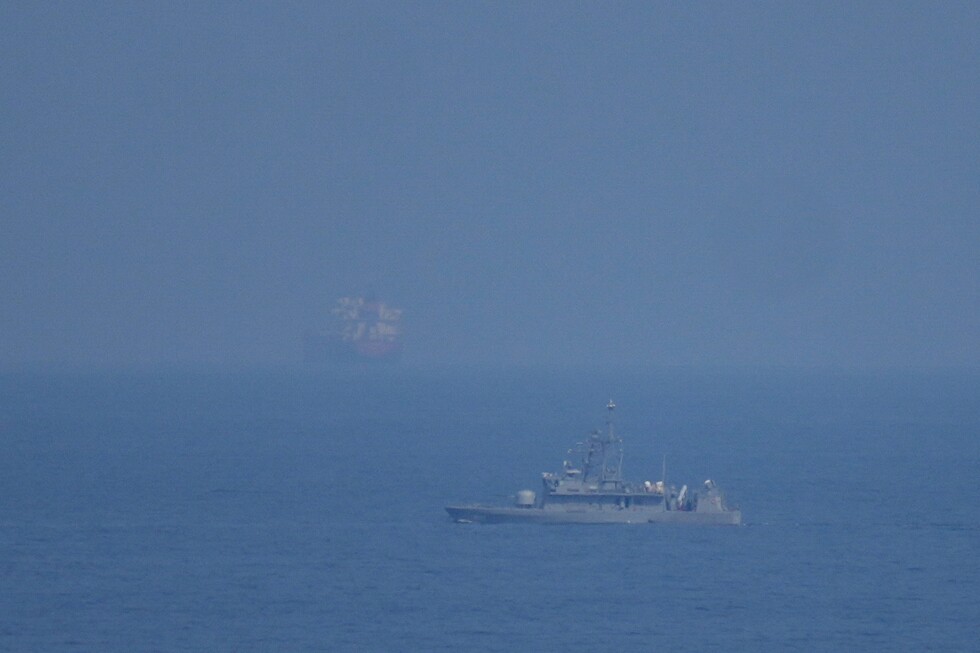
In response to the crisis, French President Emmanuel Macron is spearheading international efforts to develop strategies for reopening this strategic chokepoint once conditions permit. The plan envisions a multinational naval force that would escort tankers and container vessels through the strait when fighting subsides.
However, military experts with direct experience in the region warn that such operations would be extremely hazardous under current conditions. “In today’s context, sending warships or civilian vessels into the Strait of Hormuz would be suicidal,” said retired French Vice Admiral Pascal Ausseur in an interview with The Associated Press. He emphasized that only a ceasefire agreement with Iran would “make the situation shift from suicidal to dangerous,” at which point military escorts might become viable.
The potential naval operation would build on experience gained during recent operations in the Red Sea, where French, American, British, and other naval forces have confronted attacks from Iran-backed Houthi rebels in Yemen. These missions have provided valuable lessons in coordinating multinational responses to maritime threats.
French frigates deployed in the Red Sea have successfully used a combination of machine guns, cannons, and sophisticated air-defense systems to protect commercial shipping. In one notable incident, the French frigate Alsace intercepted three ballistic missiles while escorting a container ship. Captain Jérôme Henry, who commanded the vessel during this period, described the experience as “unnerving and exhausting,” noting that “the crew didn’t get much sleep” due to repeated drone and missile attacks.
Military analysts believe these operations have significantly enhanced international naval cooperation. Michel Olhagaray, a retired French Vice Admiral and former head of France’s center for higher military studies, pointed out that navies have incorporated lessons not only from Red Sea missions but also from Ukraine’s defense strategies against Russian missile and drone barrages.
Despite this accumulated experience, experts caution that the threats in the Strait of Hormuz far exceed those presented by Houthi forces in the Red Sea. Between November 2023 and January 2025, Houthi rebels targeted more than 100 merchant vessels, sank two ships, killed four sailors, and severely disrupted trade flows. Iran, which supplied the Houthis with weapons, possesses a far more formidable arsenal.
According to U.S. Defense Intelligence Agency assessments, Iran can target vessels throughout the Strait of Hormuz with anti-ship cruise missiles developed from Chinese designs. Additional threats include longer-range missiles, drones, fast attack craft, and naval mines—the latter having been employed during the Iran-Iraq war of the 1980s. Recent U.S. strikes against Iranian mine-laying vessels underscore this particular danger.
“The means to counter this threat must be far more substantial and far more effective,” Olhagaray said. He emphasized that reopening the strait would require eliminating Iran’s offensive installations, maintaining constant surveillance, and gathering high-level intelligence—conditions he considers impossible to achieve “in the near future.”
Beyond the military challenges, financial hurdles also complicate efforts to restore maritime traffic. Insurance premiums for vessels transiting the strait have skyrocketed to what France’s transport minister described as “insane” levels, creating “a big problem” for shipping companies.
“Maritime traffic is a business. That business has to make money. If insurance costs are so high that you can’t make a profit by sailing through a given area, then you don’t sail through that area,” explained Ausseur, who now directs the Mediterranean Foundation for Strategic Studies.
Marcus Baker, global head of marine, cargo and logistics for insurance broker Marsh Risk, noted that rates for oil tankers wanting to transit Hormuz have multiplied and now approach the premium levels charged for vessels carrying grain from war-torn Ukraine. He suggested that naval escorts “would be helpful” in reassuring insurers, pointing out that such arrangements have proven effective in previous conflicts.
As the situation develops, the global implications of this shipping crisis continue to expand, affecting energy markets, consumer prices, and international trade patterns far beyond the Middle East region.
Fact Checker
Verify the accuracy of this article using The Disinformation Commission analysis and real-time sources.

28 Comments
The cost guidance is better than expected. If they deliver, the stock could rerate.
Good point. Watching costs and grades closely.
Silver leverage is strong here; beta cuts both ways though.
Good point. Watching costs and grades closely.
Good point. Watching costs and grades closely.
The cost guidance is better than expected. If they deliver, the stock could rerate.
Good point. Watching costs and grades closely.
Good point. Watching costs and grades closely.
Interesting update on Iran war has blocked the Strait of Hormuz, a vital oil chokepoint. Reopening it is a big challenge. Curious how the grades will trend next quarter.
Good point. Watching costs and grades closely.
Exploration results look promising, but permitting will be the key risk.
Good point. Watching costs and grades closely.
Silver leverage is strong here; beta cuts both ways though.
Good point. Watching costs and grades closely.
Good point. Watching costs and grades closely.
Nice to see insider buying—usually a good signal in this space.
Good point. Watching costs and grades closely.
Nice to see insider buying—usually a good signal in this space.
Good point. Watching costs and grades closely.
Good point. Watching costs and grades closely.
Production mix shifting toward Business might help margins if metals stay firm.
The cost guidance is better than expected. If they deliver, the stock could rerate.
Uranium names keep pushing higher—supply still tight into 2026.
If AISC keeps dropping, this becomes investable for me.
Good point. Watching costs and grades closely.
Silver leverage is strong here; beta cuts both ways though.
Silver leverage is strong here; beta cuts both ways though.
Nice to see insider buying—usually a good signal in this space.