


Listen to the article
Indian Trade Unions and Farmers Launch Nationwide Strike Against US Trade Deal
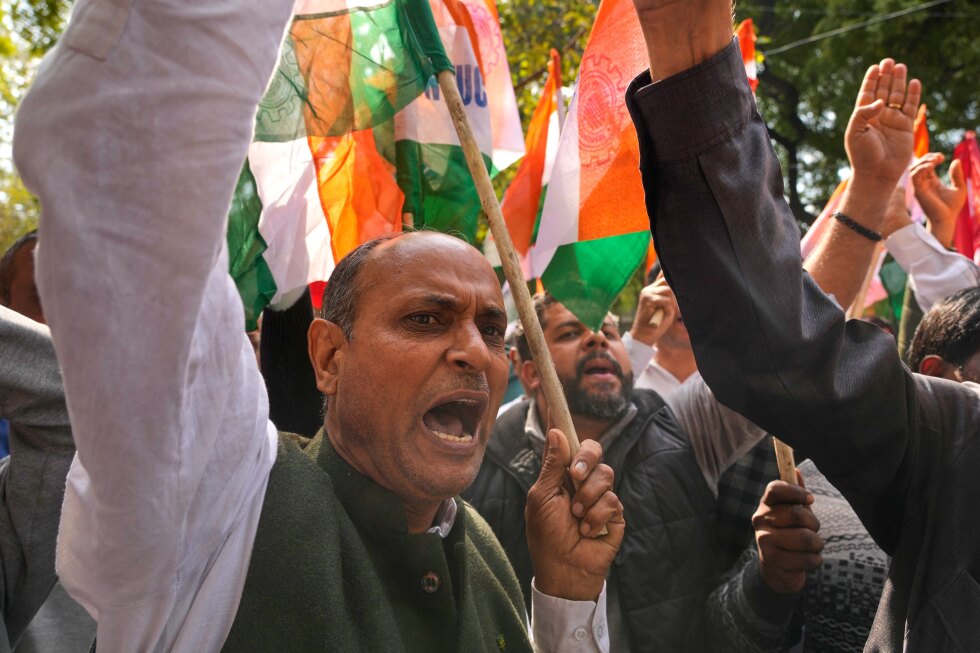
A coalition of major trade unions and farmers’ organizations across India staged a nationwide strike Thursday, protesting an interim trade agreement with the United States that they claim undermines the interests of farmers, small businesses, and workers throughout the country.
The one-day strike partially disrupted public services and manufacturing activities as protesters took to the streets in several cities. Inside parliament, opposition lawmakers voiced their disapproval by demanding the government cancel the trade deal, criticizing Prime Minister Narendra Modi with chants of “Narendra Modi, surrender Modi.”
The protest highlights growing resistance to Modi’s reform agenda and underscores the political risks his Bharatiya Janata Party (BJP) faces in pushing market-oriented policies ahead of crucial state elections later this year.
Hannan Mollah, a prominent farmer activist participating in the New Delhi demonstrations, expressed concerns that India’s recent free trade agreements with New Zealand, European nations, and now the United States would devastate India’s agricultural sector.
“The local markets would be inundated by cheaper products,” Mollah warned. “The fight will go on till our demands are met. If not, the public will gather in large numbers and uproot the Modi government.”
Labor leaders share similar concerns about the impact of the trade agreement on domestic producers. Amarjeet Kaur, general-secretary of the All India Trade Union Congress, one of the primary unions organizing the strike, stated that the deal would open Indian markets to subsidized agricultural products from the United States.
“Cheap American farm produce will be dumped in India, making it difficult for our farmers and small businesses to compete,” Kaur said, highlighting fears that millions of small farmers could see their livelihoods threatened.
The Modi government has defended the interim trade pact as beneficial for India’s economy. Trade Minister Piyush Goyal recently insisted that the agreement would expand exports, attract investments, and strengthen strategic ties with the United States while protecting the interests of farmers in the agriculture and dairy sectors.
Earlier this month, India and the United States announced progress toward a formal trade agreement by releasing an interim framework designed to lower tariffs and deepen economic relations between the world’s two largest democracies. According to a fact sheet released by the White House, the agreement would reduce reciprocal tariffs on Indian goods from 25% to 18% and eliminate a 25% penalty tariff imposed on India for purchasing Russian oil.
In exchange, India would reportedly commit to stopping Russian oil purchases and buying $500 billion worth of American goods, including energy products. The agreement also includes provisions for India to reduce taxes and non-tariff barriers to trade.
The ongoing protests extend beyond the trade agreement to encompass broader economic policies of the Modi government. Demonstrators also voiced opposition to efforts to privatize state-run companies and implement new labor codes, which they characterized as “deceptive fraud” against workers.
Indian government officials have consistently maintained that labor reforms are necessary to enhance economic efficiency and generate employment opportunities in the long term. These reforms represent part of Modi’s broader economic agenda aimed at modernizing India’s economy and boosting growth.
The nationwide strike comes at a politically sensitive time for Modi’s government, as several states prepare for elections in the coming months. The extent of the protest’s impact on public opinion and voter sentiment remains to be seen, but it clearly demonstrates the challenges facing the government as it attempts to implement market-oriented economic reforms while maintaining political support among farmers and workers.
Fact Checker
Verify the accuracy of this article using The Disinformation Commission analysis and real-time sources.

11 Comments
The political risks highlighted by the protests underscore the challenges the Modi government faces in pushing market-oriented reforms. Balancing the interests of workers, farmers, and businesses will require nuanced policymaking.
It will be interesting to see how the government responds to the widespread opposition to the US trade deal. Effective stakeholder engagement and policy adjustments may be needed to defuse the situation.
The impact of free trade agreements on India’s agricultural sector is a valid concern raised by the protesting farmers. The government should carefully assess the potential effects and work to protect the interests of small-scale producers.
This nationwide strike is a strong signal that the government’s reform agenda is facing significant opposition from unions and farmers. The government will need to engage in constructive dialogue and find compromises to address the concerns of these groups.
The political risks highlighted by these protests could have implications for the ruling party’s performance in upcoming state elections. The government will need to carefully manage this situation to maintain its political support.
This nationwide strike is a significant show of resistance against the government’s reform agenda. The Modi administration will need to find ways to address the concerns of unions and farmers while advancing its economic objectives.
The chants of “Narendra Modi, surrender Modi” from opposition lawmakers highlight the political tensions surrounding this issue. The government will have to navigate these complex dynamics carefully.
The concerns raised by the protesters about the potential negative impacts of the US trade deal on India’s agricultural sector and small businesses are valid. The government should closely examine these issues and explore ways to mitigate any adverse effects.
This nationwide strike by Indian unions and farmers against the US trade deal is a strong pushback against policies that could negatively impact local industries and farmers. The government will need to carefully navigate these concerns to find a balanced approach.
Unions and farmers raising their voices against perceived threats to their livelihoods is understandable. The government will have to work closely with stakeholders to address their legitimate concerns.
The disruption to public services and manufacturing activities caused by the strike underscores the widespread impact of these protests. The government will need to find a delicate balance between pursuing economic reforms and addressing the concerns of key stakeholders.