


Listen to the article
In the midst of nationwide attention on Minneapolis unrest, local journalists have demonstrated exceptional coverage capabilities, providing comprehensive reporting on recent immigration enforcement operations and public protests.
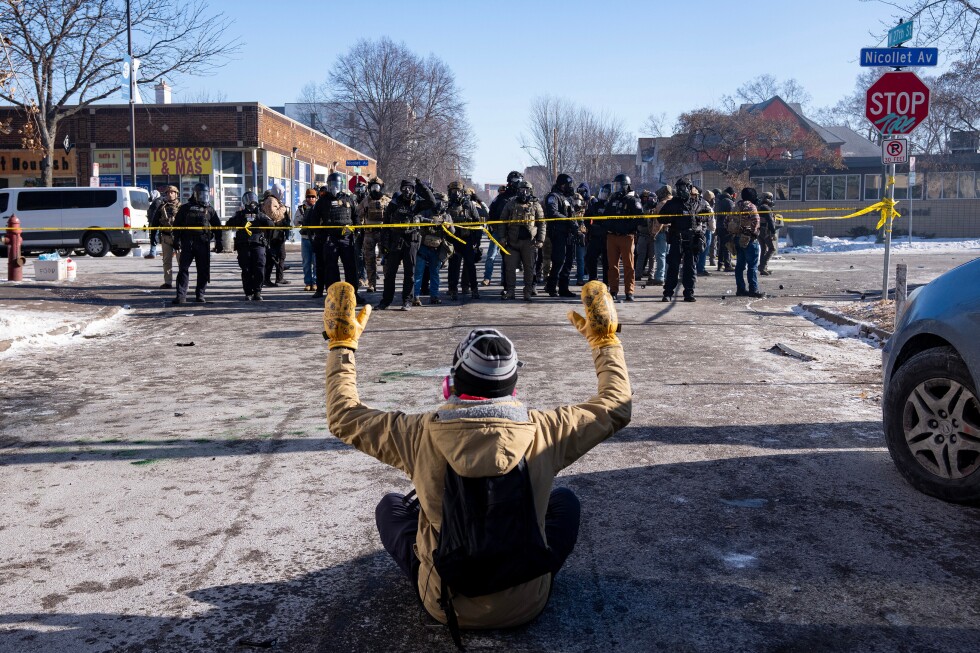
The Minnesota Star Tribune has emerged as a standout news source, breaking significant stories including the identity of the immigration officer who shot Renee Good. Photojournalist Richard Tsong-Taatarii captured what became an iconic image of the crisis: a demonstrator pinned to the ground while being sprayed point-blank with a chemical irritant, a photo that quickly crystallized public sentiment about the confrontations.
“If you hadn’t invested in the newsroom, you wouldn’t be able to react in that way,” said Steve Grove, publisher and chief executive of the Star Tribune.
Unlike many regional newspapers that have suffered from industry-wide decline, the Star Tribune has maintained relatively stable staffing levels under billionaire owner Glen Taylor, who acquired the publication in 2014. The organization rebranded from the Minneapolis Star Tribune and committed to digital transformation, positioning it well for intensive coverage of complex, fast-moving events.
Minneapolis boasts a robust journalism ecosystem beyond the Star Tribune. Public radio and television maintain strong presences, while digital outlets like Sahan Journal, which focuses on immigrant and diverse communities, have distinguished themselves covering President Trump’s immigration policies and the public response.
“The whole ecosystem is pretty darn good,” noted Kathleen Hennessey, senior vice president and editor of the Star Tribune, “and I think people are seeing that now.”
Local journalists hold distinct advantages when covering community crises. Star Tribune reporter Josie Albertson-Grove was among the first journalists at the scene after ICU nurse Alex Pretti was shot dead on January 24, leveraging her residence just a block away and familiarity with the neighborhood to reconstruct events accurately.
The publication’s deep community connections proved invaluable. Reporters with children in school learned about ICE operations targeting areas where children gather through community networks. Years of relationship building by crime reporter Liz Sawyer provided crucial sources that helped her team identify who shot Good.
“This is a place with a really, really long and entrenched tradition of activism, and a place with really deep social networks and neighborhood networks,” Hennessey explained. “People mobilize quickly and passionately, and they’re noisy about it. That’s definitely been part of the story.”
In one notable investigative piece, reporters Christopher Magan and Jeff Hargarten identified 240 of an estimated 3,000 immigrants detained in Minnesota, determining that while 80% had felony convictions, nearly all had already been through the judicial system, served their sentences, and were no longer sought by police. Another analysis compared federal immigration force size with local police departments.
Columnist Laura Yuen captured the human impact, writing that her 80-year-old parents now carry passports when leaving their suburban home due to the “quiet, pervasive fear” spreading through Twin Cities communities. “A document that once made me proud of all the places I’ve traveled is now a badge to prove I belong,” she wrote.
The Star Tribune has also investigated health consequences of chemical irritants used by law enforcement, though questions about specific agents deployed often went unanswered by authorities.
Scott Libin, a veteran television journalist and University of Minnesota professor, praised the outlet’s approach. “I really think they’ve done a commendable job,” he said, highlighting their thorough and dispassionate reporting on immigrants’ backgrounds.
Under Hennessey’s leadership since May, the newsroom has covered multiple major stories, including shootings of state lawmakers and a school shooting. The newsroom also benefits from “muscle memory” from covering the George Floyd protests in 2020, according to Grove.
Breaking news has driven fundamental operational changes at the Star Tribune. The publication now features continuously updated live blogs on its website, offered free to readers. There’s increased emphasis on video content, including forensic analysis of footage from recent shootings—capabilities few local newsrooms possess. Website traffic has increased 50 percent, paid subscriptions have grown, and the organization has received thousands of dollars in nationwide donations.
“People have changed the way that they consume news,” Hennessey observed. “We see that readers are coming back…They’re not just waking up in the morning, reading the site and then forgetting about us all day long. They’re coming back a couple of times a day to check in on what’s new.”
The crisis has mobilized virtually every department, from food writers to outdoor reporters. “There are no normal beats anymore,” Albertson-Grove said.
Under Grove, a former Google executive, the Star Tribune has accelerated its digital-first transition, turning over approximately 20% of staff in two years. In December, the paper closed its Minneapolis printing plant and moved print operations to Iowa, resulting in 125 layoffs.
“We face every single headwind that every local news organization in the country does,” Grove acknowledged. “But we do feel fortunate that we’re the largest newsroom in the Midwest and it’s part of the reason we’re able to do this now.”
For journalists like Sawyer, public response to their work has been encouraging, with readers viewing it as essential public service. However, the intensity takes a personal toll. She and her husband, Star Tribune photographer Aaron Lavinsky, must carefully coordinate coverage schedules to ensure childcare for their baby daughter.
“I think both residents and journalists in this town are running on fumes,” Sawyer admitted. “We’re tired of being in the international spotlight and it’s never for something positive. People are trying their best to get through this moment with grace.”
Fact Checker
Verify the accuracy of this article using The Disinformation Commission analysis and real-time sources.

12 Comments
Fascinating to see how the Star Tribune has navigated the digital transition and maintained robust coverage capabilities. Investing in a strong newsroom seems crucial for tackling complex, evolving stories like this immigration enforcement saga.
Agreed. Local journalism plays a vital role in providing comprehensive, on-the-ground reporting during challenging times. The iconic photo captured by the Tribune’s photojournalist underscores the importance of this work.
The Star Tribune’s ability to maintain stable staffing levels and commit to digital transformation is commendable, especially given the industry-wide challenges facing regional newspapers. Their coverage of the Minneapolis immigration story demonstrates the value of a well-resourced, nimble local newsroom.
Agreed. Local journalism plays a crucial role in providing comprehensive, on-the-ground reporting on issues that directly impact communities. The Star Tribune’s work, including the iconic photo captured by their photojournalist, underscores the importance of this kind of reporting.
The Star Tribune’s coverage of the immigration enforcement operations and public protests in Minneapolis sounds like an impressive display of local journalism in action. Capturing an iconic image and breaking significant stories are clear indicators of their reporting capabilities.
Absolutely. Local news outlets are often the first responders when it comes to covering complex, evolving events in their communities. The Star Tribune’s digital transformation efforts seem to have paid off, allowing them to react quickly and provide comprehensive reporting.
The immigration enforcement operations and public protests in Minneapolis sound like an incredibly complex, fast-moving story. Kudos to the Star Tribune for their diligent reporting and ability to react quickly to this evolving situation.
Absolutely. Local news outlets are often the first to break major stories and provide crucial context. It’s encouraging to see the Star Tribune maintaining stable staffing and investing in digital transformation to serve their community effectively.
The Star Tribune’s coverage of the immigration enforcement and protest events in Minneapolis highlights the value of a well-resourced, nimble local newsroom. Capturing an iconic image like that photojournalist did can be a powerful way to crystallize public sentiment.
Definitely. Visuals can be so impactful in shaping the narrative around complex, fast-moving stories. The Star Tribune’s commitment to digital transformation also seems to have positioned them well to cover this evolving situation.
It’s impressive that the Star Tribune has been able to maintain relatively stable staffing levels and invest in digital transformation, unlike many regional newspapers. Their coverage of the Minneapolis immigration story demonstrates the importance of a strong local news presence.
You’re right. Local journalism is crucial for providing comprehensive, on-the-ground reporting on issues that impact communities directly. The Star Tribune’s work highlights the value of having a well-resourced, nimble newsroom to cover fast-moving events.