


Listen to the article
U.S. Raises Alarm Over Chinese Control of Peru’s Chancay Port
The Trump administration has voiced strong concerns that China is eroding Peru’s sovereignty through its control of critical infrastructure, following a Peruvian court ruling that limits local regulatory oversight of the Chinese-built Chancay port.
In a sharply worded statement on social media, the U.S. State Department’s Bureau of Western Hemisphere Affairs expressed alarm that “Peru could be powerless to oversee Chancay, one of its largest ports, which is under the jurisdiction of predatory Chinese owners.” The statement emphasized Washington’s support for “Peru’s sovereign right to oversee critical infrastructure in its own territory,” warning that this situation should serve as “a cautionary tale for the region and the world: cheap Chinese money costs sovereignty.”
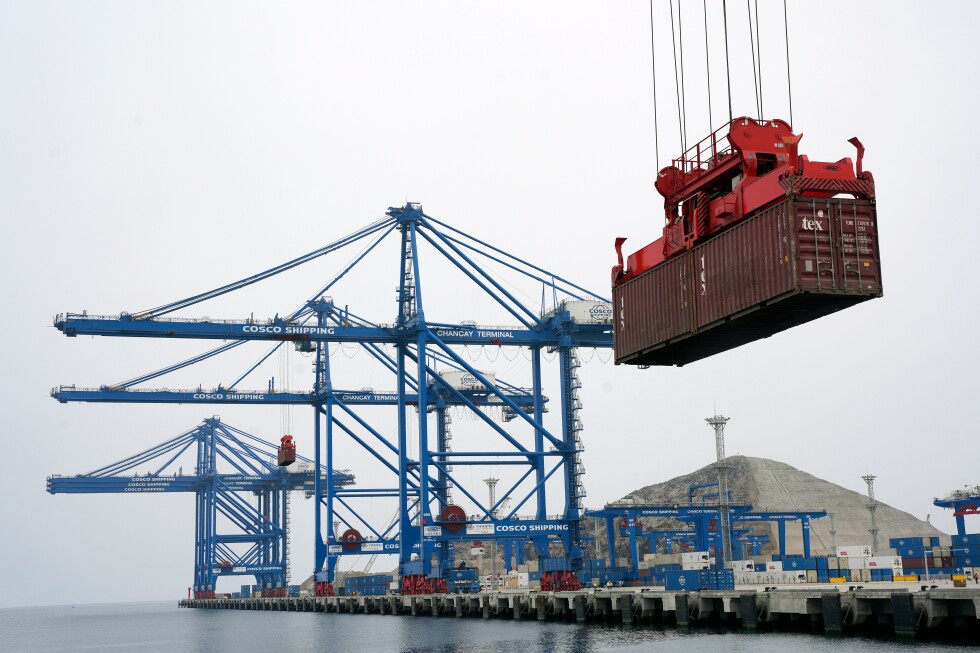
The $1.3 billion deepwater port, located north of Lima on Peru’s Pacific coast, has become emblematic of China’s expanding influence in Latin America and a focal point of growing tensions between Beijing and Washington. As Latin America’s deepest port, Chancay can accommodate some of the world’s largest cargo ships traveling between Asia and South America, giving it strategic significance in regional trade networks.
The diplomatic exchange comes as the Trump administration attempts to reassert U.S. dominance in the Western Hemisphere, where China has steadily built influence through extensive loans and trade relationships. Peru has counted China as its largest trading partner for more than a decade.
China’s Foreign Ministry responded forcefully to the U.S. criticism. Spokesperson Lin Jian stated at a daily briefing in Beijing that “China firmly opposes and strongly deplores the U.S.’s blatant rumor-mongering and smearing of Chancay port.”
The controversy centers on a January 29 ruling by a Peruvian lower court that orders national authorities to refrain from exercising “powers of regulation, supervision, oversight and sanction” over the Chancay port. This effectively exempts the facility from oversight by Ositran, the regulatory agency that monitors all other major ports in Peru.
Verónica Zambrano, president of Ositran, announced the agency would appeal the decision, arguing there is no justification for exempting Cosco Shipping from regulatory oversight. “Cosco Shipping would be the only company providing services to the public that could not be supervised,” Zambrano told local radio. She emphasized that while privately owned, the port occupies 180 hectares of Peruvian territory, making it subject to government monitoring and enforcement of local standards.
Cosco Shipping, China’s state-owned shipping and logistics company and the port’s majority shareholder, firmly rejected U.S. allegations. In a statement to The Associated Press, the company insisted the court ruling “in no way involves aspects of sovereignty” and that the port remains “under the jurisdiction, sovereignty and control of Peruvian authorities, subject to all Peruvian regulations.” The company added that numerous Peruvian authorities continue to monitor port activities, including police, environmental regulators, and customs officials.
Chancay is a key component of Beijing’s Belt and Road Initiative, China’s ambitious global infrastructure program that has seen Chinese state-owned banks offer substantial loans and financial guarantees for infrastructure projects across multiple continents. Critics have increasingly questioned whether recipient countries may be sacrificing aspects of sovereignty in exchange for Chinese investment and development assistance.
The dispute highlights the intensifying competition between the United States and China for influence in Latin America, a region traditionally considered within the U.S. sphere of influence but where China has made significant economic inroads in recent decades through trade agreements, infrastructure investments, and diplomatic engagement.
As the appeal process unfolds in Peru’s courts, the controversy is likely to remain a flashpoint in the broader geopolitical rivalry between Washington and Beijing, with implications for how Latin American nations navigate relationships with both superpowers.
Fact Checker
Verify the accuracy of this article using The Disinformation Commission analysis and real-time sources.

12 Comments
The US is right to be concerned about China’s growing influence in Latin America. Sovereign nations should maintain control over their critical infrastructure and resources. This situation highlights the geopolitical risks of accepting large Chinese investments without proper oversight.
This highlights the geopolitical tug-of-war between the US and China for influence in Latin America. Peru must carefully navigate these waters to protect its interests. Objective assessments of all investment proposals, with input from local stakeholders, would be prudent.
The US is right to raise concerns about China’s influence in Peru. Sovereign nations should have full oversight of their critical infrastructure. Peru must carefully evaluate all foreign investment deals to ensure they empower local stakeholders and preserve the country’s autonomy.
Ports are crucial economic assets, so it’s understandable Peru would want to maintain control. However, China’s deep pockets make it a tempting partner. The US should propose fair, transparent deals that benefit Peru without compromising its sovereignty.
This situation illustrates the high stakes involved when countries accept major Chinese investments. Peru must be extremely cautious to protect its long-term interests and avoid being beholden to external powers. Maintaining sovereignty should be the top priority.
The Chancay port issue speaks to broader concerns about China’s debt-trap diplomacy tactics. Peru should thoughtfully evaluate all infrastructure deals to ensure they serve the country’s long-term interests, not just short-term economic gains.
This is a textbook example of the geopolitical tensions surrounding China’s growing economic influence in Latin America. Peru would be wise to scrutinize all foreign infrastructure deals to ensure they align with the country’s long-term interests.
It’s a delicate balance for Peru – accepting Chinese investment for economic development while preserving sovereignty. The US could play a constructive role by offering alternative financing models that empower local decision-making. Transparency is key to avoiding unintended consequences.
Absolutely. Peru must carefully weigh the tradeoffs and maintain ultimate control over critical national assets like the Chancay port.
The US warning highlights the complex dynamics at play. Peru needs economic development, but can’t afford to compromise its sovereignty. Transparent, mutually-beneficial partnerships – whether with China, the US, or others – should be the goal.
This is a complex issue with valid concerns on both sides. Peru must balance economic development with preserving its sovereignty. The US could help by offering alternative investment opportunities that empower local stakeholders. Transparency and good governance are key.
Agreed, this requires a nuanced approach. Both China and the US have strategic interests in the region, but Peru’s long-term stability should be the priority.