


Listen to the article
International Monetary Fund Chief Urges China to Reduce Export Reliance
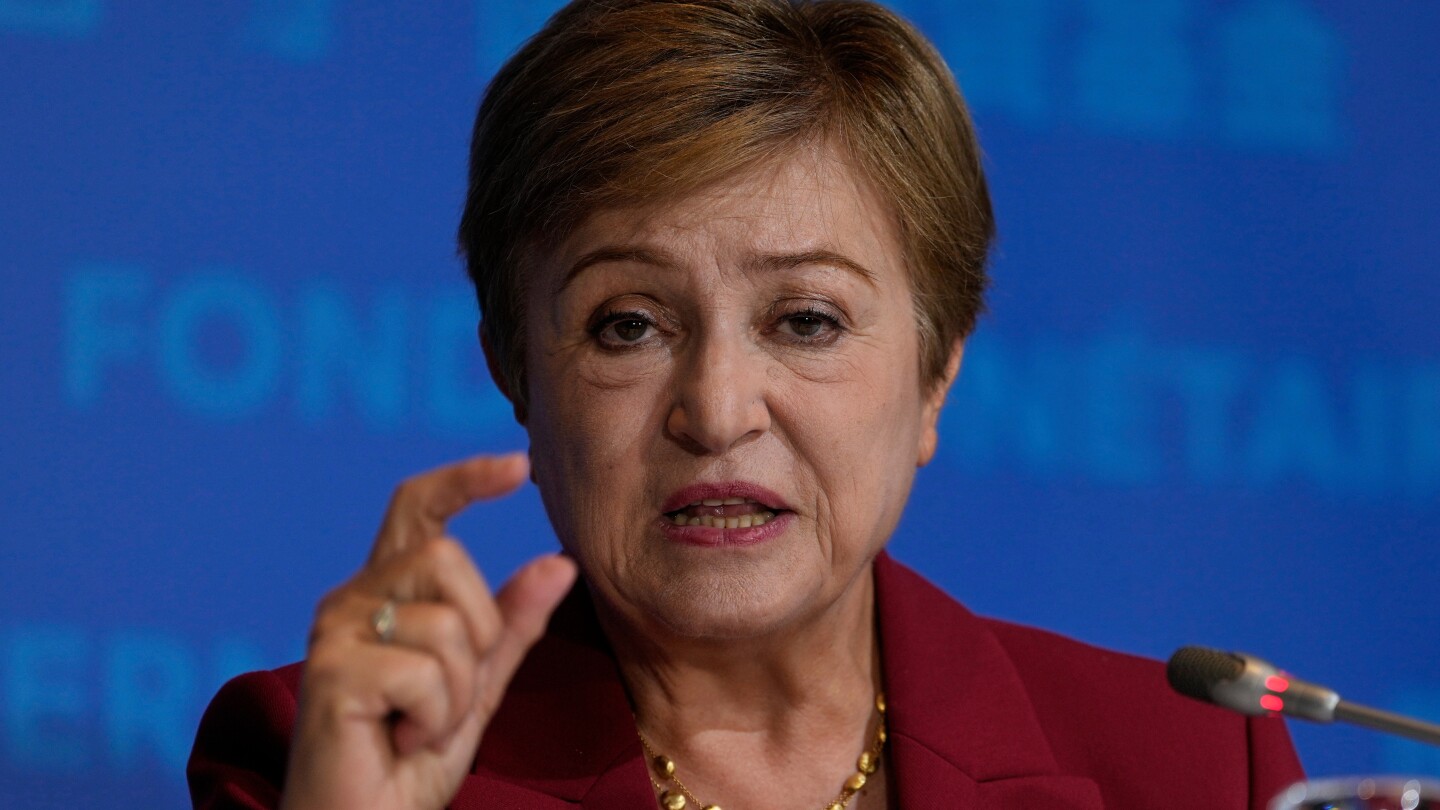
The International Monetary Fund’s Managing Director Kristalina Georgieva has called on China to address its economic imbalances, warning that the world’s second-largest economy has grown too large to depend on exports as its main growth driver.
Speaking at a press conference on Wednesday, Georgieva cautioned that China’s continued reliance on export-led growth risks intensifying global trade tensions. “China is now too big to rely on exports as a source for growth,” she stated, adding that the nation’s “large domestic market can be a big aspiration for growth in the years to come.”
Her remarks come as Beijing reported its trade surplus for 2025 has already exceeded a record $1 trillion. China’s global exports have continued to rise despite contracting shipments to the United States, where President Donald Trump has increased tariffs on Chinese imports along with those from many other countries.
The IMF chief’s comments were made during her visit to Beijing for an annual economic forum that brings together heads of major international organizations. The visit coincided with the IMF’s completion of its annual review of the Chinese economy.
China’s ruling Communist Party has long recognized the need to rebalance its economy. At a high-level meeting in October, Chinese leaders emphasized plans to boost domestic consumption as part of their economic strategy for the next five years. This marks a continuation of long-standing efforts to shift away from heavy dependence on both exports and massive infrastructure investments.
However, these rebalancing efforts have faced significant headwinds. The COVID-19 pandemic severely disrupted economic activity, while a prolonged downturn in the real estate market has eliminated what was once a powerful engine for growth. Simultaneously, Beijing has aggressively expanded manufacturing capacity in high-tech industries, though it struggles to control excess capacity in sectors like automobile production.
Financial analysts remain bullish on China’s export potential despite these challenges. Morgan Stanley recently predicted that by 2030, China’s share of global exports could reach 16.5%, up from the current 15%. This growth is expected to be driven by advanced manufacturing and high-growth segments including robotics, electric vehicles, and batteries.
The weakness in domestic consumption has contributed to a softening of the yuan against the dollar and other major currencies, making Chinese exports comparatively cheaper and further reinforcing trade imbalances. The IMF has stressed that comprehensive policies are needed to encourage greater consumer spending within China.
Despite maintaining an impressive annual growth rate of nearly 5%, domestic demand in China has weakened considerably. Consumers have reduced spending due to job and income losses during and after the pandemic. Additionally, the prolonged property market slump has eroded household wealth, further dampening consumer confidence and reducing demand for imports, which amplifies the trade imbalance.
As exports to the United States have declined, China has successfully redirected its exports to other markets including Africa, Latin America, Southeast Asia, and Europe. This shift has sparked complaints from these trading partners as Chinese imports have not kept pace with its exports.
The European Union Chamber of Commerce in China added its voice to these concerns on Wednesday, warning about the implications of China’s substantial trade surplus.
The IMF’s warnings followed remarks by Chinese Premier Li Qiang to the international group of financial experts on Tuesday, in which he claimed that higher tariffs have “dealt a severe blow” to the global economy.
As global trade tensions persist, the pressure on China to address its economic imbalances and develop a more consumption-driven growth model continues to mount. The ability of Chinese policymakers to navigate this transition will have significant implications not just for China’s 1.4 billion citizens, but for the global economic landscape as well.
Fact Checker
Verify the accuracy of this article using The Disinformation Commission analysis and real-time sources.

8 Comments
China’s huge trade surplus is a double-edged sword. On one hand, it reflects the country’s manufacturing prowess and competitiveness. But the IMF is correct that it also creates global economic distortions that need to be addressed.
Agreed. Striking the right balance between export-led and domestic-driven growth will be critical for China going forward. The transition may be bumpy, but it’s necessary for long-term stability.
China’s huge trade surplus is a complex issue. While exports have driven its growth, relying too heavily on them could exacerbate global tensions. The IMF is right to urge China to rebalance its economy and focus more on domestic demand.
Reducing China’s export reliance will be a delicate balancing act, but it’s important for global economic stability. Diversifying growth drivers could benefit both China and its trading partners.
A $1 trillion trade surplus is an eye-watering figure. While China’s exports have fueled its rapid rise, the IMF is right that this level of imbalance is unsustainable. Diversifying growth and reducing reliance on exports seems prudent.
I’m curious to see how China addresses the IMF’s concerns. Shifting away from an export-led model won’t be easy, but developing its domestic market seems like a sensible long-term strategy. What specific policy changes might China consider?
You raise a good point. Boosting consumer spending and services in China could help rebalance the economy. But the transition will likely be gradual and require carefully calibrated policies.
The IMF’s call for China to reduce its export reliance is understandable, but won’t be easy to implement. China’s massive manufacturing capacity and global supply chain integration make a swift shift away from exports challenging. Gradual, well-planned reforms will be key.