


Listen to the article
Conservation Pioneer Iain Douglas-Hamilton Dies at 83, Leaving Lasting Legacy for Elephant Protection
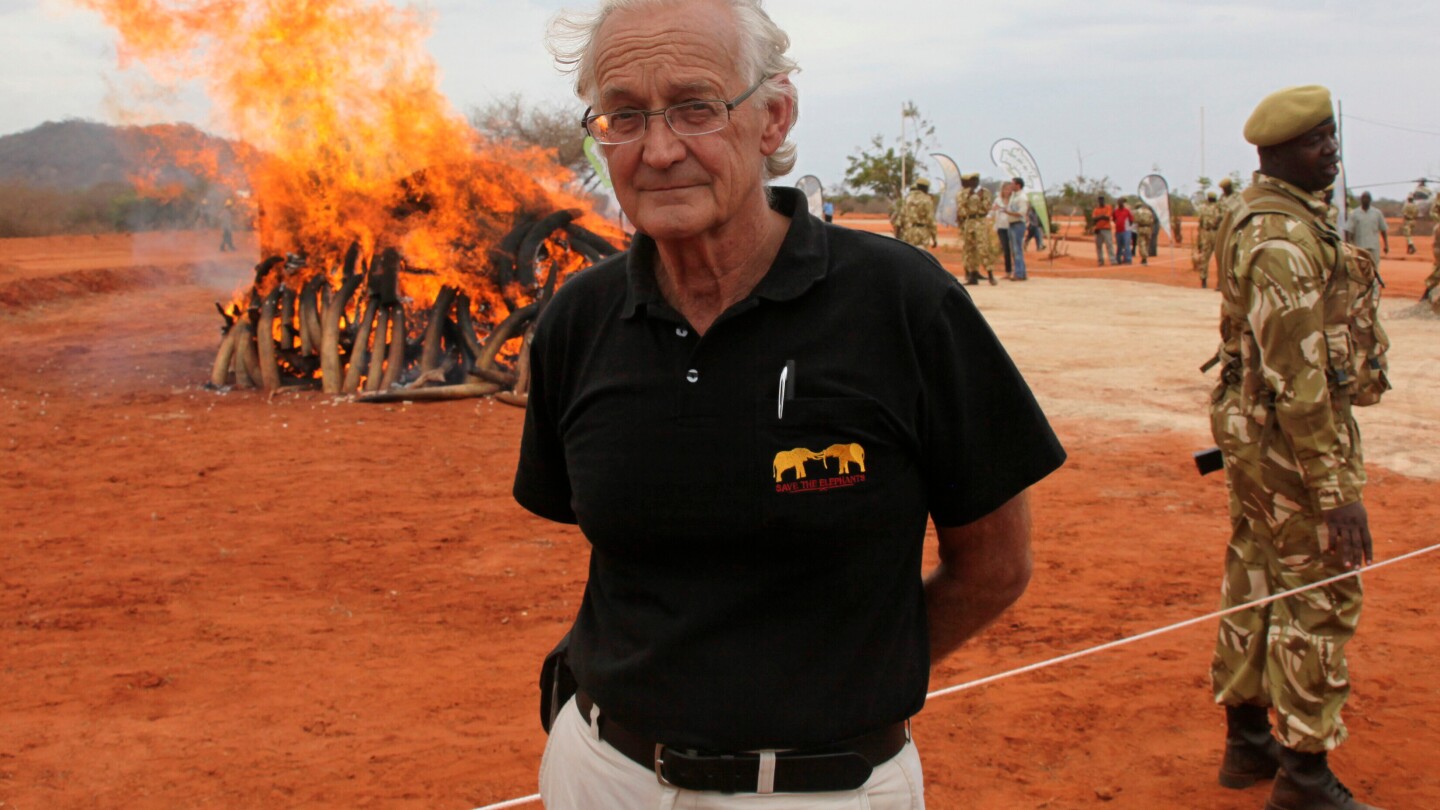
Iain Douglas-Hamilton, a pioneering British-born zoologist who devoted his life to elephant conservation, died Monday in Kenya at the age of 83, according to his organization Save the Elephants.
Douglas-Hamilton’s decades-long career revolutionized elephant protection through innovative tracking and collaring techniques that helped combat poaching and the illegal ivory trade. His groundbreaking research proved instrumental in exposing the devastating ivory poaching crisis that decimated more than half of Africa’s elephant population in just one decade.
“Whether sitting quietly among elephants, poring over maps of their movements, or circling above a herd in his beloved aircraft, that glint in his eye was there,” said Frank Pope, CEO of Save the Elephants. “He never lost his lifelong curiosity about what was happening inside the minds of one of our planet’s most intriguing creatures.”
Douglas-Hamilton’s scientific work and advocacy played a crucial role in the landmark 1989 decision by the Convention on International Trade in Endangered Species to ban international ivory trade. Despite this breakthrough, demand for ivory continued to drive African elephants toward extinction in subsequent decades.
His persistent advocacy efforts contributed significantly to the closure of domestic ivory markets in numerous countries during the 2010s. A major victory came when China, once the world’s largest ivory market, shut down its factories and retail outlets.
“With the end of the legal ivory trade in China, the survival chances for elephants have distinctly improved,” Douglas-Hamilton told The Associated Press in 2017. “We must give credit to China for having done the right thing by closing the ivory trade.”
Elephants use their tusks – elongated teeth – for essential activities including gathering food, digging, and self-defense. However, human demand for ivory throughout history – for weapons, jewelry, ornamentation, and traditional medicine – has driven relentless hunting of these animals.
Douglas-Hamilton’s approach to conservation extended beyond anti-poaching efforts. During Kenya’s severe 2009 drought, which killed over 100 elephants, he highlighted how environmental stress increased vulnerability to disease. “When elephants do not have enough food they also seem to be vulnerable to disease, their immune system weakens and they catch all sorts of diseases,” he explained at the time.
Born in Dorset, England, Douglas-Hamilton earned his bachelor’s degree and doctorate from the University of Oxford. Together with his wife Oria, he co-authored two books, and his work has been featured in numerous films, including the 2024 documentary “A Life Among Elephants.”
His contributions earned him prestigious recognitions, including being named Commander of the British Empire in 2015 and receiving the Esmond B. Martin Royal Geographical Society Prize earlier this year.
The Wildlife Conservation Network, which counts Save the Elephants among its founding partners, described Douglas-Hamilton as a “giant in the field of conservation” who worked tirelessly to protect elephants.
“Iain was a pioneer and an icon. He was deeply respected, loved, and admired, and will be missed beyond words,” the organization stated.
Douglas-Hamilton’s death follows that of his close friend and fellow conservation icon Jane Goodall, the renowned primatologist who passed away in October at age 91. These two pioneering researchers helped transform public understanding of animal intelligence and the importance of wildlife conservation.
The Uganda Conservation Foundation praised Douglas-Hamilton’s legacy, noting that he “generously shared his knowledge and expertise with the conservation community, inspiring action and collaboration.” The foundation added, “We honor a life that didn’t just protect elephants, but empowered the people protecting them.”
Douglas-Hamilton is survived by his wife Oria, their two daughters, and six grandchildren. His passing marks the end of an era in wildlife conservation, but his methodologies, research, and passionate advocacy continue to shape elephant protection efforts across Africa and beyond.
Fact Checker
Verify the accuracy of this article using The Disinformation Commission analysis and real-time sources.

11 Comments
Douglas-Hamilton’s scientific breakthroughs in elephant tracking and collaring were crucial for exposing the devastating poaching crisis. His advocacy efforts were instrumental in driving the landmark 1989 ivory trade ban. A true pioneer in the field of conservation.
Iain Douglas-Hamilton’s tireless work to combat the ivory poaching crisis and protect Africa’s elephants is a remarkable achievement. His pioneering research and advocacy played a pivotal role in the 1989 ivory trade ban. A true conservation hero.
Sad to hear of the passing of this conservation legend. Iain Douglas-Hamilton’s groundbreaking research and advocacy work played a pivotal role in exposing the ivory poaching crisis and securing critical policy changes to protect elephants. A true pioneer whose impact will be felt for generations.
Sad to hear of the passing of this elephant conservation icon. Iain Douglas-Hamilton dedicated his life to understanding and protecting these magnificent creatures. His groundbreaking work will continue to inspire future generations of conservationists.
Iain Douglas-Hamilton was a true pioneer in elephant conservation. His groundbreaking research and advocacy helped expose the devastating ivory poaching crisis and led to the landmark 1989 ivory trade ban. His lifelong dedication to protecting these magnificent creatures is an inspiration.
Sad to hear of the passing of this conservation legend. Douglas-Hamilton’s innovative tracking and collaring techniques were instrumental in combating poaching and the illegal ivory trade. He leaves behind an incredible legacy of protecting Africa’s elephants.
Agreed. His work helped raise global awareness of the elephant poaching crisis and drove critical policy changes to curb the illegal ivory trade. A true hero for elephant conservation.
Douglas-Hamilton’s passion for understanding elephant behavior and intelligence was evident throughout his career. His scientific contributions and advocacy work were invaluable for elephant protection efforts. A true loss for the conservation community.
Absolutely. His lifelong curiosity about elephants and determination to save them is truly inspiring. A great legacy to leave behind.
Iain Douglas-Hamilton leaves behind an incredible legacy of protecting Africa’s elephants. His lifelong curiosity about elephant behavior and intelligence, paired with his tireless advocacy, made him a true hero in the conservation community. He will be deeply missed.
Iain Douglas-Hamilton’s pioneering research proved the devastating toll of ivory poaching on Africa’s elephants. His efforts to expose this crisis and advocate for protective measures were crucial. A remarkable scientist and conservationist who will be deeply missed.