


Listen to the article
In the shadows of Petit Goâve, Haiti, Amizia Renotte sits on a fragment of concrete, gesturing toward a mound of dirt where her home once stood before Hurricane Melissa’s devastating outer bands reduced it to rubble. Though the Atlantic hurricane season has officially ended, thousands across the Caribbean continue to grapple with its aftermath nearly two months later.
“We ran. We had nothing to save,” Renotte recalls of the terrifying night when floodwaters suddenly surrounded her home.
Hurricane Melissa, a catastrophic Category 5 storm and one of the strongest Atlantic hurricanes in recorded history, left at least 43 people dead across Haiti, with Petit Goâve suffering some of the heaviest casualties. Today, this once-vibrant coastal town lies smothered under massive piles of mud and debris, its formerly bustling streets now eerily quiet.
The constant drone of heavy machinery fills the air as crews methodically clear the destruction left by the La Digue River, which swept away children, vehicles, and homes during its late October rampage. Local resident Clermont Wood Mandy summarizes the devastation simply: “People lost everything. They lost their homes. They lost their children.”
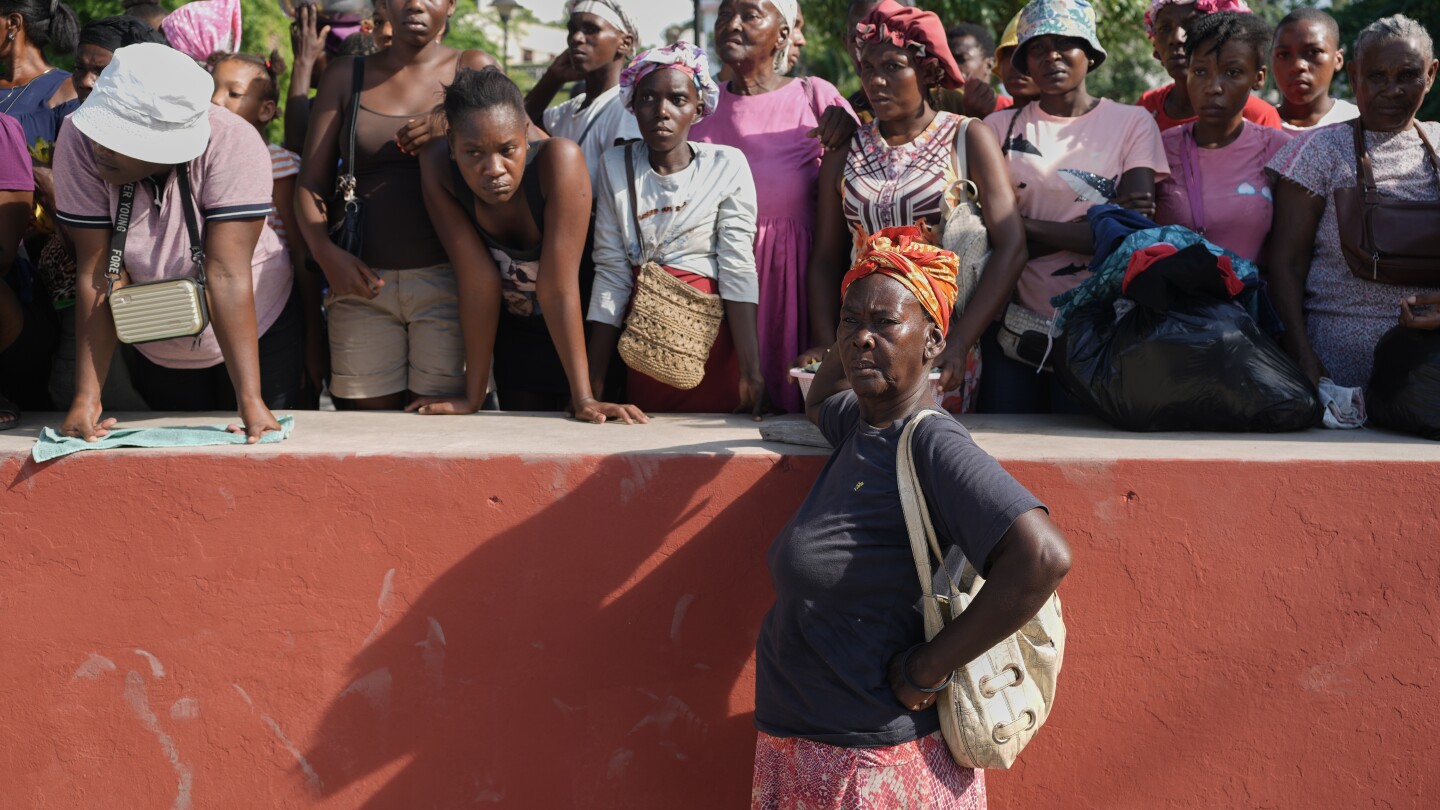
While Petit Goâve held a mass funeral in mid-November to mourn its dead, the community’s suffering continues unabated. Food insecurity remains a critical concern. At a small convenience store stocked with locally produced staples—pasta, butter, and rice—purchased with donated funds, residents like 37-year-old Joceline Antoine, who lost five family members in the disaster, wait in line for basic necessities.
“My house is destroyed,” Antoine says, her words capturing the stark reality faced by thousands.
Lola Castro, regional director with the UN’s World Food Program (WFP), recently visited Petit Goâve and observed that Melissa has only deepened Haiti’s pre-existing crises. “Around 5.3 million people don’t have enough to eat every day in Haiti,” she explained. “That’s a huge challenge.”
The storm’s impact on local agriculture has been particularly devastating for a community that relied heavily on crops like plantain, corn, and beans. “They have lost their income. They have lost their means of living,” Castro noted.
Across the Caribbean Sea, Jamaica continues its own struggle to recover. Melissa made landfall in the western part of the island in late October, causing an estimated $8.8 billion in damage. The death toll stands at 45, with 13 people still missing and an additional 32 deaths under investigation, according to Alvin Gayle, director-general of Jamaica’s emergency management office.
The disaster has triggered secondary health crises, with authorities reporting 30 confirmed cases of leptospirosis—an infection transmitted from animals—and another 84 suspected cases, resulting in 12 deaths. Two cases of tetanus, one fatal, have also been documented.
“These figures underscore the scale of the human impact and the seriousness with which the ministries, departments and agencies of government continue to approach the recovery effort,” Gayle said.
More than 1,000 displaced Jamaicans remain in over 100 shelters across seven parishes, while approximately 160 schools have yet to reopen. The government has secured a $150 million loan to expedite power restoration, which officials expect to complete by late January. Additionally, Jamaica has obtained a $6.7 billion reconstruction package from various international financial institutions, including the Development Bank of Latin America and the Caribbean and the World Bank Group.
In Cuba, where authorities evacuated more than 700,000 people from coastal areas before the hurricane struck the eastern region, no storm-related deaths were reported. However, nearly a month after Melissa hit, the UN reported that approximately 53,000 Cubans remained unable to return home, with 7,500 living in official shelters.
The regional impact is staggering. Castro reports that Hurricane Melissa affected approximately 6 million people across the Caribbean, including 1.2 million in Haiti alone. About 1.3 million people throughout the region now require food security assistance or other support. While the WFP has managed to reach 725,000 individuals so far, Castro hopes to expand their efforts, noting that the agency’s $83 million appeal is currently only 50% funded.
As the Caribbean enters the dry season, the immediate danger of hurricanes has passed, but the long road to recovery has only just begun for millions across the region.
Fact Checker
Verify the accuracy of this article using The Disinformation Commission analysis and real-time sources.

9 Comments
I hope the local and international authorities can expedite the cleanup and reconstruction process to help the affected communities get back on their feet as soon as possible. This is a stark reminder of the urgent need to address climate change and strengthen disaster preparedness.
Absolutely. Improving disaster resilience and mitigation should be a top priority, especially for regions that are increasingly vulnerable to the impacts of extreme weather events.
It’s concerning to hear that the situation remains dire, with people lacking basic necessities like food and shelter nearly two months after the hurricane. The long-term recovery efforts will be crucial in supporting these vulnerable communities.
The aftermath of Hurricane Melissa is truly devastating. My heart goes out to the people of Petit Goâve and the wider Caribbean region who are struggling to recover and rebuild. It’s heartbreaking to hear about the loss of life and homes.
The persistence of the humanitarian crisis in the aftermath of Hurricane Melissa is deeply concerning. It’s critical that the relief efforts are sustained and that the affected communities receive the necessary support to rebuild their lives and livelihoods.
This is a sobering reminder of the immense power and destruction that these extreme weather events can bring. The ongoing humanitarian crisis in the region requires sustained support and aid to help the affected communities get back on their feet.
Agreed. Rebuilding efforts will take time and resources. I hope the international community steps up to provide the necessary assistance to those in dire need.
The stories of loss and suffering coming out of the Caribbean are truly heartbreaking. I hope the international community rallies behind these communities and provides the resources and assistance needed to help them recover and rebuild in the long run.
The scale of the destruction is truly staggering. Hurricane Melissa’s impact on the region has been catastrophic, and the stories of loss and hardship are heartbreaking. Ongoing relief and rebuilding efforts will be critical in the months and years ahead.