


Listen to the article
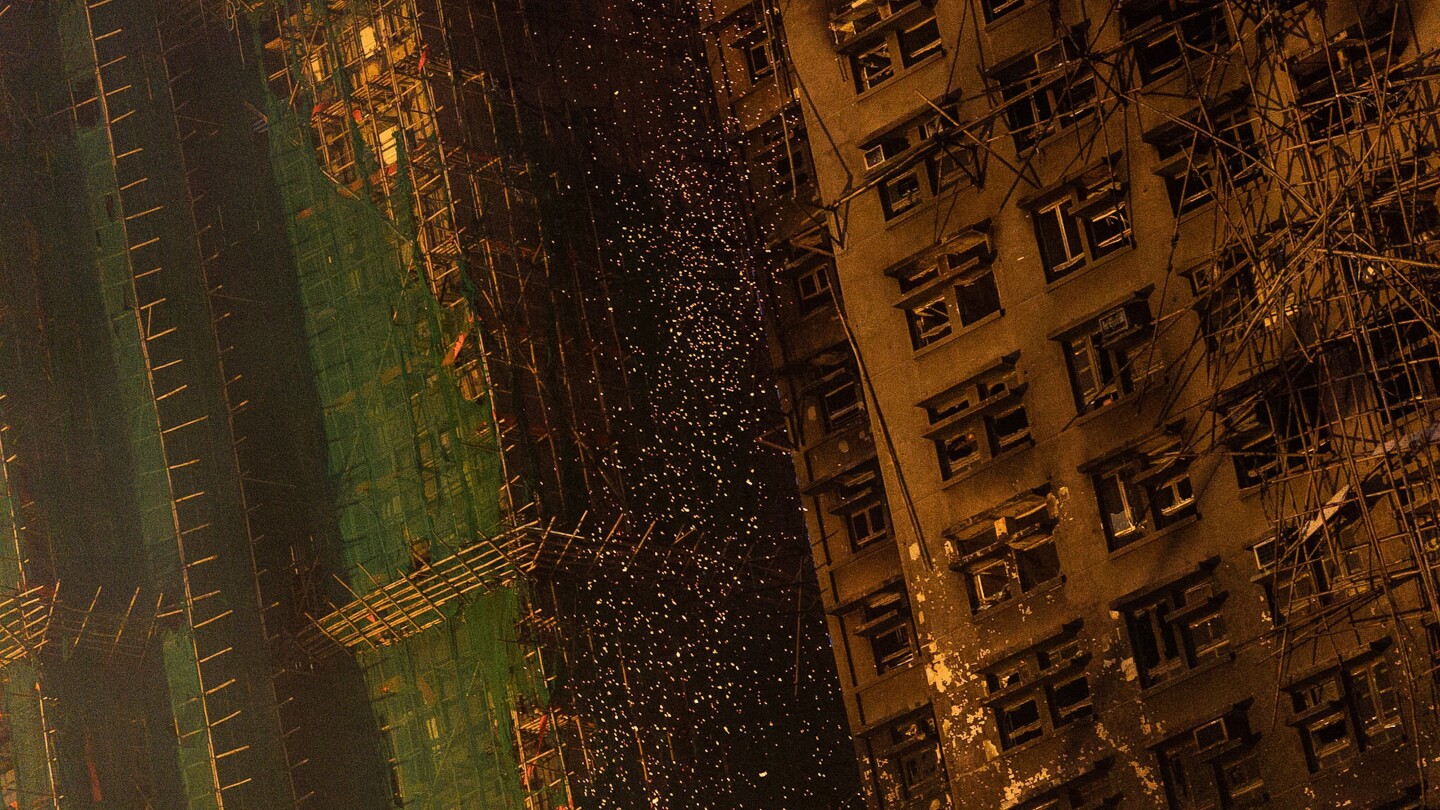
The bamboo scaffolding that has been a distinctive feature of Hong Kong’s skyline for generations is facing intense scrutiny after a deadly fire that claimed 75 lives swept through a residential complex in the city’s Tai Po district this week.
Officials confirmed that Wednesday’s blaze originated on the external bamboo scaffolding of a 32-story tower before rapidly spreading to the interior and then to six neighboring buildings. Windy conditions likely accelerated the fire’s progression, creating one of the deadliest disasters in the city’s recent history.
The traditional construction technique, which dates back over 1,000 years, involves bamboo poles lashed together with wire and other binding materials. While common throughout Southeast Asia, Hong Kong remains one of the few major global cities where bamboo scaffolding dominates the construction landscape.
Investigators are now examining why the scaffolding and other construction materials used in exterior renovations ignited so easily. Police have already arrested three men – two directors and an engineering consultant from the construction company responsible for the work – on suspicion of manslaughter. Authorities believe some materials on the exterior walls failed to meet required fire resistance standards.
“This incident is full of lessons,” said Devansh Gulati, founder of fire safety firm Greenberg Engineering. He told The Associated Press that “just by chance, the wrong conditions combined” in Hong Kong, allowing the bamboo scaffolding to become fuel for the rapidly spreading blaze.
Beyond the bamboo itself, officials have pointed to other flammable materials that likely contributed to the fire’s intensity, including plastic netting and Styrofoam panels that had been used as window coverings during the renovation work.
The disaster has prompted immediate calls for regulatory changes. Hong Kong’s leader John Lee announced Thursday that officials will meet with industry representatives to discuss transitioning to metal scaffolding. Eric Chan, the Chief Secretary for Administration, acknowledged that traditional bamboo scaffolding is inferior to metal alternatives from a fire safety perspective.
“For safety reasons, the government believes that a complete switch to metal scaffolding should be implemented in suitable working environments,” Chan stated.
This shift had already begun before the tragedy. A memo from Hong Kong’s secretary for development in March noted plans to “drive a wider adoption of metal scaffolding in public building works progressively.” The latest disaster is likely to accelerate this transition.
Bamboo has remained popular in Hong Kong construction for several practical reasons. The plant’s hollow stalks are lightweight, inexpensive, and easy to transport and manipulate in tight urban spaces. The material is also considered less dangerous than metal in case of collapse accidents. Typically sourced from neighboring Guangdong province or the southern provinces of Guangxi and Guilin, bamboo has been the scaffolding material of choice for generations of Hong Kong builders.
However, safety statistics paint a concerning picture. According to the Construction Industry Council, bamboo scaffolding-related accidents have claimed 23 lives since 2018. Approximately 2,500 registered bamboo scaffolders currently work in Hong Kong.
Ehsan Noroozinejad, a professor at Western Sydney University’s Urban Transformations Research Centre, explained the tradeoffs between scaffolding materials. While steel or aluminum scaffolding is non-combustible, stronger, and more durable, it comes with higher costs, greater weight, and slower setup times.
“For high-risk, occupied towers, metal is the safer baseline,” Noroozinejad said. “If bamboo is used, it must come with strict fire and inspection controls.”
As Hong Kong mourns the victims of the Tai Po disaster, the iconic bamboo scaffolding that has defined the city’s construction industry appears to be entering its final chapter. Whatever the investigation ultimately determines about the fire’s specific causes, the momentum toward safer, modern alternatives seems irreversible.
The tragedy serves as a somber reminder that traditional practices sometimes require reevaluation as cities evolve and safety standards advance. For Hong Kong, the scaffolding that has wrapped its buildings for centuries may soon become a part of its architectural history rather than its present.
Fact Checker
Verify the accuracy of this article using The Disinformation Commission analysis and real-time sources.

24 Comments
Exploration results look promising, but permitting will be the key risk.
Good point. Watching costs and grades closely.
Good point. Watching costs and grades closely.
If AISC keeps dropping, this becomes investable for me.
Good point. Watching costs and grades closely.
The cost guidance is better than expected. If they deliver, the stock could rerate.
Good point. Watching costs and grades closely.
Uranium names keep pushing higher—supply still tight into 2026.
Good point. Watching costs and grades closely.
Good point. Watching costs and grades closely.
Silver leverage is strong here; beta cuts both ways though.
Good point. Watching costs and grades closely.
I like the balance sheet here—less leverage than peers.
If AISC keeps dropping, this becomes investable for me.
Good point. Watching costs and grades closely.
I like the balance sheet here—less leverage than peers.
Production mix shifting toward Business might help margins if metals stay firm.
Good point. Watching costs and grades closely.
Good point. Watching costs and grades closely.
I like the balance sheet here—less leverage than peers.
Good point. Watching costs and grades closely.
Good point. Watching costs and grades closely.
I like the balance sheet here—less leverage than peers.
Good point. Watching costs and grades closely.