


Listen to the article
Hondurans headed to the polls Sunday to elect a new president in a race that has been dramatically shaken by U.S. President Donald Trump’s last-minute endorsement of one candidate and his stunning announcement that he would pardon a former Honduran president currently serving a lengthy prison sentence in the United States.
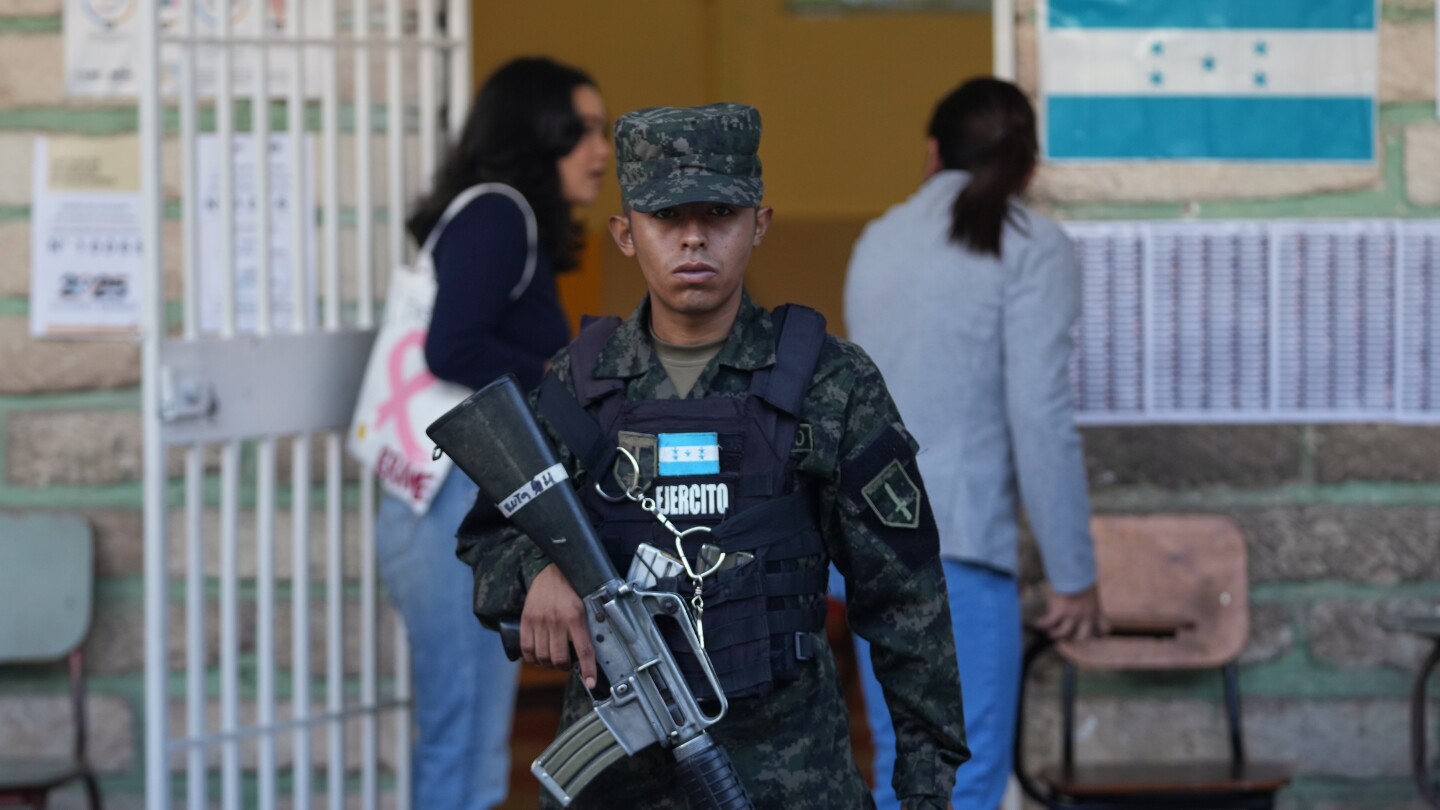
At polling stations across Tegucigalpa, the country’s capital, political parties established a vibrant presence with tables, banners, flags, and music. Voters began lining up early, though some locations reported delays of about 30 minutes past the official opening time.
The election extends beyond the presidency, with Hondurans also choosing a new Congress and hundreds of local officials in what represents a significant democratic exercise for the Central American nation.
Three candidates have emerged as frontrunners in a tightly contested presidential race. Rixi Moncada, who served as finance and defense secretary in President Xiomara Castro’s administration, represents the social democrat LIBRE (Liberty and Re-foundation) party and has pledged to “democratize” an economy still characterized by extreme wealth disparities.
Salvador Nasralla, making his fourth presidential bid, is running under the conservative Liberal Party banner as a self-styled outsider committed to tackling the country’s endemic corruption. Former Tegucigalpa Mayor Nasry “Tito” Asfura represents the conservative National Party and aims to rehabilitate his party’s image following previous corruption scandals while promoting business-friendly policies.
Despite economic improvements during Castro’s administration, Hondurans continue to prioritize security and employment concerns. The country’s homicide rate, while decreasing in recent years alongside regional trends, remains the highest in Central America, fueling citizens’ demands for stronger safety measures.
The presidential campaign had largely focused on candidates exchanging accusations about potential electoral manipulation until Trump’s unexpected intervention last week. The former U.S. president endorsed Asfura while criticizing his opponents, signaling renewed American interest in Latin America’s political landscape.
More shocking to many Hondurans was Trump’s Friday announcement that he would pardon former President Juan Orlando Hernández, who is currently serving a 45-year sentence in a U.S. prison for aiding drug traffickers moving cocaine to the United States.
This direct interference comes amid heightened regional tensions, including U.S. military buildup in the Caribbean and Trump’s threats against Venezuelan President Nicolás Maduro, leaving many Hondurans unsettled by the sudden American attention to their electoral process.
Voter reactions to the U.S. involvement varied widely. Ruben Darío Molina, a 55-year-old security guard who was recently deported from the United States after living there for two decades, expressed profound disillusionment with politicians, calling them “garbage” who “use you like a ladder to move up.” Separated from his American citizen wife and son, Molina declined to vote, citing work obligations.
Cristian Zelaya, a 42-year-old systems engineer, prioritized “rescuing the country from a future like Venezuela” and removing what he termed “Communists,” referring to the governing LIBRE party. While approving of Trump’s decision to pardon Hernández, whom he considered an effective president, Zelaya said this had no impact on his voting decision.
Conversely, Carlos Alberto Figueroa, a 71-year-old retiree, supported Moncada to continue President Castro’s work, which he credited with bringing “development, a better economy and security.” He dismissed Trump’s influence, insisting that Honduran voters would determine their own future.
For first-time voter Nancy Serrano, a 20-year-old aspiring teacher, anti-corruption efforts took precedence. She expressed concern that widespread corruption limits opportunities for young people and undermines the economy.
As voting began, National Electoral Council President Ana Paola Hall urged candidates to respect electoral rules and refrain from declaring victory before official confirmation. Polls were scheduled to close at 5 p.m. local time, with preliminary results expected by 9 p.m., though the council has up to 30 days to announce final results.
More than 4,000 Honduran and foreign election observers were deployed across nearly 6,000 polling stations nationwide to monitor the voting process, underscoring the significance of this election for Honduras’s democratic future amidst unusual foreign attention and intervention.
Fact Checker
Verify the accuracy of this article using The Disinformation Commission analysis and real-time sources.

16 Comments
I like the balance sheet here—less leverage than peers.
I like the balance sheet here—less leverage than peers.
Silver leverage is strong here; beta cuts both ways though.
Silver leverage is strong here; beta cuts both ways though.
Good point. Watching costs and grades closely.
Silver leverage is strong here; beta cuts both ways though.
Good point. Watching costs and grades closely.
Good point. Watching costs and grades closely.
Uranium names keep pushing higher—supply still tight into 2026.
Production mix shifting toward Business might help margins if metals stay firm.
Good point. Watching costs and grades closely.
Good point. Watching costs and grades closely.
Exploration results look promising, but permitting will be the key risk.
Good point. Watching costs and grades closely.
Production mix shifting toward Business might help margins if metals stay firm.
Nice to see insider buying—usually a good signal in this space.