


Listen to the article
The term “K-shaped economy” has rapidly entered the lexicon of economic discourse, from corporate boardrooms to Federal Reserve meetings. This descriptor is becoming increasingly prevalent as it effectively captures the contradictory nature of the current U.S. economic landscape.
In simple terms, the K-shaped economy represents a bifurcated reality: the upper portion of the K symbolizes higher-income Americans experiencing income and wealth growth, while the lower part represents lower-income households struggling with weak income gains and persistent high prices.
The concept has gained traction precisely because it explains today’s economic paradoxes. The U.S. is witnessing solid overall growth, yet hiring remains sluggish and unemployment has inched upward. Consumer spending continues to rise broadly, but confidence among average Americans is waning. While AI-related construction booms, manufacturing sectors are shedding jobs and housing markets remain tepid. Perhaps most tellingly, stock markets hover near record highs even as wage growth decelerates for many workers.
“Those at the bottom are living with the cumulative impacts of price inflation,” explains Peter Atwater, an economics professor at William & Mary. “At the same time, those at the top are benefiting from the cumulative impact of asset inflation.”
Atwater helped popularize the “K-shaped” terminology during the pandemic after noticing it on social media. While economists debated whether the COVID recession would follow a V-shaped recovery (sharp decline followed by rapid rebound), U-shaped (more gradual recovery), or L-shaped (recession followed by stagnation), Atwater recognized that the K better captured the divergent experiences across income levels.
During the pandemic’s early stages, the K-shape was evident as white-collar professionals continued working remotely while enjoying rising stock portfolios, even as massive layoffs in service industries, factories, and entertainment venues pushed unemployment to nearly 15%.
The immediate post-pandemic period temporarily narrowed this gap. As businesses reopened amid labor shortages, lower-wage workers saw substantial pay increases. According to Federal Reserve Bank of Minneapolis research, inflation-adjusted wages for the bottom quarter of workers rose at a yearly rate of 3.9% in 2023 and early 2024, outpacing the 3.1% gains for the top quarter.
“We had that kind of two-year period where the bottom was catching up and that talk of the K-shape went away,” noted economist Dario Perkins of TSLombard. “And since then, the economy’s cooled down again,” bringing the K-shape discussion back to the forefront.
In 2024, as hiring slowed, inflation-adjusted wage growth weakened considerably, particularly for lower-income Americans. Their wage growth plunged to just 1.5% annually, falling behind the highest-earning quarter’s 2.4% growth rate. This income disparity has affected spending patterns, with Bank of America data showing that higher-income households increased spending by 2.7% in October compared to the previous year, while lower-income groups managed just a 0.7% increase.
Corporate America has taken notice of this bifurcation, adapting business strategies accordingly. Companies are simultaneously pursuing “premiumization” for wealthy consumers while offering “affordability” options for budget-conscious shoppers. Coca-Cola’s Chief Operating Officer Henrique Braun recently explained their dual approach: generating more earnings from premium products like Smartwater and Fairlife milk, while introducing mini cans for cost-conscious consumers.
Similar patterns emerge across industries. Delta Air Lines reports that first- and business-class tickets are driving revenue while economy travelers struggle. Best Buy CEO Corie Barry noted that the top 40% of U.S. consumers now drive two-thirds of all consumption, leaving the remaining 60% focused primarily on deals and discounts.
The AI revolution has further accentuated this economic division. Massive investments in data centers and computing power have boosted stock prices for the “Magnificent 7” tech giants (Google, Amazon, Nvidia, Microsoft, Apple, Meta, and Tesla), but these investments haven’t created proportional employment opportunities or broadly lifted incomes.
“What we see at the very top is an economy that is sort of self-contained… between AI, the stock market, the experiences of the wealthy,” Atwater observed. “And it’s largely contained. It doesn’t flow through to the bottom.”
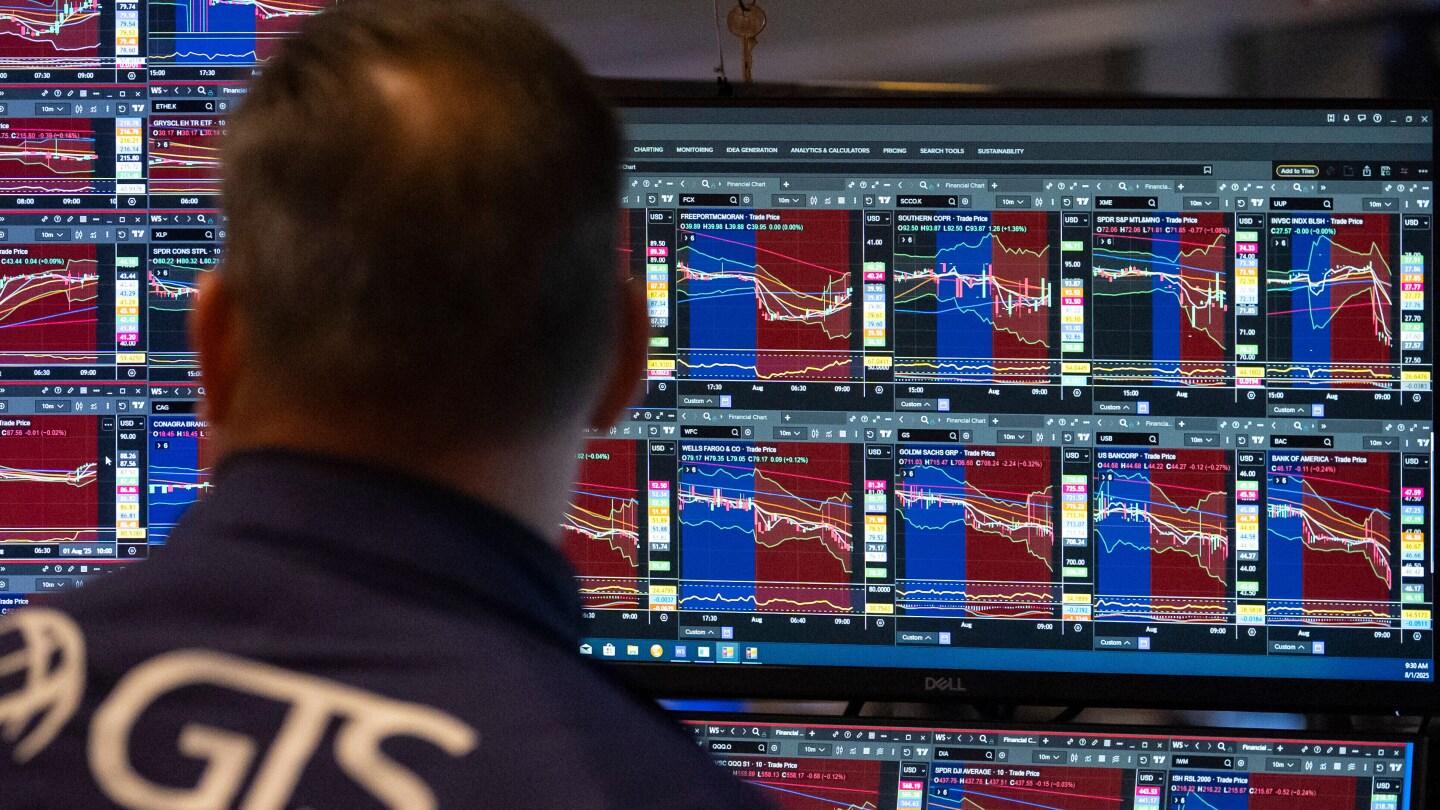
This concentration of benefits is starkly illustrated in stock market ownership: the wealthiest 10% of Americans own approximately 87% of stocks, while the poorest 50% own just 1.1%, according to Federal Reserve data.
Economists warn that this top-heavy growth model may prove unsustainable. If unemployment rises further, middle and lower-income consumers could sharply reduce spending, ultimately impacting even tech giants’ revenues and potentially triggering broader economic contraction.
Perkins, however, sees potential relief on the horizon through larger tax refunds expected under the Trump administration’s budget law and the likelihood of a more rate-cut-friendly Federal Reserve chair appointment by May. While lower borrowing costs could accelerate growth and wages, they might also reignite inflation pressures.
As this economic divergence continues to shape both corporate strategy and policy discussions, the K-shaped recovery remains a powerful framework for understanding America’s complex economic reality.
Fact Checker
Verify the accuracy of this article using The Disinformation Commission analysis and real-time sources.

8 Comments
This ‘K-shaped’ dynamic is a concerning trend that deserves greater attention. The widening gulf between the economic haves and have-nots is a recipe for social and political instability if not addressed. Thoughtful, equitable policies will be key.
Fascinating concept – the ‘K-shaped’ economy really captures the diverging fortunes we’re seeing. It highlights how recovery is uneven, benefiting some while leaving others behind. I’m curious to see how policymakers address this imbalance going forward.
You’re right, the K-shape is a stark illustration of the growing wealth gap. It will be a major challenge for governments to find ways to lift up the lower end of the ‘K’ without disrupting the gains at the top.
The ‘K-shaped’ concept is a useful frame for understanding the current economic reality. It points to the need for policies that can lift up the lower half of the ‘K’ without destabilizing the gains at the top. Finding that balance will be crucial.
Absolutely, the K-shape is a worrying sign of a two-tiered economy. Policymakers will have to get creative to support the struggling segments without undermining the overall recovery.
The K-shaped recovery really highlights how uneven the economic impacts have been. It’s concerning to see wages stagnate even as markets soar. This dynamic risks further exacerbating inequality if not properly addressed.
This is an insightful way to frame the current economic situation. While topline metrics like GDP and stock prices look strong, the reality on the ground is much more complex. The bifurcation is a troubling trend that deserves attention.
Agreed, the divergence between the ‘haves’ and ‘have-nots’ is a real concern. Policymakers will need to carefully balance supporting the struggling segments without undermining the pockets of growth.