


Listen to the article
Federal Ban Threatens to Upend Booming Hemp-Derived THC Industry
A provision buried in the recent bill that ended the federal government shutdown has sent shockwaves through the $24 billion hemp industry. The measure will ban THC-infused seltzers, beverages, and snacks made from hemp—products that have become crucial revenue streams for many businesses, including craft breweries struggling with declining alcohol sales.
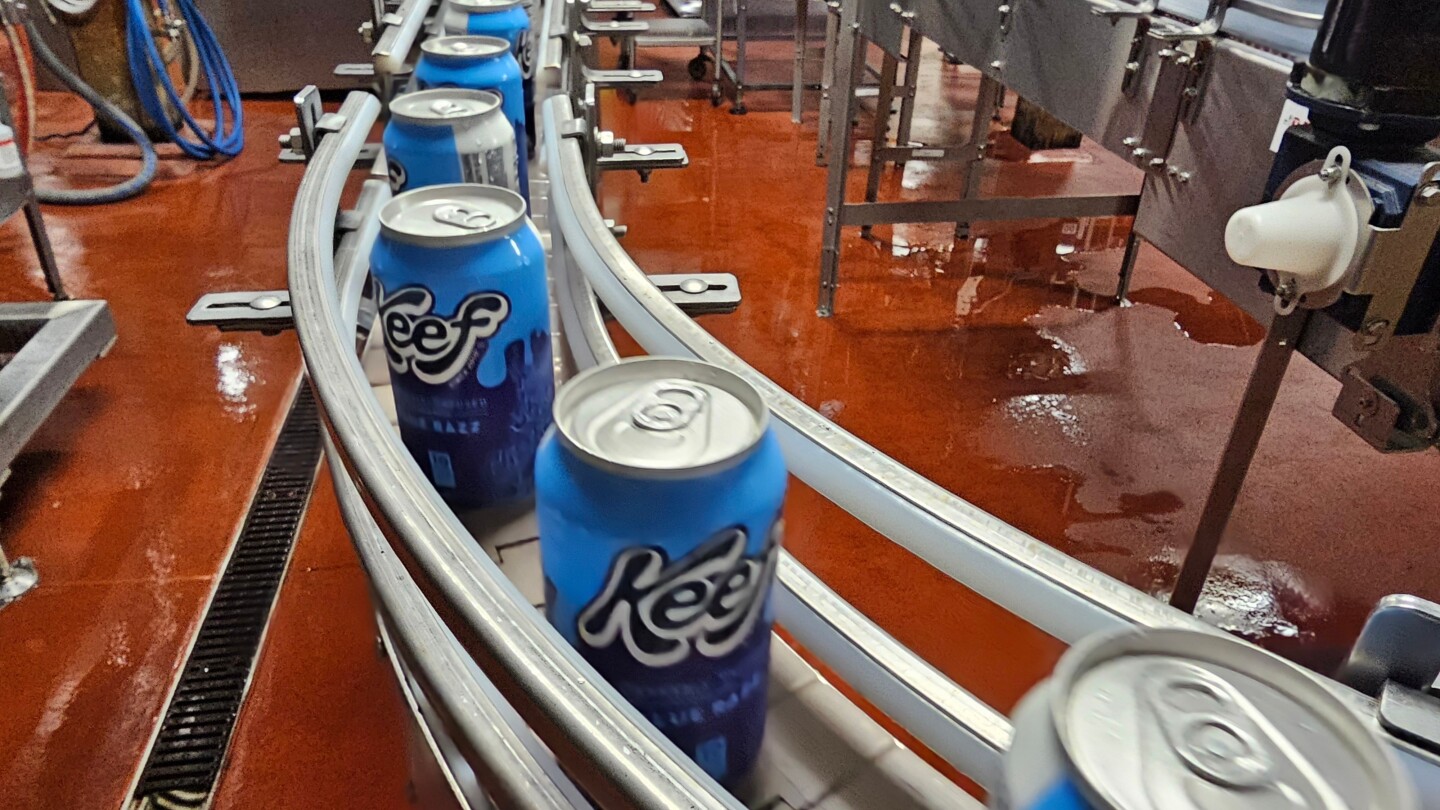
At Indeed Brewing in Minneapolis, production lines busily fill cans with THC-infused seltzer rather than beer. This product line, featuring the compound that produces cannabis’s high, has become a financial lifeline for Indeed and other craft brewers in recent years.
“It’s a big deal,” said Ryan Bandy, Indeed’s chief business officer. “It would be a mess for our breweries, for our industry, and obviously for a lot of people who like these things.”
The ban, set to take effect in November 2026, threatens to eliminate thousands of jobs and disrupt a rapidly growing market segment that emerged through a legal loophole.
That loophole stems from the 2018 farm bill, which legalized industrial hemp cultivation to provide farmers—including those in Republican Senator Mitch McConnell’s home state of Kentucky—with a new cash crop. The legislation defined hemp as cannabis containing less than 0.3% of delta-9 THC, which inadvertently created a massive opportunity for businesses.
Manufacturers discovered they could create beverages or snacks that technically complied with this threshold while still containing enough THC to produce intoxicating effects. Companies also began extracting CBD from hemp and chemically converting it into other forms of THC, such as delta-8 or delta-10.
The result was an explosion of unregulated, untested THC products—including vape oils, gummy candies, chips, cookies, and sodas—that became widely available at gas stations and convenience stores across the country, sometimes even to teenagers. In legal marijuana states, these products undercut heavily taxed and regulated cannabis. In states where recreational marijuana remains illegal, hemp-derived THC effectively circumvented prohibition.
This regulatory gray area has created public health concerns. States like Indiana have reported increases in poison-control calls related to pediatric THC exposure, prompting various legislative responses nationwide.
California, under Democratic Governor Gavin Newsom, banned the sale of intoxicating hemp products outside the state’s legal marijuana system. Texas, with its massive hemp market, is moving toward regulating sales by restricting purchases to those over 21. Washington state effectively eliminated intoxicating hemp products from the market outside its regulated cannabis system, causing hemp cultivation licenses to plummet from 220 five years ago to just 42 today.
Minnesota took a different approach in 2022, legalizing infused beverages and foods for adults 21 and older, with requirements that products be derived from legally certified hemp. The state’s regulatory framework has been so successful that national retailers like Target now offer THC drinks in some Minnesota locations.
For Minneapolis brewers like Indeed and Bauhaus Brew Labs, hemp-derived THC products have become essential to their business models. At Bauhaus, THC drinks account for 26% of distributed product revenues and 11% of taproom sales.
“If this goes through as written currently, I don’t see a way at all that Bauhaus could stay in business,” said Drew Hurst, the company’s president and chief operating officer.
Senator McConnell, who helped craft the original 2018 farm bill, inserted the THC ban language into the shutdown-ending legislation, stating it would “keep these dangerous products out of the hands of children, while preserving the hemp industry for farmers.”
The legal marijuana industry and anti-cannabis organizations have largely applauded the move. Kevin Sabet, president of Smart Approaches to Marijuana, declared, “There’s really no good argument for allowing these dangerous products to be sold in our country.”
However, the industry has a one-year window before the ban takes effect, providing time to advocate for regulations rather than prohibition. Jonathan Miller, general counsel of the U.S. Hemp Roundtable, expressed optimism that “cooler heads will prevail,” noting that the delayed implementation suggests the issue isn’t considered an immediate health emergency.
According to industry estimates, the ban would jeopardize over 300,000 jobs and cost states approximately $1.5 billion in lost tax revenue.
Several lawmakers, including Kentucky Republican Senator Rand Paul and Minnesota Democratic Senators Amy Klobuchar and Tina Smith, are working to save the industry. Klobuchar highlighted that the ban was inserted into the shutdown bill without a hearing and suggested federal authorities could allow states to develop their own regulatory frameworks, potentially using Minnesota’s strict regulations as a national model.
For hemp farmers, the uncertainty creates immediate challenges. Kevin Hilliard, co-founder of Insight Brewing in Minneapolis, noted that farmers need clarity before the spring planting season: “If a farmer has uncertainty, they’re not going to plant.”
Fact Checker
Verify the accuracy of this article using The Disinformation Commission analysis and real-time sources.

10 Comments
The potential ban on THC-infused products is a complex issue that highlights the evolving regulatory landscape for the hemp and cannabis industries. It will be important to monitor how this situation unfolds and the impact on businesses and consumers.
This federal ban on THC-infused drinks and snacks is a significant development that could have far-reaching consequences for the hemp industry. It will be interesting to see how stakeholders respond and if any policy adjustments are made to address the concerns.
Given the potential economic impact, I imagine there will be intense lobbying and advocacy efforts from the industry to try to influence the outcome.
The hemp industry has found creative ways to leverage the legalization of industrial hemp, but this federal ban could undermine those efforts. It’s a reminder that policy changes can significantly impact emerging markets.
Fascinating to see how the hemp industry has grown and adapted to capitalize on the legalization of industrial hemp. The potential ban on THC-infused drinks and snacks would certainly disrupt this burgeoning market segment.
I’m curious to see how the industry responds and whether they can find alternative revenue streams to offset the potential ban.
The federal ban on THC-infused products could have significant impacts on craft brewers who have come to rely on these revenue streams. It will be interesting to see if there are any legal challenges or policy changes to address this situation.
This highlights the complex regulatory environment that businesses in the hemp and cannabis industries must navigate. Flexibility and innovation will likely be key to their survival.
While the federal ban on THC-infused drinks and snacks may disrupt the hemp industry, it also presents an opportunity for the sector to explore new product development and diversification strategies. Adaptability will be crucial.
I’m curious to see if the industry can work with policymakers to find a balanced approach that supports innovation while addressing any legitimate concerns around these products.