


Listen to the article
After 54 years on a waitlist, 80-year-old Betty Ann Hurdle finally received what she had long awaited — a lease to Hawaiian homelands property in Kapolei. Though the 200-acre plot currently consists mostly of dirt with no houses, underground utilities, or complete roadways, Hurdle feels a profound sense of relief and accomplishment.
“We felt like, ‘Finally! Finally we’re here,'” said Hurdle. “It’s nice to know that we will finally be able to own a home, and it’s not so far distant anymore. It’s closer now.”
Hurdle’s award is part of an ambitious initiative by the Hawaii Department of Hawaiian Home Lands (DHHL) to address a waitlist that has become a generational burden for many Native Hawaiian families. The department plans to issue 7,000 awards by the end of 2026 for projects in early development stages — an unprecedented effort to help beneficiaries secure land before they die.
The strategy marks a significant shift from DHHL’s traditional approach of waiting until housing developments near completion before assigning lots. With more than 29,000 people on the waitlist and beneficiaries passing away each year without receiving land, the department is taking more aggressive action under Governor Josh Green’s administration.
If successful, this initiative would represent the largest reduction of the waitlist in state history. However, the approach comes with substantial risks, as evidenced by a similar program in the early 2000s that yielded disappointing results.
Between 2005 and 2006, the department issued more than 1,400 “paper leases” — agreements for undeveloped land. But of those beneficiaries, only 580 have received homes, according to recent department data. More than 700 are still waiting, while others had their awards rescinded or canceled.
A commissioned analysis cited funding shortfalls as a primary reason for delays, but also criticized DHHL for poor communication and overpromising. The consultants warned bluntly: “Do not make promises that will not be kept.”
The history of the Hawaiian homelands program, created by Congress to provide homestead lots for Native Hawaiians who meet a 50% blood quantum threshold, has been marked by slow progress and frustrated expectations. The program issued just 2,800 leases in its first 60 years, and various initiatives to accelerate land distribution have fallen short.
Governor Linda Lingle’s administration attempted a similar approach in the early 2000s, promising to distribute land to each person on the 20,000-person waitlist within five years. That goal was never achieved. Many beneficiaries who received paper leases believed they would have homes within three years, but a decade later, most were still waiting.
Jade Riley’s experience illustrates the challenges. In 2005, she received a paper lease for DHHL’s Waiohuli subdivision on Maui. Despite promotional materials describing an ideal family environment, the development encountered numerous obstacles including difficult terrain, drainage issues, archaeological sites, and water system problems.
“We owned it and we were comfortable with that,” said Riley, who eventually bought a home in Arizona while waiting. “We could live and not be a burden to our kids and have our own place and be able to afford more than just getting by.”
After 20 years of waiting, Riley finally received a home in DHHL’s Puuhona project in July 2024, becoming the first lessee to move into the development. She described receiving the keys to her five-bedroom home as “overwhelming.”
Current DHHL Director Kali Watson has acknowledged past failures, calling the inability of beneficiaries to qualify for loans due to high home prices “the worst injustice for the Native Hawaiian people under this program.”
“To be bypassed and in some cases pass away after waiting so many years was not only a loss, but an injustice to their heirs,” Watson stated at a recent meeting.
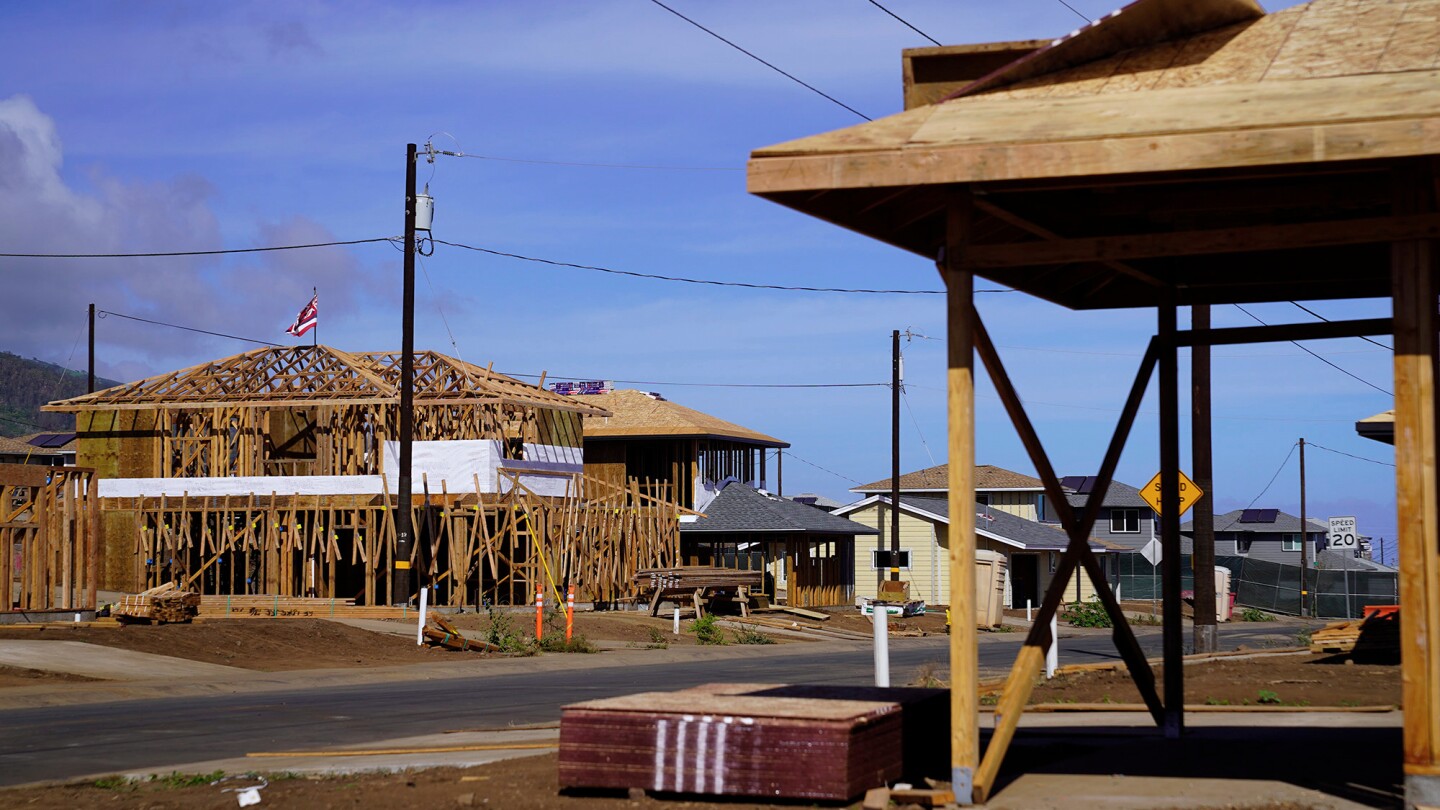
The department is now taking steps to address these issues. Developers are instructed to build homes at affordable price points based on income data. The $600 million provided by the Legislature has been allocated to jumpstart 28 projects that could yield more than 6,300 lots with a mix of turnkey homes and buildable land.
DHHL is also providing more options than before, including vacant lots where lessees can lower costs through self-construction. Additional home and construction loan options are available through lenders specializing in serving DHHL beneficiaries.
Hawaiian Community Lending, a mortgage broker created in 2002, offers flexible approaches such as deferred interest payments to help beneficiaries manage costs during the waiting period.
“We do that because we know we may be serving the folks that can’t go to the bank and the credit union. And I think there’s a lot of families like that on the waitlist,” said Jeff Gilbreath, the organization’s chief executive. “It’s damn hard to live in Hawaii.”
Despite these improvements, officials estimate they need an additional $800 million to complete all projects for paper leaseholders. Construction costs continue to rise due to inflation and tariffs, with infrastructure costs reaching as high as $376,000 per lot in some areas.
For beneficiaries like Hurdle and Riley, the program offers not just housing but a legacy. The ability to pass homesteads to family members who might not independently qualify due to blood quantum requirements (minimum 25% Hawaiian ancestry for inheritance versus 50% to initially qualify) is a crucial benefit.
“It’s definitely a gift from God, I tell you that,” Riley said of her new home, which she plans to give to her son after she dies.
Fact Checker
Verify the accuracy of this article using The Disinformation Commission analysis and real-time sources.

12 Comments
This seems like a risky but necessary strategy by DHHL. With over 29,000 people on the waitlist and beneficiaries passing away each year, they need to be more proactive. Issuing undeveloped land plots is a gamble, but it may be the best way to get homes to the people who need them most.
This is a bold and much-needed move by DHHL, but the risks are significant. Giving out undeveloped land could create major challenges for new homeowners if projects are delayed or costs balloon. Careful planning and coordination with developers will be critical to the success of this initiative.
It’s concerning to hear that some of these land plots don’t even have basic infrastructure like roads and utilities yet. That could create major challenges for new homeowners. DHHL will need to coordinate closely with developers to ensure timely completion of these projects.
Agreed, the lack of basic infrastructure is worrying. DHHL will have to carefully manage the timeline and budgets to get utilities and housing built quickly on these undeveloped plots.
While I applaud DHHL’s efforts to get land into the hands of Native Hawaiians more quickly, the lack of infrastructure on these initial plots is concerning. Ensuring timely and affordable home construction will be crucial to making this program a true success for waitlisted beneficiaries.
I’m curious to see how DHHL coordinates with developers and construction firms to expedite infrastructure and home-building on these new land plots. Effective public-private partnerships will be key to avoiding delays and keeping costs reasonable for beneficiaries.
This is a bold and necessary move by DHHL, but the risks are significant. Giving out undeveloped land could backfire if projects stall or costs escalate. Rigorous oversight and project management will be critical to ensure these new homeowners don’t get stuck in limbo.
While the land may not have full infrastructure yet, it’s great that 80-year-old Betty Ann Hurdle and others can now feel a sense of ownership and accomplishment after waiting decades. Providing land first before complete development is an innovative approach to address the backlog.
Securing land is the first critical step. Hopefully the state can work quickly to build out the necessary utilities and housing on these properties to get families moved in.
This is an ambitious move by the Hawaii Department of Hawaiian Home Lands to address the long waitlist for land and housing. Issuing 7,000 awards by 2026 is a bold target, but it’s encouraging to see them take more aggressive action to help Native Hawaiian families secure land before it’s too late.
I hope this initiative is successful in getting more Hawaiians into homes. The waitlist has been a heavy burden for many families for far too long.
It’s great that DHHL is being more proactive to address the massive waitlist, but this ‘land first, development later’ approach seems quite risky. I hope they have strong contingency plans in place in case any of these early-stage projects face setbacks or run over budget.