


Listen to the article
Global Tiger Trafficking Crisis Intensifies, New Report Reveals
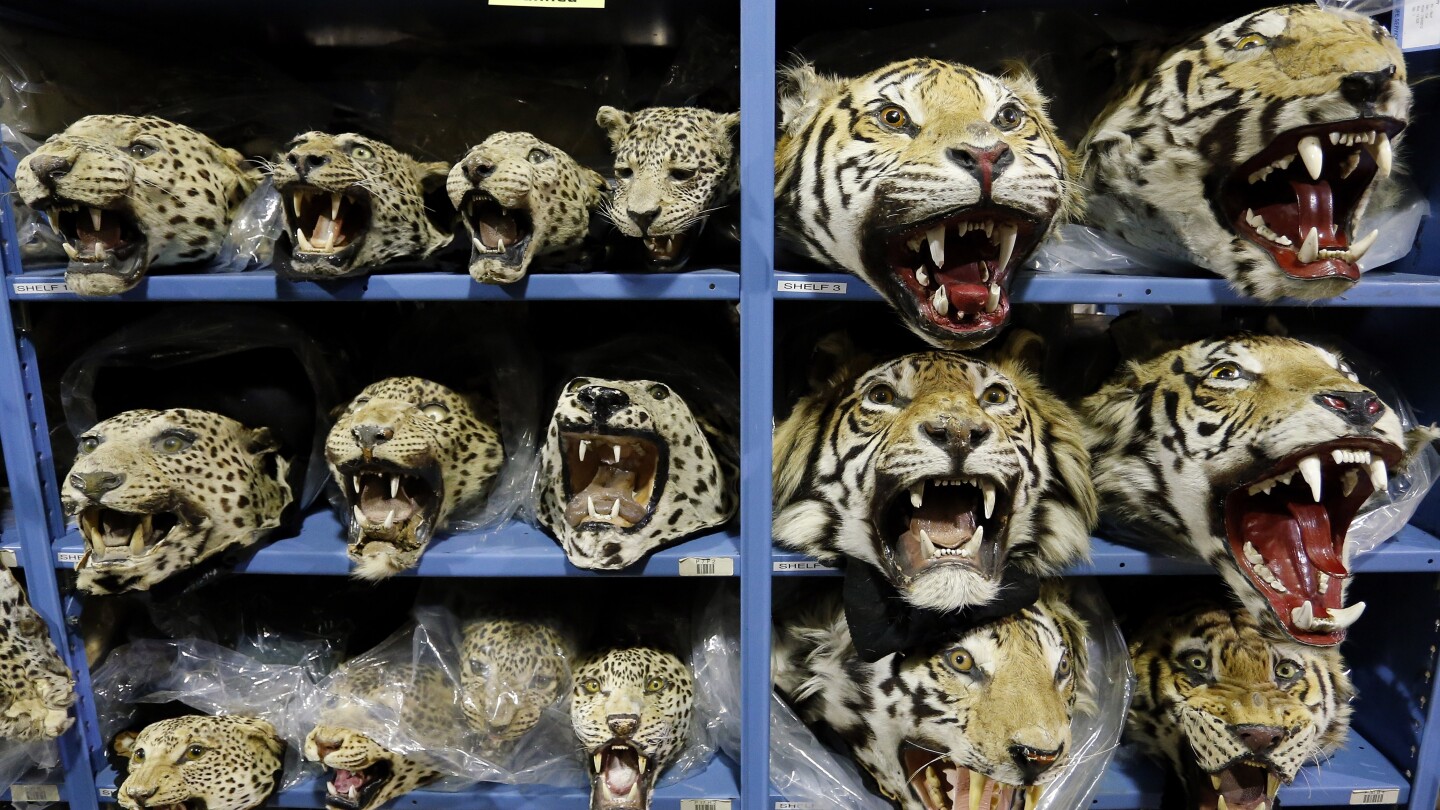
Authorities worldwide have seized an average of nine tigers each month over the past five years, according to a troubling new report that highlights an accelerating wildlife trafficking crisis threatening one of the world’s most iconic species.
The comprehensive analysis, released Tuesday by wildlife trade monitoring network TRAFFIC, warns that criminal networks are evolving faster than conservation efforts can respond. The report represents the sixth installment in TRAFFIC’s “Skin and Bones” series examining illegal tiger trade patterns.
“This rise reflects improved enforcement efforts but also signals persistent and, in some areas, escalating criminal activity and a widespread demand for tigers and their parts,” said Ramacandra Wong, senior wildlife crime analyst and co-author of the report.
The findings paint a grim picture for wild tigers, whose global population has plummeted from approximately 100,000 a century ago to an estimated 3,700-5,500 today, despite half a century of international protection efforts.
Between 2000 and mid-2025, law enforcement agencies recorded 2,551 seizures involving at least 3,808 tigers worldwide. The trafficking appears to be accelerating, with 765 seizures in just the last five years (2020 to June 2025), representing 573 tigers. The worst single years were 2019 and 2023, with 141 and 139 seizures respectively.
Most seizures occurred within the 13 countries with wild tiger populations, led by India, which hosts the world’s largest tiger population, followed by China, Indonesia and Vietnam. Among countries without native tiger populations, Mexico, the United States and the United Kingdom reported significant numbers of trafficking incidents.
TRAFFIC’s analysis reveals a notable shift in trafficking patterns. During the 2000s, tiger parts accounted for 90% of seized products, but since 2020, that proportion has dropped to 60%. This decline has been accompanied by a spike in seizures of whole animal carcasses and live tigers. More than 40% of confiscations in countries such as Vietnam, Thailand, Indonesia and Russia now involve whole tigers.
Experts suggest this trend may be linked to captive-breeding operations, or could reflect tigers being seized shortly after poaching, before being dismembered. The shift might also be driven by rising demand for exotic pets or taxidermy.
Leigh Henry, director of wildlife conservation at the World Wildlife Fund (WWF), emphasized that the surge in whole-animal trafficking underscores the “prominent role of captive tiger breeding facilities in feeding and perpetuating the illegal trade.”
“Illegal trade remains the greatest immediate threat to wild tigers. If we don’t urgently scale up investments to combat tiger trafficking — at all points along the trade chain — we absolutely face the possibility of a world without wild tigers,” Henry told The Associated Press.
The report identifies several entrenched trafficking hotspots where interventions should be prioritized, including India and Bangladesh’s tiger reserves; Indonesia’s Aceh region; the Vietnam-Laos border area; and major consumption hubs in Vietnam, including Hanoi and Ho Chi Minh City.
Consumption patterns vary significantly by region. In Mexico and the United States, demand trends toward live tigers, often for exotic pet ownership. European markets show stronger demand for tiger derivatives used in certain traditional medicines and taxidermy for decoration. Across Asia, demand spans skins, bones, claws and whole dead animals, used for fashion and traditional medicine.
The report also documents growing “species convergence,” with almost one in five tiger trafficking incidents involving other threatened wildlife, most commonly leopards, bears and pangolins. This suggests sophisticated criminal networks trafficking multiple endangered species simultaneously.
TRAFFIC emphasizes that investigations should not end at the point of seizure. The organization calls for strong international cooperation and intelligence-led, multi-agency enforcement actions to disrupt organized crime networks along the entire illegal trade chain.
As trafficking methods continue to evolve, the report serves as an urgent reminder that without intensified conservation efforts and stronger enforcement, the world risks losing one of its most magnificent predators to extinction within our lifetime.
Fact Checker
Verify the accuracy of this article using The Disinformation Commission analysis and real-time sources.

11 Comments
This crisis reflects the broader challenges in tackling the illegal wildlife trade. A comprehensive, multi-stakeholder approach is needed to address the root causes.
This is a concerning report on the rampant illegal tiger trade. Authorities must step up enforcement and conservation efforts to protect this iconic species before it’s too late.
Agreed. Stronger international cooperation is needed to dismantle the criminal networks behind this wildlife trafficking crisis.
This report highlights the need for greater international cooperation and information sharing to combat the global tiger trafficking crisis.
Improved enforcement efforts are a step in the right direction, but the criminals are evolving faster than conservation can respond. More resources and innovative strategies are needed.
Agreed. We must stay one step ahead of the poachers and traffickers to effectively protect the remaining wild tiger populations.
With only 3,700-5,500 wild tigers left, this situation is extremely dire. Urgent, coordinated action is required to save this magnificent species from extinction.
The decline of wild tigers over the past century is truly heartbreaking. We must redouble our efforts to save this iconic species before it’s too late.
Absolutely. The survival of wild tigers is crucial for maintaining the delicate balance of ecosystems worldwide.
The demand for tiger parts and products is clearly a major driver fueling this crisis. More public awareness campaigns are needed to reduce consumer demand.
Absolutely. Sustainable alternatives and traditional medicine substitutes could also help curb the illegal tiger trade.