


Listen to the article
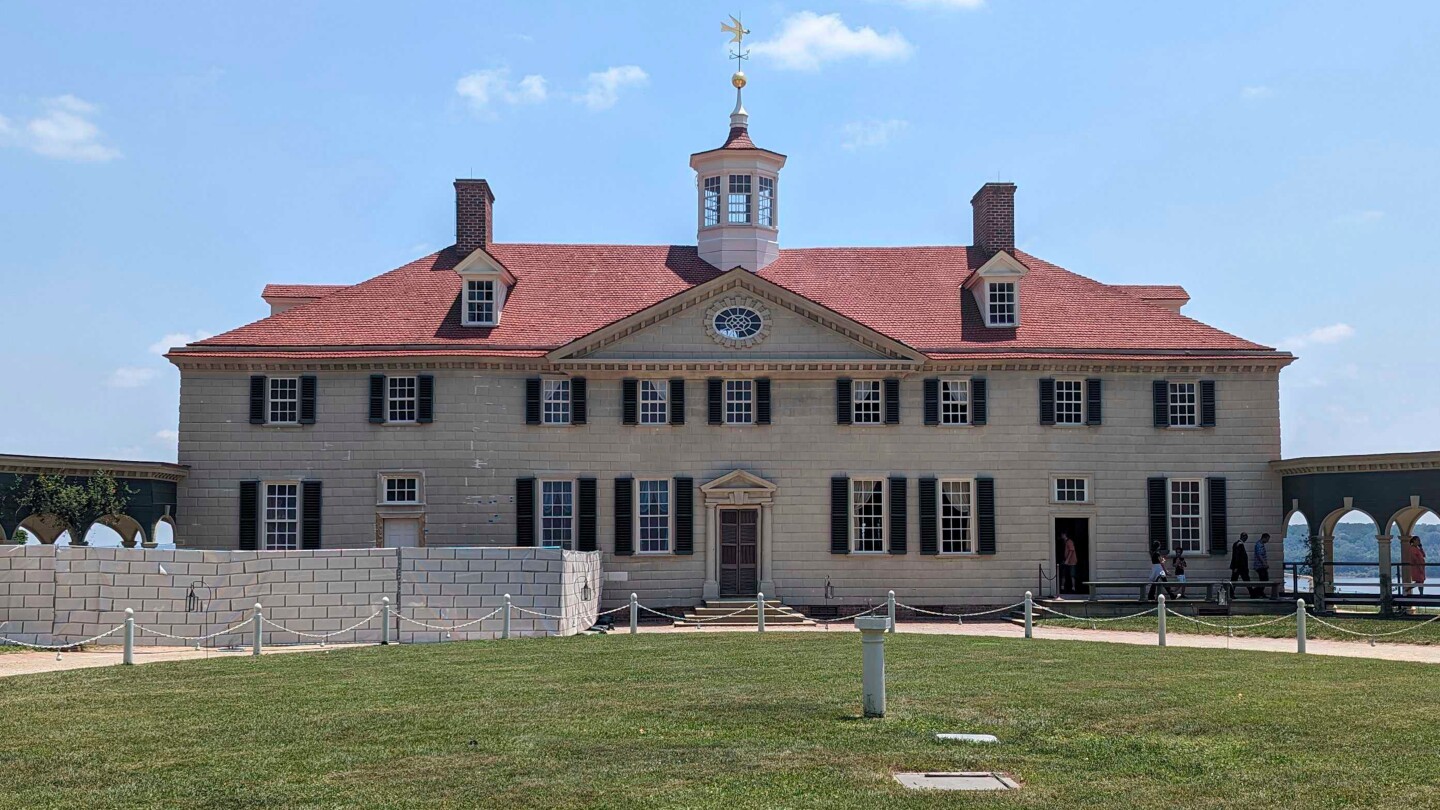
After two years of extensive renovations, visitors can once again tour the first and second floors of George and Martha Washington’s historic mansion at Mount Vernon. The reopening marks a significant milestone in the ongoing $40 million preservation project aimed at restoring the first president’s home to its original glory.
The ambitious restoration effort, which began with exterior work on the building’s west side in 2019, has involved comprehensive infrastructure repairs, the installation of a state-of-the-art HVAC system, improved drainage around the cellar, and the meticulous restoration of Washington’s bedroom.
“We have moved steadily to restore the mansion to its glory, restored the exterior, fixed all the windows, repaired the piazza,” said Doug Bradburn, president of George Washington’s Mount Vernon, during Wednesday’s ribbon-cutting ceremony. He emphasized the project’s commitment to historical accuracy and preservation techniques that will ensure the mansion’s longevity.
The current phase of the preservation project, launched in 2023, focuses primarily on the mansion’s interior and structural reinforcement. One of the most challenging aspects has been addressing significant termite damage and removing approximately 200 years of problematic structural interventions.
Tom Whitmore, vice president of historic preservation at the Christman Co., which is overseeing the construction work, noted that more than 400 subcontractors have contributed to the project. “There was intensive termite damage, and like you see in old crawl spaces and basements, things have been added over time to support things that really weren’t structurally sound anymore,” Whitmore explained.
The restoration team replaced much of the timber framing below the mansion using white oak sourced directly from the grounds of Mount Vernon, maintaining historical authenticity. Whitmore indicated that his company’s portion of the work will be completed by July 4, 2026—a symbolically significant date for the first president’s home.
Washington’s bedchamber has received particular attention, featuring a new bed, freshly restored wall plaster, and meticulously reproduced 1790s wallpaper created by New York-based Adelphi Paper Hangings. These details help recreate the space as Washington would have known it during his lifetime.
The project has also yielded remarkable archaeological discoveries. Researchers uncovered 35 18th-century glass bottles in five storage pits, with nine bottles containing perfectly preserved cherries, gooseberries, and currants—offering a rare glimpse into colonial-era food preservation. Additionally, an 18th-century fork was found hidden behind a wall in Martha Washington’s closet, adding another piece to the puzzle of daily life at Mount Vernon.
While visitors can now enjoy access to the main floors of the mansion, which had been closed on a rotating schedule during the renovation process, some areas remain off-limits. The cellar, which is being restored to its appearance at the time of Washington’s death in 1799, will remain closed to the public until fall 2026. Amy McCauley, restoration manager at the estate, revealed plans for a gala celebration in October 2026 to mark the grand reopening of the fully restored cellar.
The comprehensive preservation effort represents one of the most significant investments in maintaining Mount Vernon’s historical integrity. By combining modern preservation techniques with historical research, the project team aims to provide visitors with the most accurate depiction of the Washington family’s living environment while ensuring the structural stability of this national treasure for generations to come.
The complete restoration project is scheduled for completion by October 2026, coinciding with the 250th anniversary of American independence—a fitting tribute to the home of the nation’s first president.
Fact Checker
Verify the accuracy of this article using The Disinformation Commission analysis and real-time sources.

12 Comments
What an impressive achievement to have the mansion’s first and second floors reopened after two years of intensive renovations. It must have been a monumental undertaking to meticulously restore Washington’s bedroom and other key interior spaces.
Restoring historic sites like Mount Vernon is vital for educating the public about our nation’s origins. I’m glad to see this project prioritizing historical accuracy and using preservation techniques to ensure the mansion’s long-term future.
A $40M renovation is a significant investment, but it’s heartening to see the commitment to restoring George Washington’s home to its original splendor. I’m curious to learn more about the specific infrastructure and restoration work undertaken.
The article mentions improvements like a new HVAC system and drainage work around the cellar. I imagine those behind-the-scenes upgrades were crucial to preserving the mansion’s structural integrity.
Extensive infrastructure repairs, a new HVAC system, and meticulous restoration of key rooms – it’s clear a tremendous amount of work went into revitalizing this historic mansion. I’m curious to see how the completed project is received by visitors.
Same here. With the interior and structural reinforcement now the focus, I imagine the final result will be quite impressive and immersive for guests.
A $40M price tag is no small feat, but the results seem well worth it based on the details provided. Maintaining these irreplaceable landmarks is crucial for honoring our country’s history and inspiring future generations.
Agreed. The commitment to restoring the mansion to its original glory, down to Washington’s own bedroom, is a remarkable accomplishment.
While the renovation costs are certainly high, it’s heartening to see the dedication to preserving this important piece of American history. The attention to detail and use of historically accurate techniques will ensure Mount Vernon remains a treasure for years to come.
It’s wonderful to see this historic mansion restored to its former glory after such an extensive renovation project. Preserving America’s founding sites is so important for understanding our nation’s history.
Indeed, the attention to historical accuracy and preservation techniques used will ensure this landmark’s longevity for future generations to enjoy.
A $40 million renovation is no small feat, but it’s reassuring to see the commitment to historical preservation and accuracy for this iconic American landmark. The attention to detail in restoring Washington’s bedroom and other key spaces must have been painstaking work.