


Listen to the article
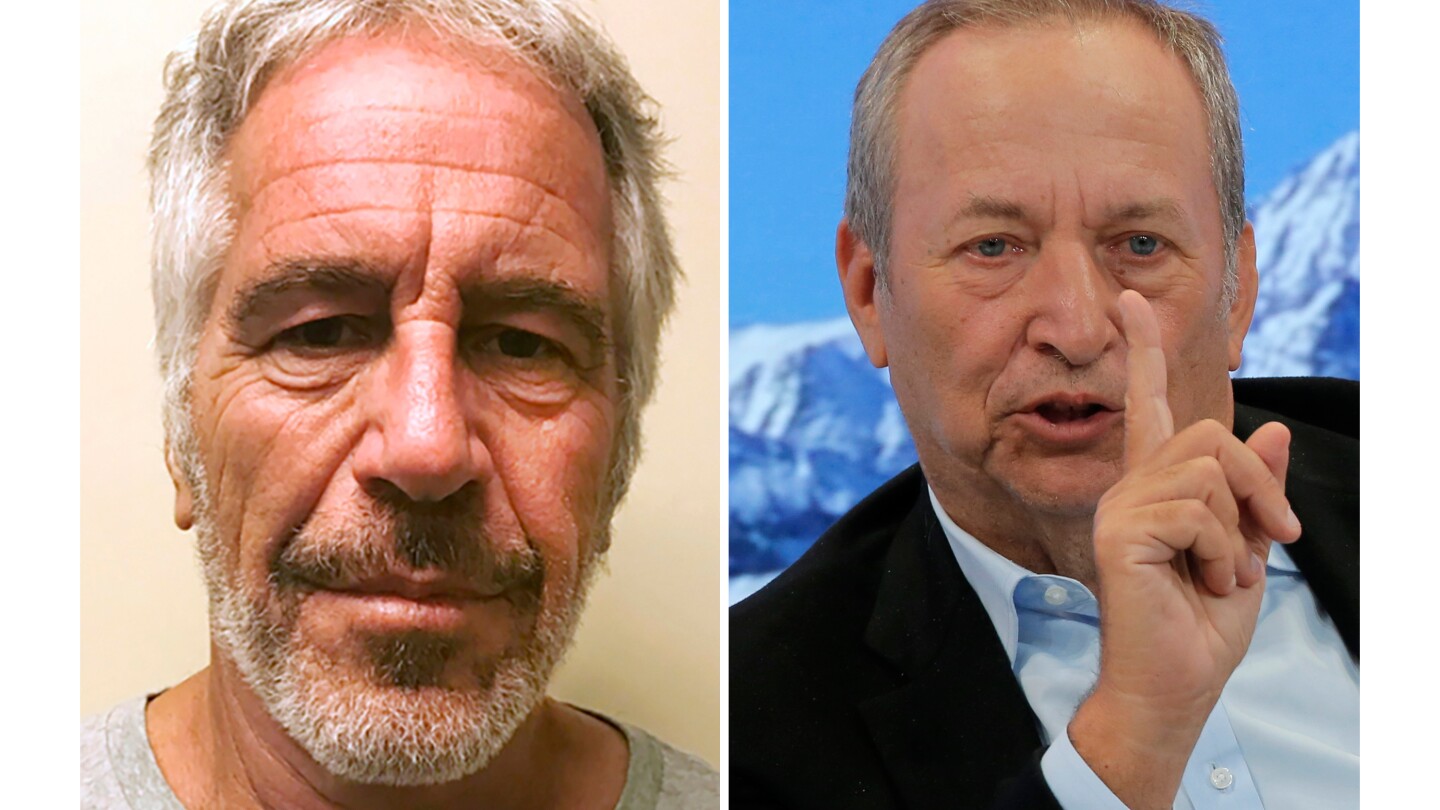
Former Treasury Secretary Larry Summers has withdrawn from several high-profile positions, including his role on OpenAI’s board of directors, amid controversy surrounding newly disclosed emails showing his continued relationship with convicted sex offender Jeffrey Epstein years after Epstein’s 2008 conviction.
The fallout began after the release of emails revealing that Summers maintained communications with Epstein as recently as 2018, a decade after Epstein pleaded guilty to soliciting prostitution from an underage girl. In response to these revelations, Summers announced Monday that he would “step back from public commitments,” triggering a cascade of severed affiliations across academic, business, and media organizations.
Harvard University, where Summers served as president from 2001 to 2006, has reopened an investigation into connections between university personnel and Epstein. While not naming Summers specifically, Harvard spokesperson Jason Newton confirmed the university is “conducting a review of information concerning individuals at Harvard included in the newly released Jeffrey Epstein documents to evaluate what actions may be warranted.”
This isn’t Harvard’s first examination of Epstein connections. A previous investigation completed in 2020 found that Epstein had visited Harvard’s campus more than 40 times after his conviction and had been given office space and access to a research center he helped establish. That investigation resulted in disciplinary action against one professor who had provided Epstein with campus access.
The recently released emails contain exchanges where Summers appeared to seek Epstein’s advice regarding a romantic relationship. In one November 2018 exchange, Epstein described himself as a “pretty good wing man,” to which Summers responded about messaging a woman, contemplating whether he should apologize about “being married.”
Other emails show that Summers’ wife, Elisa New, an English professor emerita at Harvard, communicated with Epstein regarding financial support for a poetry project she directed. In a 2015 email, New thanked Epstein for arranging support that “changed everything for me,” adding that “it really means a lot to me, all financial help aside, Jeffrey, that you are rooting for me and thinking about me.”
Despite stepping back from many public roles, Summers has continued teaching his undergraduate course at Harvard, “The Political Economy of Globalization,” which he co-teaches with Professor Robert Lawrence. On Tuesday, Summers addressed students briefly about the situation, stating: “Some of you will have seen my statement of regret expressing my shame with respect to what I did in communication with Mr. Epstein and that I’ve said that I’m going to step back from public activities for a while. But I think it’s very important to fulfill my teaching obligations.”
OpenAI, the artificial intelligence company behind ChatGPT, confirmed Summers’ departure from its board of directors. Summers had joined the board in November 2023 as part of a leadership reorganization aimed at stabilizing the company after CEO Sam Altman’s brief ouster. In a statement about his resignation, Summers said, “I am grateful for the opportunity to have served, excited about the potential of the company, and look forward to following their progress.”
Other organizations severing ties with Summers include the Center for American Progress, the Center for Global Development, and Yale University’s Budget Lab. Media affiliations have also ended, with Bloomberg TV confirming the termination of his role as a paid contributor, and The New York Times stating it would not renew his contract as a contributing opinion writer.
Summers, who served as Treasury Secretary under President Bill Clinton from 1999 to 2001, issued a statement last week acknowledging that his association with Epstein was a “major error in judgment” and that he has “great regrets” in his life.
Epstein died in 2019 while in federal custody awaiting trial on sex trafficking charges. His connections to powerful figures across business, politics, and academia have remained a source of scrutiny and controversy, highlighting questions about influence and accountability among elite institutions and individuals.
Fact Checker
Verify the accuracy of this article using The Disinformation Commission analysis and real-time sources.

9 Comments
This is a complex and sensitive issue that deserves careful consideration. While the facts are still emerging, any potential misconduct must be handled with the utmost seriousness and professionalism.
I agree. It’s important to allow the investigation to proceed objectively and without bias. The industry and the public deserve a clear and credible accounting of what occurred.
The mining and commodities industry needs to maintain the highest ethical standards. Any evidence of improper relationships or conduct must be swiftly and thoroughly addressed. Transparency is crucial for public confidence.
Absolutely. The industry cannot afford to be tainted by these kinds of allegations. A full, independent investigation is warranted to determine the facts and ensure appropriate actions are taken.
This is a concerning development. Summers’ relationship with Epstein raises serious ethical questions that deserve thorough investigation. Harvard must ensure full transparency and accountability in this matter.
I agree. Maintaining ties to known sex offenders, even years later, is highly problematic and damages public trust. Harvard must handle this review with the utmost rigor and integrity.
The mining and commodities industry faces enough challenges without these kinds of distractions. A thorough, impartial investigation is needed to determine the facts and take appropriate actions to uphold the sector’s integrity.
Summers’ withdrawal from public roles is understandable given the nature of the allegations. However, the mining and energy sectors must remain vigilant in ensuring the highest ethical standards across all levels of leadership.
Well said. These industries play a critical role in the global economy and cannot afford any perception of impropriety. A proactive, transparent approach is essential to maintain public trust.