


Listen to the article
FlyDubai Makes Historic Pivot to Airbus with $24 Billion Aircraft Order
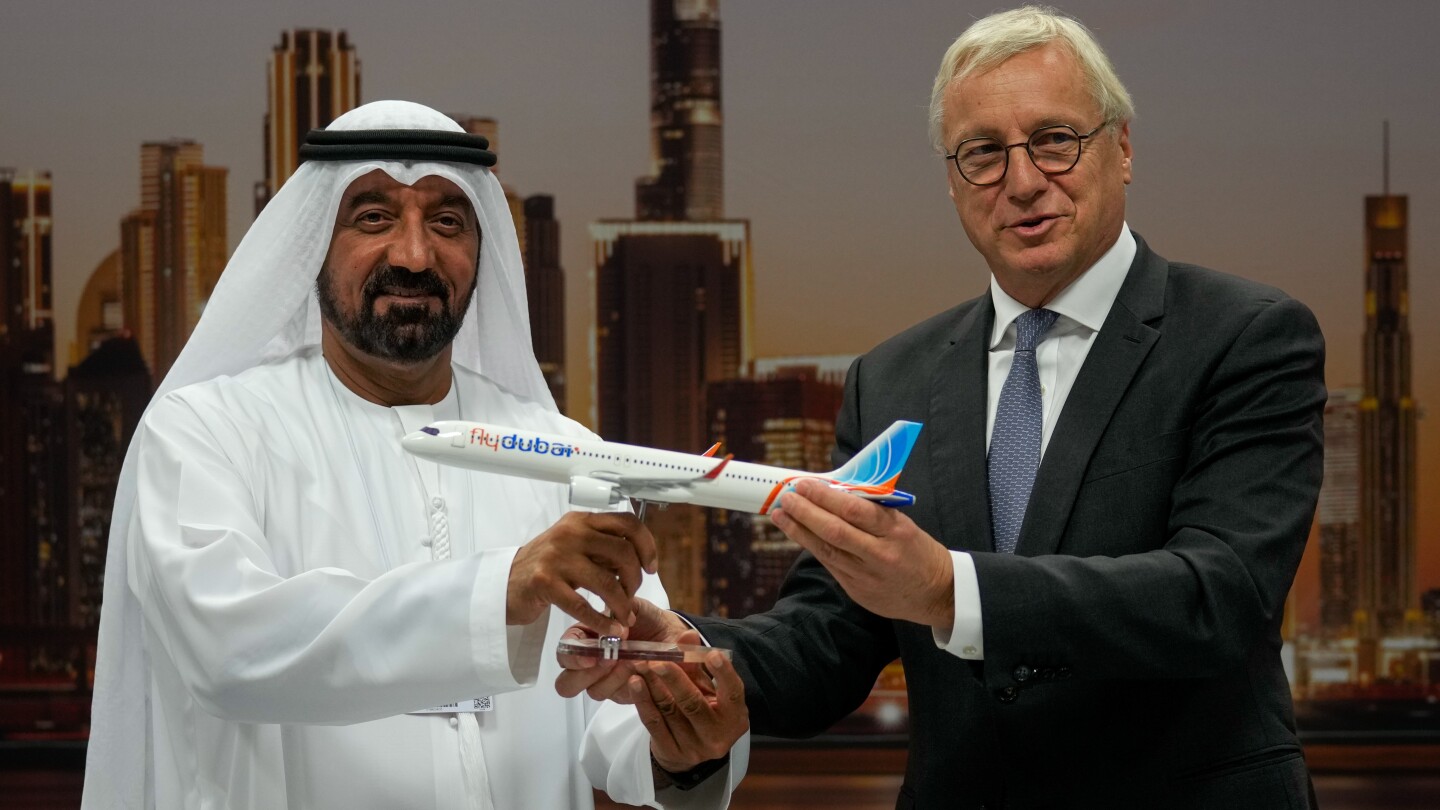
In a significant shift from its long-established fleet strategy, FlyDubai announced Tuesday an initial order for 150 Airbus A321neo aircraft at the Dubai Air Show, marking the first time the carrier has expanded beyond Boeing since its 2009 launch.
The deal, valued at approximately $24 billion, would more than double the airline’s current fleet of 95 aircraft. FlyDubai also secured options for an additional 100 A321neos, positioning the carrier for substantial growth as Dubai develops its ambitious five-runway airport project.
“It’s an exciting step in expanding and diversifying our fleet and strengthening our long-term expansion plans,” said Sheikh Ahmed bin Saeed Al Maktoum, who serves as both chairman and chief executive of Emirates and chairman of FlyDubai.
The agreement, currently characterized as a memorandum of understanding, suggests additional negotiations may precede a finalized contract. Neither Airbus nor FlyDubai entertained questions from journalists at the announcement, indicating sensitive details remain under discussion.
Christian Scherer, CEO of Airbus Commercial Aircraft, praised FlyDubai as “an efficiency-minded carrier that’s also offering a premium product” – acknowledging the airline’s reputation for operational excellence while maintaining competitive pricing in the regional market.
The A321neo, a mid-range, twin-engine, single-aisle aircraft, aligns with FlyDubai’s existing fleet of Boeing 737s. This massive order comes just months after FlyDubai’s $11 billion purchase of 30 Boeing 787-9 Dreamliners at last year’s Dubai Air Show, which will introduce the first wide-body aircraft to its operations.
The strategic fleet diversification comes amid Dubai’s broader aviation expansion plans, centered on a $35 billion project to develop Al Maktoum International Airport at Dubai World Central with five parallel runways and 400 aircraft gates within the next decade.
Tim Clark, president of Emirates, highlighted the significance of this infrastructure development, noting: “We’ll be able to reach any point on the planet” once the expansion is complete.
Meanwhile, Abu Dhabi-based Etihad Airways also announced a significant Airbus purchase on Tuesday, ordering 16 aircraft including six A330-900s, seven A350-1000s, and three A350F freighters. The financial terms were not disclosed, though airlines typically negotiate substantial discounts on such orders.
The purchase reflects Etihad’s improving economic situation, with the carrier reporting a record $476 million profit in 2024 – a remarkable turnaround after years of financial struggles that saw losses of approximately $6 billion since 2016, when the airline aggressively expanded by acquiring stakes in carriers across Europe and Asia.
While Etihad’s profits remain modest compared to Emirates’ record $5.2 billion in the last fiscal year, the positive performance signals a successful restructuring following extensive cost-cutting measures implemented even before the COVID-19 pandemic.
The Dubai Air Show has proven fruitful for Boeing as well, with Emirates placing an order Monday for 65 of Boeing’s upcoming 777-9 aircraft, valued at $38 billion at list prices. However, Clark acknowledged ongoing production delays at Boeing, which has faced billions in losses in recent years due to manufacturing slowdowns, worker strikes, and increased regulatory scrutiny following fatal 737 MAX crashes and a recent Boeing 787-8 accident in India.
Despite these challenges, Clark expressed cautious optimism that the substantial Emirates order might attract U.S. government attention to encourage Boeing to accelerate production. “I’m sure the White House will be leaning on Boeing to make sure it all works and they can get the things out of the doors quickly as they can, because it does mean jobs for everyone,” Clark said.
Sheikh Ahmed expects Emirates to begin receiving its 777-9 aircraft from Boeing in “the second quarter of 2027,” though Clark tempered expectations with a measured “We’ll see” when asked about Boeing meeting this timeline.
Fact Checker
Verify the accuracy of this article using The Disinformation Commission analysis and real-time sources.

5 Comments
While the Airbus order diversifies FlyDubai’s fleet, I’m curious to see if it affects their operational efficiency or costs in the long run. Transitioning to a new aircraft type can be complex, but the A321neo’s fuel efficiency may offset those challenges.
Interesting to see FlyDubai expand beyond its traditional Boeing fleet. This Airbus order signals a strategic shift as the airline positions itself for growth in the region. It will be exciting to see how this diversification impacts their operations and customer experience.
Absolutely, this is a significant move that could open up new routes and opportunities for FlyDubai. The A321neo seems well-suited for their needs.
A $24 billion deal for 150 Airbus aircraft is no small feat. FlyDubai must be confident in the A321neo’s capabilities to commit to such a major fleet expansion. I wonder how this will affect their relationships with Boeing and impact the wider Middle Eastern aviation market.
Good point. This shift could have wider implications for the regional aviation landscape as airlines reevaluate their fleet strategies.