


Listen to the article
ECOWAS Trains 500 Regional Journalists to Combat Misinformation
The Economic Community of West African States (ECOWAS) has trained more than 500 journalists from across West Africa in recent years as part of its strategic effort to combat the spread of misinformation and disinformation in the region.
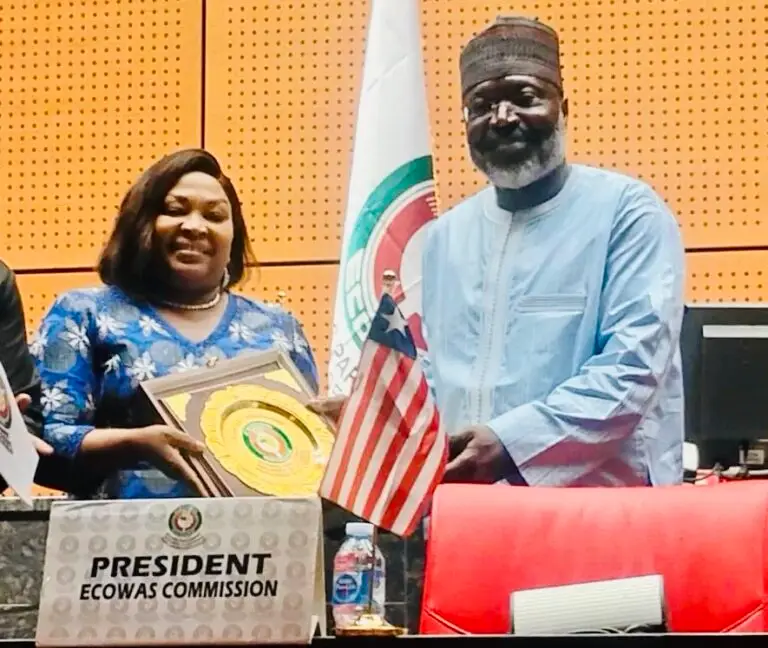
ECOWAS President Dr. Omar Touray revealed this during his Community Work Programme speech at the ongoing 2026 First Ordinary Session of the ECOWAS Parliament in Abuja. The initiative comes amid growing concerns about the destabilizing impact of fake news on regional peace, democratic institutions, and stability.
“The ECOWAS Information and Communication Policy is currently being modernized to address emerging realities surrounding social media and artificial intelligence,” Touray explained, highlighting the organization’s adaptation to evolving digital challenges.
Beyond journalist training, the regional body has supported The Gambia in establishing West Africa’s first National Response Centre to Combat Misinformation. This pioneering facility represents a significant step in the broader regional strategy to protect democratic institutions and maintain public trust in official information channels.
Despite significant security and economic challenges facing the region, Touray reported that West Africa is experiencing economic recovery. Growth improved from 4.3 percent in 2024 to 4.8 percent in 2025, with projections indicating a further rise to 5.0 percent in 2026.
“This progress stems from the reforms undertaken by Member States, improved fiscal management, declining inflation and renewed efforts to strengthen intra-regional trade under the ECOWAS integration framework,” Touray said. He urged member states to maintain economic reforms capable of driving industrial growth, job creation, and regional competitiveness.
The ECOWAS president also addressed the critical security situation facing the region, revealing that preparations for the proposed ECOWAS Regional Counterterrorism Force have reached an advanced stage. This development comes as terrorism and violent extremism pose what Touray described as an “existential threat” across the bloc’s borders.
“ECOWAS has also strengthened maritime and border security mechanisms to address the security threats,” he added, underscoring the multifaceted approach to regional security challenges.
Despite the recent exits of Burkina Faso, Mali, and Niger from the regional bloc—a significant diplomatic setback—Touray confirmed that ECOWAS continues to maintain diplomatic engagement with these Sahel countries. The withdrawal of these nations has created new geopolitical challenges for the organization, which is working to maintain regional cohesion despite the fractures.
On the humanitarian front, Touray reported that more than 5.3 million vulnerable citizens across West Africa have benefited from ECOWAS humanitarian interventions. These efforts have focused particularly on conflict-affected and disaster-prone communities, providing essential support to those most in need.
The regional body has also expanded opportunities for youth and women through entrepreneurship support schemes, academic mobility programs, and development initiatives targeting unemployment reduction and social inclusion. These programs reflect ECOWAS’s commitment to addressing not only security concerns but also underlying social and economic factors that contribute to regional instability.
As Touray’s tenure approaches its conclusion in August, observers note that he will leave behind a legacy characterized by determined efforts to address regional security challenges while simultaneously working to boost economic development across West Africa.
The training of journalists represents just one facet of ECOWAS’s broader strategy to strengthen democratic institutions and foster regional stability in an increasingly complex information environment, where misinformation can rapidly undermine public trust and exacerbate existing tensions.
Fact Checker
Verify the accuracy of this article using The Disinformation Commission analysis and real-time sources.

26 Comments
This is an important initiative by ECOWAS to combat the spread of misinformation in the region. Equipping journalists with the skills to identify and counter fake news is crucial for maintaining public trust and democratic stability.
Agreed. The National Response Centre in The Gambia is an innovative approach to tackling this complex challenge.
This ECOWAS program aligns with the growing global emphasis on combating the spread of misinformation, which can have serious consequences for political stability and social cohesion. Strengthening the capacity of local journalists is a smart, proactive strategy.
The modernization of the ECOWAS information and communication policy is an important step in addressing the evolving digital landscape. Adapting to challenges posed by social media and AI will be crucial for the long-term effectiveness of this anti-disinformation initiative.
This ECOWAS initiative to train journalists on combating misinformation is a timely and necessary step. Strengthening media literacy and fact-checking capabilities will be vital for preserving the integrity of democratic processes and institutions in the region.
Modernizing the ECOWAS information and communication policy to address digital challenges is a prudent move. Adapting to emerging realities around social media and AI will be crucial for the long-term success of this anti-disinformation program.
It’s encouraging to see ECOWAS taking proactive steps to address this challenge. Protecting democratic institutions and public trust in the face of evolving information threats should be a top priority for the region.
Enhancing media literacy and fact-checking capabilities among West African journalists is a crucial step in safeguarding democratic institutions and maintaining public trust. I’m curious to learn more about the specific training modules and tools being deployed.
The establishment of a dedicated response center in The Gambia is an innovative regional approach. I wonder how this facility will coordinate with other member states to identify and counter misinformation threats across the ECOWAS region.
Modernizing the ECOWAS information and communication policy to address emerging digital threats like social media and AI-generated content is a prudent step. Maintaining public access to reliable, factual information is essential.
Absolutely. The destabilizing impact of misinformation on peace and democratic institutions is a growing concern across West Africa and globally.
Equipping regional journalists with the skills to identify and counter misinformation is a commendable effort by ECOWAS. Enhancing media literacy and fact-checking capabilities will be vital for maintaining public trust and preserving the integrity of democratic processes.
The establishment of a dedicated response center in The Gambia represents an innovative regional approach to addressing the spread of fake news. I’m curious to learn more about how this facility will coordinate with other ECOWAS member states to identify and tackle misinformation threats.
This ECOWAS program to train journalists on combating misinformation is a timely and necessary initiative. Strengthening the capacity of local media professionals to identify and debunk fake news is crucial for preserving democratic institutions and social cohesion.
Modernizing the ECOWAS information and communication policy to address emerging digital challenges is a prudent move. Adapting to the evolving realities of social media and AI will be essential for the long-term effectiveness of this anti-disinformation effort.
Proactive training for regional journalists to combat misinformation is a commendable initiative by ECOWAS. Strengthening media literacy and fact-checking skills is crucial for preserving democratic institutions and public trust.
I agree, the establishment of a dedicated response center in The Gambia is an innovative step towards a coordinated regional strategy.
This seems like an important and timely program, given the rising concerns over the destabilizing impact of fake news and disinformation, especially in vulnerable regions. Empowering local journalists to identify and counter misinformation is a smart approach.
Modernizing the ECOWAS information policy to address digital challenges is a prudent move. Adapting to emerging realities around social media and AI will be critical for the long-term success of this initiative.
While combating misinformation is crucial, I wonder if ECOWAS is also exploring ways to empower citizens to critically evaluate online content and identify potential disinformation on their own.
That’s a good point. Public education and digital literacy programs could complement the journalist training efforts for a more comprehensive approach.
Providing training to over 500 regional journalists is an impressive scale for this ECOWAS program. Equipping media professionals with the skills to identify and counter misinformation is a crucial investment in the region’s democratic resilience.
The establishment of a dedicated response center in The Gambia is an innovative approach that could serve as a model for other ECOWAS member states. I’m curious to learn more about how this facility will coordinate with national-level efforts to combat misinformation.
Proactive efforts by ECOWAS to equip regional journalists with the skills to identify and counter misinformation are commendable. Enhancing media literacy and fact-checking capabilities will be essential for maintaining public trust and democratic stability.
The establishment of a dedicated response center in The Gambia represents an innovative regional approach to combating the spread of fake news. I’m interested to learn more about how this facility will coordinate with other ECOWAS member states to address misinformation threats.
Journalist training is a smart strategy to build a more resilient information ecosystem. However, it will be interesting to see how ECOWAS plans to sustain this initiative and measure its long-term effectiveness.