


Listen to the article
Fire Disrupts UN Climate Talks in Brazil, Delays Critical Negotiations
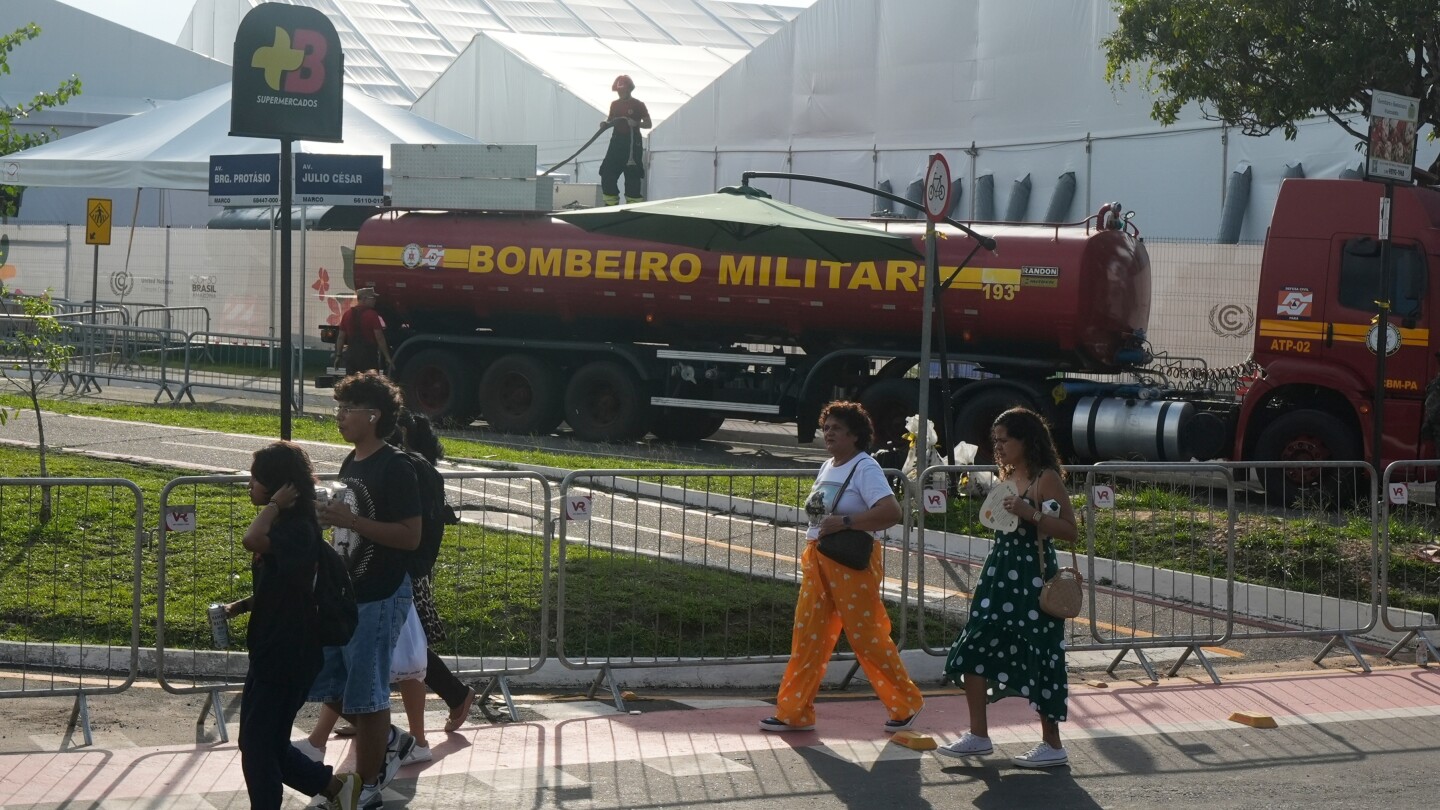
A fire broke out Thursday at the United Nations climate conference in Belem, Brazil, forcing the evacuation of several buildings and significantly disrupting already sluggish negotiations. Officials reported that 13 people were treated for smoke inhalation, though no serious injuries were reported.
The blaze erupted in an area of pavilions hosting sideline events for COP30, this year’s edition of the annual UN climate talks. While firefighters quickly brought the flames under control, safety officials ordered the entire site evacuated for comprehensive safety checks, leaving it uncertain when formal conference business would resume.
The timing could not have been worse for negotiators. With only one scheduled day remaining, the interruption threatens to derail progress on several contentious issues that have yet to yield any major agreements. The Brazilian presidency of the talks had planned for ministers and diplomats to work late into Thursday night to bridge significant divides.
“It definitely puts a hold on negotiations for a period of time,” said veteran climate talks observer Alden Meyer of European think-tank E3G. “They could still get back on track but ending Friday, as scheduled, doesn’t look likely.”
The disruption comes at a critical juncture. The COP30 presidency had been working to finalize a draft agreement on four interconnected and contentious topics: climate finance, emission reduction targets, fossil fuel phase-out plans, and climate-related trade measures. Leaders had originally hoped to reach a deal by Wednesday while UN Secretary-General António Guterres and Brazilian President Luiz Inácio Lula da Silva were still on site, but negotiations had stalled.
“It means there is a lot to do with very little time. There were already huge gulfs to bridge and this won’t help,” said Teresa Anderson, climate justice lead at ActionAid.
Just hours before the fire, Guterres had urged countries to compromise and “show willingness and flexibility to deliver results,” even if they fell short of the strongest measures some nations want. “We are down to the wire and the world is watching Belem,” Guterres said, emphasizing the need for good-faith negotiations.
The secretary-general highlighted the human cost of climate inaction: “Communities on the front lines are watching, too — counting flooded homes, failed harvests, lost livelihoods — and asking, ‘how much more must we suffer?’ They’ve heard enough excuses and demand results.”
Among the most divisive issues is climate finance, with developing nations calling for increased financial support to address climate impacts. Guterres has advocated for tripling adaptation finance from $40 billion to $120 billion annually. The talks aim to finalize an agreed goal of $300 billion in yearly climate aid to vulnerable countries.
Another sticking point involves detailed plans for transitioning away from fossil fuels. More than 80 countries have pushed for a specific “road map” on how to phase out coal, oil, and natural gas — the primary drivers of global warming. While a general agreement was reached two years ago at COP28 in Dubai, translating this into concrete actions has proven challenging.
Mohamed Adow, director of PowerShift Africa, found a silver lining in the emergency response to the fire. “That spirit is precisely what climate action demands,” Adow said. “If we can respond to the planet’s emergencies with the same unity shown in that tense moment, COP30 might yet be remembered not for an incident, but for a turning point.”
Meyer, however, remained skeptical that the momentary solidarity would overcome entrenched interests. “People tend to feel a little closer during an emergency like this,” he said, “but there are pretty deep fundamental interests at play.” He expressed concern that with limited time remaining, the Brazilian leadership might settle for minimal agreements that satisfy no one.
The fire’s impact extends beyond the immediate schedule disruption. Nations particularly vulnerable to climate disasters had delivered emotional testimonies earlier this week, pleading for concrete action rather than continued discussion. The delay potentially undermines momentum built during those sessions.
Climate conferences typically run longer than their scheduled two weeks, and with the current disruption, an extension past Friday now seems inevitable. Whether negotiators can salvage meaningful progress from this setback remains to be seen, as the world watches for signals that global climate cooperation can overcome both physical and diplomatic obstacles.
Fact Checker
Verify the accuracy of this article using The Disinformation Commission analysis and real-time sources.

11 Comments
The timing of this fire couldn’t be worse for the UN climate conference. Negotiators are racing against the clock to make progress on critical issues, and any disruption threatens to derail the entire process. I hope the damage is minimal and that talks can resume promptly.
This is certainly an untimely interruption in the critical climate talks. Hopefully the fire was contained quickly and without major damage, allowing negotiations to resume as soon as possible. These annual COP meetings are essential for advancing global climate action.
Yes, any delays could jeopardize the already slow progress on key issues. The negotiators will need to work around the clock to make up for lost time.
It’s concerning to hear about this fire disrupting the UN climate conference. These talks are crucial for coordinating international efforts to address climate change, so any interruptions are worrying. I hope the cause of the fire can be quickly investigated and resolved.
Agreed. The world is running out of time to implement meaningful policies to curb emissions and transition to clean energy. These annual summits are essential for maintaining momentum and accountability.
This is a setback for the critical climate negotiations taking place in Brazil. Disrupting the talks during the final days could jeopardize the ability to reach meaningful agreements. I hope the fire was contained quickly and that the conference can get back on track.
Yes, the timing is very bad. With so little time left, every hour counts for the negotiators to bridge divides and finalize outcomes. This interruption is quite worrying.
This is a concerning development that could significantly impact the final days of the COP30 climate talks. Fires and other emergencies have the potential to stall crucial negotiations when time is of the essence. I hope the situation can be resolved quickly so the conference can get back on track.
A fire at the COP30 climate talks is certainly an unfortunate development. Negotiators were likely working hard to make progress on difficult issues before this incident. Hopefully the site can be secured and talks can resume without further delays.
A fire at the UN climate conference is never a good sign. These talks are already challenging, with so many complex issues and competing interests at play. Any interruption, especially at the critical final stage, risks undermining the potential for meaningful outcomes. Let’s hope the negotiators can regain momentum.
Absolutely. The world is counting on these annual climate summits to drive urgent action. Delays or setbacks could further erode public confidence in the process.