


Listen to the article
The fiery crash of a UPS plane shortly after its left engine detached during takeoff may signal the end for the remaining MD-11 aircraft fleet, which has exclusively carried cargo for over a decade. Aviation experts are now questioning whether the aging aircraft model has reached its final days in commercial service.
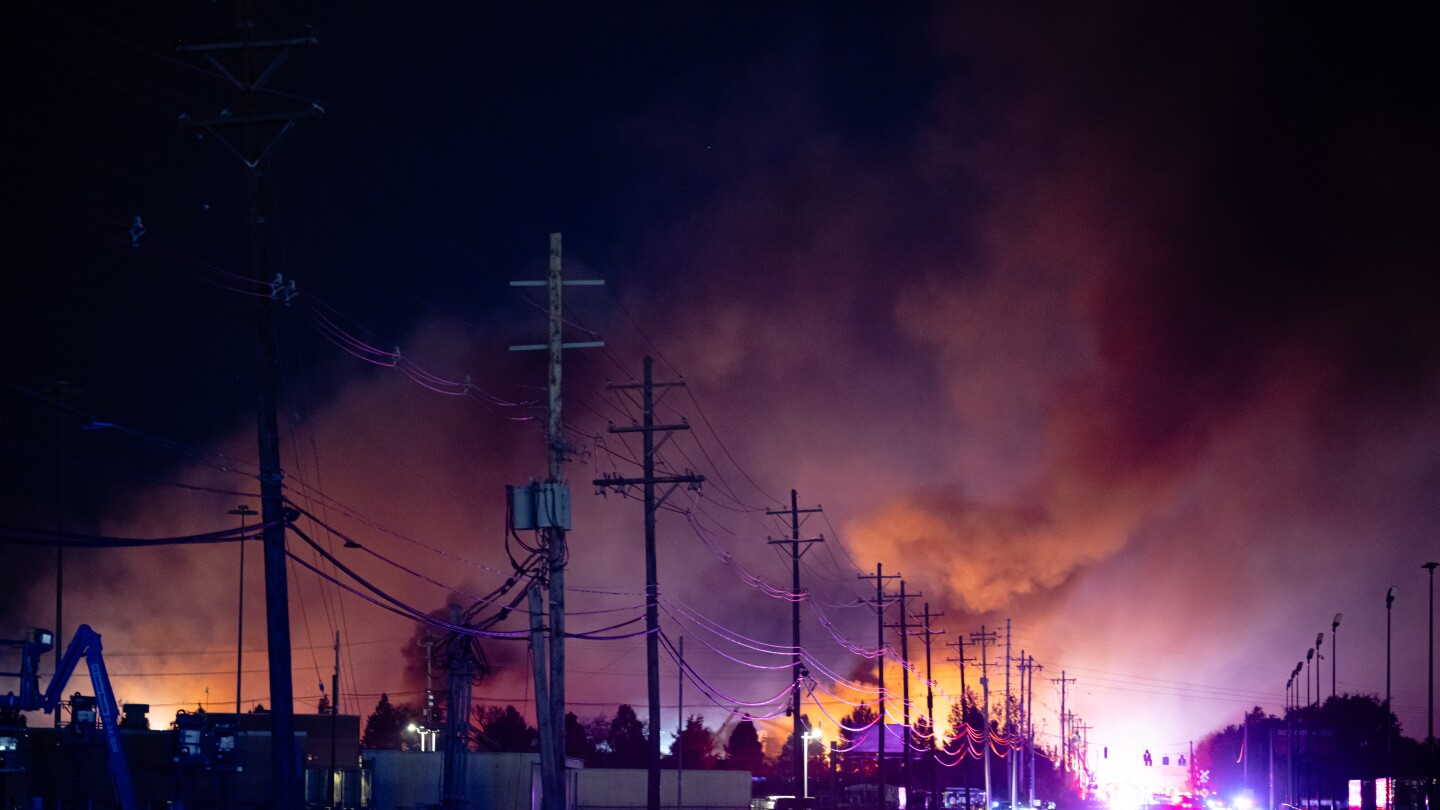
Following the November 4 incident near Muhammad Ali International Airport in Louisville, Kentucky, the Federal Aviation Administration promptly grounded all 109 MD-11s and 10 related DC-10 aircraft still in operation. The crash claimed 14 lives, including the plane’s three crew members, after the aircraft reached only 30 feet before plummeting into several businesses adjacent to the airport.
UPS, FedEx, and Western Global Airlines—the primary operators of these three-decade-old aircraft—now face critical decisions regarding their fleets. The companies must evaluate whether potential FAA-mandated repairs will be economically viable or if accelerating planned retirements makes more financial sense.
“For them to order inspections and to ground them as readily as they did makes me think that they’re worried about them,” said Mary Schiavo, former U.S. Department of Transportation Inspector General. Schiavo believes it likely won’t be economical to repair the aircraft when newer, safer, and more efficient alternatives are available from Boeing and Airbus—despite current manufacturing backlogs stretching deliveries years into the future.
The National Transportation Safety Board revealed on Thursday that investigators discovered cracks in critical components that failed to secure the engine to the wing. This finding has drawn uncomfortable parallels to a catastrophic 1979 American Airlines crash in Chicago, where a DC-10’s engine detached during takeoff, killing 273 people.
That earlier disaster led to the temporary worldwide grounding of all DC-10 aircraft—the predecessor to the MD-11. The DC-10 eventually returned to service after investigators determined improper maintenance procedures, not an inherent design flaw, caused the Chicago accident.
The current investigation centers on whether the lugs that cracked and failed in the UPS crash represent a common defect across the MD-11 fleet or if this was an isolated issue. While these components are located near the part that failed in the 1979 crash, they are different mechanisms.
Both the DC-10 and MD-11 have troubling safety records, with some of the highest accident rates among commercial aircraft according to Boeing’s annual statistics. The DC-10 experienced two separate incidents in the 1970s involving lost cargo doors during flight, with the second causing a 1974 crash near Paris that killed 346 people.
McDonnell Douglas announced the MD-11 in 1984 as an improved successor to the DC-10, promising larger capacity and extended range. However, the aircraft never fully delivered on its performance expectations and was quickly overshadowed by more efficient twin-engine designs from Boeing and Airbus.
“The MD-11 was practically obsolete when it came out compared to two-engine planes, which are cheaper to operate,” noted Schiavo. Just 200 MD-11s were manufactured between 1988 and 2000. Most began service as passenger aircraft before airlines gradually retired them in favor of newer models, with KLM Royal Dutch Airlines operating the last passenger flight in 2014.
Today, MD-11s constitute approximately 9% of UPS’s fleet and 4% of FedEx’s operations. Western Global Airlines operates just 16 of the aircraft.
Despite their age, some aviation experts believe the aircraft could still have serviceable life remaining. “I think there is still much more useful life in them,” said Wolfgang Borgmann, an aviation journalist who authored a book on the history of MD-11s and DC-10s. “Age doesn’t matter in aviation. It’s the maintenance that counts.”
The NTSB investigation is closely examining the UPS aircraft’s maintenance history. Investigators noted that its engines last underwent detailed inspection in 2021, and no similar inspection occurred during extended maintenance the month before the crash. The plane wasn’t scheduled for another comprehensive engine inspection until completing roughly 7,000 additional flights.
Boeing and the FAA must now determine whether the current maintenance schedule for these aging aircraft is adequate, or if the MD-11 fleet has reached the end of its operational life.
Fact Checker
Verify the accuracy of this article using The Disinformation Commission analysis and real-time sources.

6 Comments
The MD-11 has had a storied history, but this latest incident may finally spell its demise. While the economics will be challenging, the carriers have a responsibility to prioritize safety. Hopefully they can chart a way forward that minimizes disruption to their cargo operations.
Tough decision ahead for the airlines on whether to repair the MD-11 fleet or accelerate retirements. Safety has to come first, but the financial hit could be substantial. I’ll be following this story closely to see how it unfolds.
This is a tragic incident, and I’m glad the FAA acted quickly to ground the MD-11 fleet pending a full investigation. Aviation safety has to be the top priority, even if it means costly repairs or accelerated fleet retirements. I’m curious to see how the operators balance those factors.
The MD-11 has had a long cargo service life, but this fiery crash may be the final nail in the coffin. Regulators are right to err on the side of caution and ground the remaining aircraft until the cause is determined and any necessary fixes are made.
Tough decisions ahead for the airlines operating these aging MD-11s. Safety has to come first, but the financial impact of inspections, repairs or fleet replacements could be substantial. I hope they can find a prudent path forward that balances operational needs and passenger/crew protection.
This is a concerning incident that could spell the end for the aging MD-11 fleet. Aviation safety should be the top priority, even if it means costly repairs or fleet retirements. I’m curious to see how UPS, FedEx, and other operators weigh the economics versus the risks.