


Listen to the article
Freshwater eels, prized in global sushi markets, face a critical moment as their populations continue to plummet worldwide. Some species have declined by more than 90% since the 1980s, yet a recent international effort to protect these ancient creatures through trade restrictions was voted down at a key wildlife summit.
The Convention on International Trade in Endangered Species of Wild Fauna and Flora (CITES) met in Uzbekistan this week to consider new protections for several eel species, including the commercially valuable American and Japanese varieties. Despite support from conservation groups, member nations rejected the proposal on Thursday.
“This measure is vital to strengthen trade monitoring, aid fisheries management, and ensure the species’ long-term survival,” said Susan Lieberman, vice president of international policy for Wildlife Conservation Society, who had advocated for the restrictions.
Freshwater eels of the anguilla genus have existed since dinosaur times, yet scientists understand less about them than those extinct reptiles. These remarkable creatures spend most of their lives in rivers and streams but make a mysterious migration to the ocean to spawn, laying millions of eggs before dying.
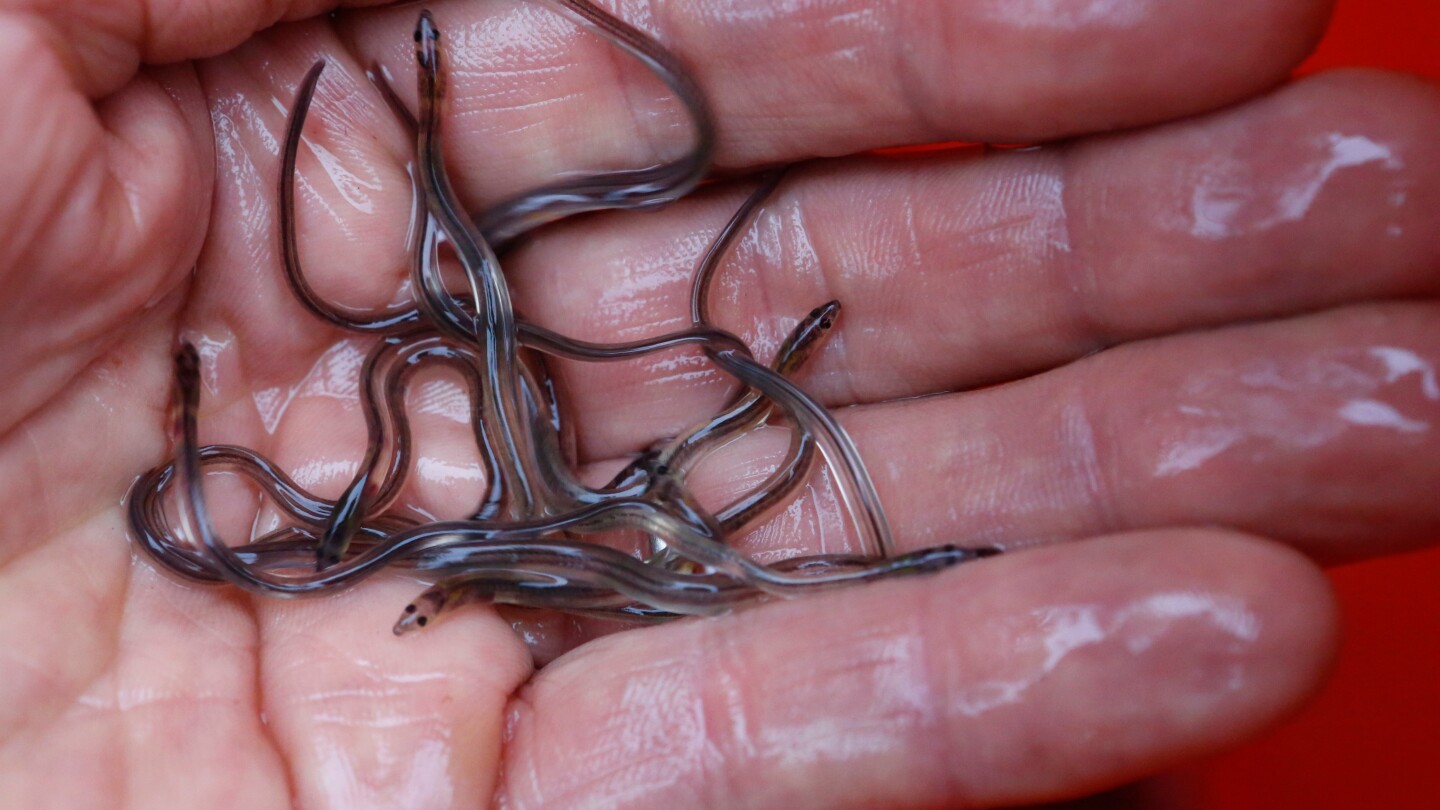
Unlike the moray eels popular in aquariums or South America’s electric eels, anguilla eels are highly sought after for food, especially in Asian markets. Baby eels, called elvers, are particularly valuable as they serve as seed stock for Asian aquaculture operations that raise them to maturity primarily for the sushi industry.
In Japan, where freshwater eel (known as unagi) has been consumed for thousands of years, these fish hold both culinary and cultural significance. The popularity of eel in sushi has created immense pressure on wild populations already struggling against multiple threats.
Scientists attribute the dramatic decline to a perfect storm of challenges: river dams blocking migration routes, deaths in hydroelectric turbines, pollution, habitat destruction, climate change impacts, poaching, and commercial overfishing. This combination has pushed some species toward potential extinction.
The United States, Japan, and China—all countries with significant economic interests in the eel trade—opposed the new restrictions. Mitchell Feigenbaum, one of North America’s largest eel dealers, criticized the conservation effort as the work of “an international body dominated by volunteer scientists and unelected bureaucrats.”
Maine stands as the only U.S. state with a significant commercial fishery for baby eels, operating under strict regulations. The value of Maine’s elvers has skyrocketed as global populations have crashed, fetching more than $1,200 per pound at docks in 2024, down from over $2,000 per pound the previous year.
The Atlantic States Marine Fisheries Commission, which regulates American eel fisheries, opposed the CITES listing. “We don’t feel that the proposal provides enough information on how the black market would be curbed,” said Toni Kerns, the commission’s fisheries policy director. “We are very concerned about how it would potentially restrict trade in the United States.”
Had the protections passed, exporters would have needed permits to ship eels internationally. These permits would have required scientific authorities to certify that exports wouldn’t harm species survival and that the eels weren’t illegally harvested—a significant concern given widespread poaching and mislabeling of rare species as more common varieties.
A coalition of industry groups from China, Japan, South Korea, and Taiwan also submitted a request to reject the protections, arguing that CITES’ assertion about international trade causing population declines was “not supported by sufficient evidence.”
Conservation advocates emphasize that the new rules wouldn’t have banned eel fishing but rather helped ensure sustainability through better monitoring and trade controls. “It’s not about banning it or stopping fishing practices,” said Nastya Timoshyna, Europe office director for TRAFFIC, an anti-wildlife trafficking organization. “It’s about industry being responsible, and there is massive power in industry.”
Timoshyna noted that eels serve as important indicator species that help scientists understand ecosystem health. Their decline signals broader environmental problems that extend beyond the fish themselves.
For now, eel conservation will continue to rely on national and regional protections rather than a coordinated international approach, even as populations of these ancient, mysterious creatures continue their alarming decline.
Fact Checker
Verify the accuracy of this article using The Disinformation Commission analysis and real-time sources.

12 Comments
Concerning to hear about the declining eel populations. These ancient creatures deserve protection, but it’s troubling that key nations opposed the CITES proposal. Sustainable fisheries and trade monitoring are crucial for their long-term survival.
I agree, the lack of protections is worrying. Eels play an important role in their ecosystems, and overfishing could have serious environmental consequences. Hopefully more can be done to preserve these unique species.
The plummeting eel numbers are quite alarming. As a commercially valuable species, it’s critical that global trade and harvesting practices are properly regulated to prevent further declines. I’m curious to understand the rationale behind the opposition from Japan and the US.
Agreed, the lack of protections is worrying. Eels play an important ecological role, so overfishing could have significant environmental impacts. Hopefully the CITES members can reconsider this decision and find ways to support eel conservation.
Disappointing to see efforts to protect endangered eels rejected at the CITES summit. These unique creatures deserve greater conservation efforts, especially given the drastic population declines. I hope the member nations can revisit this issue and find ways to support sustainable eel fisheries.
It’s disappointing to see countries block efforts to protect endangered eel species. These ancient creatures are clearly in trouble, and stronger conservation measures are needed. Hopefully the CITES members can reconsider this decision and find a way to support eel populations.
The plummeting eel numbers are quite alarming. As an important food source and ecological component, effective fisheries management and trade monitoring are crucial for their long-term survival. I’m curious to understand the reasoning behind the opposition from Japan and the US to the CITES proposal.
Good point. Understanding the specific objections from those countries would provide helpful context on this issue. Protecting endangered species should be a priority, so it’s concerning to see key nations block conservation efforts.
The falling eel numbers are quite alarming. As a prized food source, it’s important that fisheries and trade are properly regulated to prevent over-exploitation. I’m curious what the specific objections were from Japan and the US in rejecting the CITES proposal.
Good point. The article doesn’t go into the reasons behind Japan and the US opposing the protections. Understanding their rationale would provide more context on this issue.
The fall in eel populations is concerning, especially given how little is understood about their life cycles. While commercial interests are understandable, stronger protections seem necessary to ensure the long-term viability of these ancient species.
Freshwater eels are fascinating creatures, but it’s distressing to learn their populations have declined so dramatically. The failure to pass new CITES protections is concerning. Effective fisheries management and trade monitoring seem crucial to ensure the long-term survival of these species.