


Listen to the article
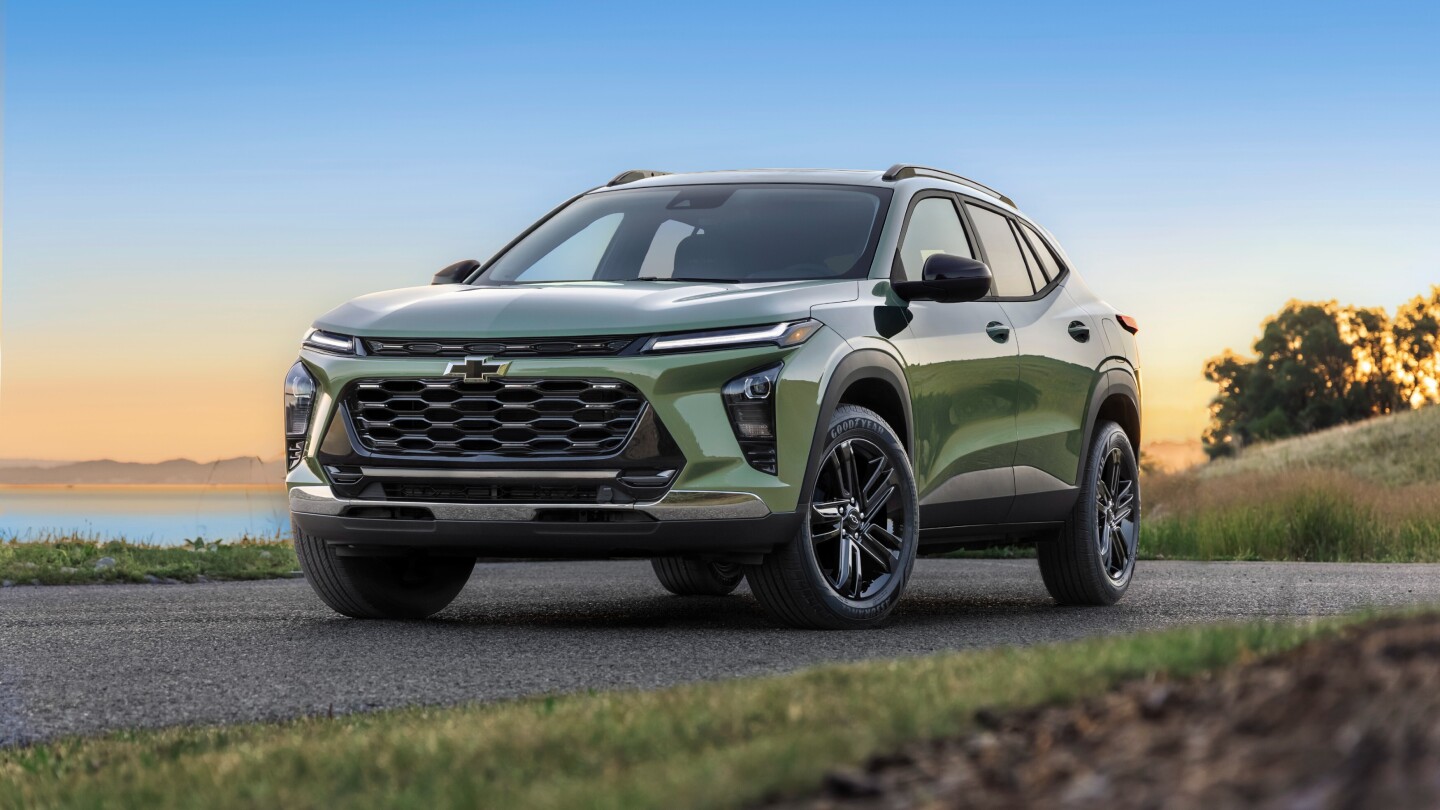
As year-end approaches, budget-conscious SUV shoppers will find two compelling options competing for their attention in the small crossover segment: the Chevrolet Trax and the Volkswagen Taos. Both represent the smallest SUV offerings from their respective manufacturers, but bring distinct advantages to the increasingly competitive affordable crossover market.
The recently redesigned Chevrolet Trax brings practicality and modern tech features to the table, while the Volkswagen Taos, freshly updated for the 2025 model year, offers more power and a surprisingly spacious interior. With consumers increasingly seeking value in the crossover segment, these two models highlight different approaches to meeting buyer needs.
Under the hood, the Trax comes equipped with a turbocharged three-cylinder engine generating 137 horsepower. This power plant delivers adequate acceleration for urban driving, completing the 0-60 mph sprint in 9.1 seconds during testing. While sufficient for city commuting, the engine can feel somewhat underpowered during highway merges and passing maneuvers.
The Taos, by comparison, offers noticeably more muscle with its turbocharged four-cylinder engine producing 174 horsepower. When equipped with all-wheel drive, the Volkswagen accelerates from 0-60 mph in a much quicker 7.8 seconds. This additional power provides more confidence during highway driving and when carrying multiple passengers or cargo.
Fuel efficiency remains competitive for both vehicles despite their performance differences. The Trax achieves up to an EPA-estimated 30 mpg in combined driving, while the Taos edges slightly ahead with up to 31 mpg combined. However, a significant distinction emerges in drivetrain options – the Trax is front-wheel drive only, while the Taos offers optional all-wheel drive, a potentially decisive factor for buyers in regions with inclement weather.
On the technology front, both crossovers come well-equipped with similar standard features, including smartphone integration through Apple CarPlay and Android Auto. The Trax offers wireless connectivity for these systems across all trim levels, while base Taos models require a physical USB connection. Chevrolet also provides an available 11-inch touchscreen that eclipses Volkswagen’s 8-inch maximum display size.
The Taos counters with advantages of its own, including more USB-C fast-charging ports and an available integrated navigation system – a feature absent from the Trax lineup. Volkswagen also includes more standard driver assistance technologies, such as adaptive cruise control and blind-spot warning, which are optional extras on the Chevrolet.
Interior space reveals clear differences between the two contenders. Despite being the smaller vehicle overall, the Volkswagen Taos offers substantially more cargo capacity with nearly 28 cubic feet behind the rear seats – 2.3 cubic feet more than the Trax. Folding those seats expands the advantage further, with the Taos providing 65.9 cubic feet compared to the Trax’s 54.1 cubic feet. While the slightly longer Chevrolet offers marginally better rear legroom, the taller Volkswagen provides superior headroom for passengers.
Material quality and available amenities also favor the German offering. Higher trim levels of the Taos can be equipped with upscale features absent from the Trax lineup, including ventilated leather seats, customizable ambient lighting, rear air vents, and premium audio options. The Chevrolet makes commendable efforts to mask its budget-oriented materials, but cannot match the refinement available in well-optioned Taos models.
Where the Chevrolet makes its strongest case is pricing. The 2025 Trax starts at a highly competitive $21,895 including destination fees, significantly undercutting the Taos’ entry point of $26,920. This substantial $5,000 price difference persists throughout the model range, with a fully-loaded Trax Activ remaining under $27,000 while a comparable Taos approaches $37,000.
For value-focused shoppers who prioritize modern features and adequate performance at the lowest possible price point, the Trax presents a compelling package. However, buyers willing to invest more will find the Taos delivers superior performance, refinement, and utility – particularly for those requiring all-wheel drive capability.
The competition between these two models reflects broader industry trends toward packing more features and capability into smaller, more affordable packages as manufacturers respond to consumer demand for value-oriented crossovers without sacrificing modern amenities.
Fact Checker
Verify the accuracy of this article using The Disinformation Commission analysis and real-time sources.

6 Comments
It’s interesting to see how these small SUVs compare on power and performance. The Chevy Trax seems to prioritize practicality and value, while the VW Taos offers more horsepower and a spacious interior. Curious to see how they stack up in real-world driving.
As someone who does a lot of highway driving, the extra power of the Taos is quite appealing. But the Trax’s urban-focused tuning could also be a good fit for many buyers. Tough choice, lots of pros and cons to weigh.
I’m always on the lookout for affordable, fuel-efficient SUVs. The Trax and Taos both seem like compelling options in this increasingly competitive segment. Curious to see how the pricing and feature sets compare as well.
Good point. Fuel efficiency and value are key considerations for many SUV shoppers these days. It will be interesting to see how the two models stack up on those metrics.
Curious to see how the interiors and tech features of these two SUVs compare. Practical features and modern connectivity are becoming increasingly important for shoppers in this segment.
The small SUV market is really heating up, and these two models seem to represent different philosophies. Will be interesting to see how consumers respond to the Trax’s value focus vs the Taos’ more premium positioning.