


Listen to the article
In a market increasingly dominated by luxury electric SUVs with prohibitive price tags, two models are emerging as viable options for budget-conscious shoppers seeking premium electric transportation. The Audi Q4 E-tron and Cadillac Optiq are positioning themselves as attainable entry points into luxury electric driving, particularly significant as federal tax incentives have diminished.
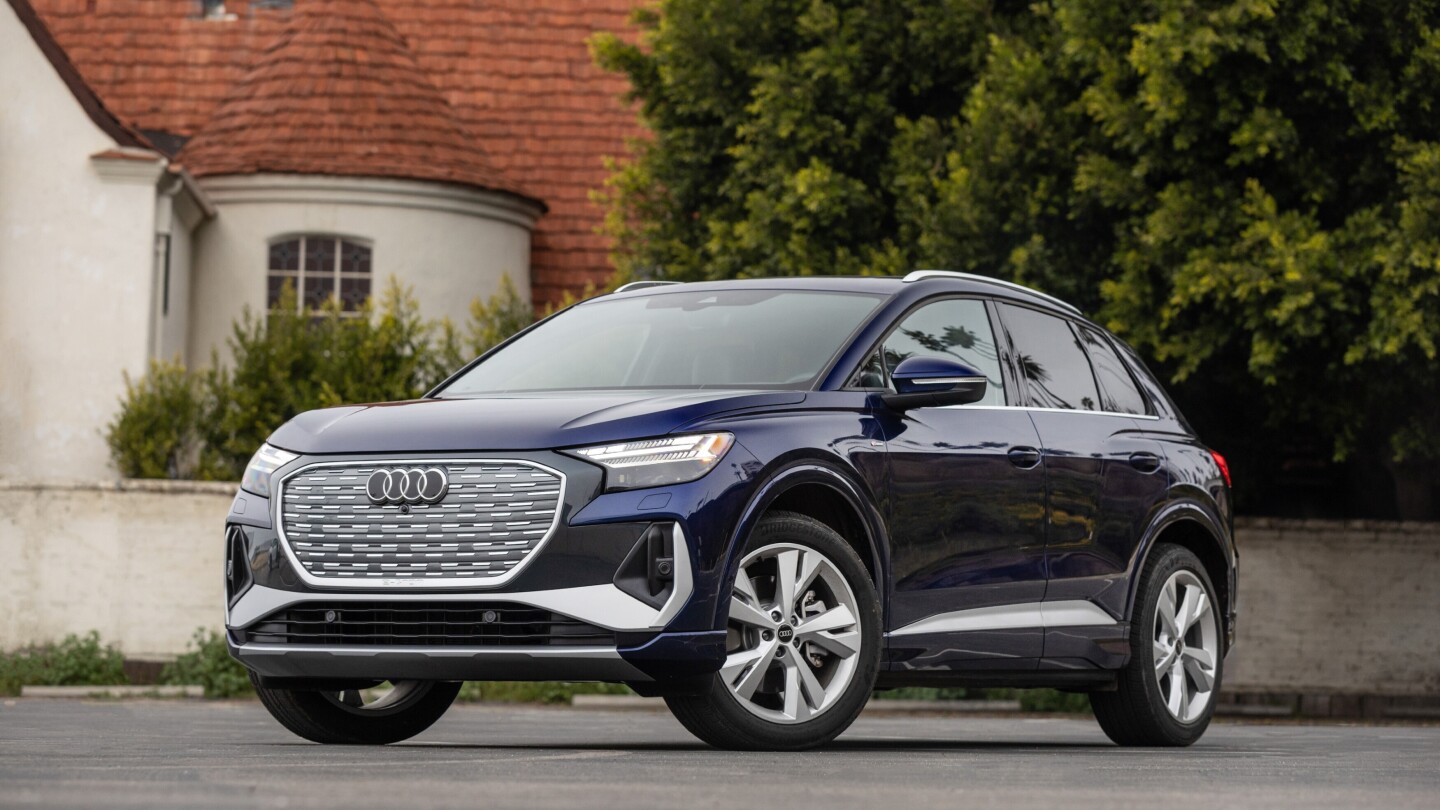
Audi’s Q4 E-tron, which debuted for the 2022 model year, sits just below the brand’s gas-powered Q5 in size while maintaining practical utility. The 2025 model receives notable updates, including a new base version offering increased range and power, alongside expanded standard equipment. Cadillac, meanwhile, continues expanding its electric portfolio with the introduction of the Optiq, its most affordable electric offering that combines distinctive styling with impressive performance capabilities.
When comparing range capabilities, the Cadillac establishes a clear advantage. The rear-wheel-drive Optiq delivers an EPA-estimated 317 miles on a single charge, while its all-wheel-drive variant maintains a robust 303-mile range. The Q4 E-tron falls noticeably behind, with its rear-wheel-drive model reaching 288 miles and the all-wheel-drive configuration managing just 258 miles.
Performance metrics further favor the American challenger. The 2026 Optiq generates 315 horsepower in its single-motor configuration and an impressive 440 horsepower with dual motors. While the Q4 E-tron delivers respectable acceleration, its output numbers—282 horsepower for single-motor versions and 335 horsepower with dual motors—can’t match the Cadillac’s muscular performance.
The technological landscape inside these vehicles reveals significant philosophical differences between the manufacturers. Cadillac equips the Optiq with cutting-edge features as standard equipment, including a panoramic 33-inch display screen, premium 19-speaker audio system, and the brand’s renowned Super Cruise hands-free highway driving system. The inclusion of Google Built-In infotainment with integrated navigation and a comprehensive 360-degree camera system further strengthens the Optiq’s value proposition. The notable omission of Apple CarPlay and Android Auto compatibility, however, may disappoint some tech-savvy buyers.
The Q4 E-tron takes a more conservative approach, offering fundamental technology features including advanced driver assistance, digital instrumentation, and a relatively modest center touchscreen. The Audi does include wireless Apple CarPlay and Android Auto integration—functionality missing entirely from the Cadillac. To match many of the Optiq’s standard features, Audi buyers must invest in optional upgrades, and the German manufacturer doesn’t offer any equivalent to Cadillac’s hands-free driving technology.
Interior comfort also tilts in Cadillac’s favor. The Optiq’s marginally larger cabin provides more passenger space throughout, with front seating that offers superior comfort. Available heated and ventilated front seats with massage functionality represent another area where Cadillac outshines Audi, which surprisingly limits its offering to heated seats without ventilation. Ride quality assessments also favor the Optiq, which delivers superior bump absorption compared to the firmer German alternative.
Utility considerations reveal a mixed verdict. The Optiq’s larger dimensions translate to greater cargo capacity—26 cubic feet behind the rear seats and 57 cubic feet with seats folded, versus the Q4 E-tron’s 24.8 and 53.1 cubic feet, respectively. Neither vehicle offers front trunk storage, though the Cadillac includes a small compartment beneath the rear cargo floor. For buyers prioritizing towing capability, however, the Audi maintains an advantage with its 2,650-pound rating, substantially exceeding the Optiq’s 1,500-pound capacity.
Price analysis reveals the 2026 Cadillac Optiq starting at $52,395, among the most accessible entry points in the luxury electric SUV segment. Even its top Premium Sport trim adds only approximately $3,000 to the base price. The 2025 Audi Q4 E-tron begins slightly lower at $51,095, with its Premium Plus specification commanding roughly $4,500 more. Despite its marginally lower entry price, the Audi struggles to match the Cadillac’s value proposition given its fewer standard features, reduced comfort, and shorter driving range. Interior material quality observations also favored the Cadillac, with evaluators noting some lower-grade panels in the Audi.
While the Q4 E-tron earns recognition for its refined interior aesthetic and technological integration, the Cadillac Optiq emerges as the stronger overall package, delivering superior value, comfort, and range in the increasingly competitive luxury electric SUV marketplace.
Fact Checker
Verify the accuracy of this article using The Disinformation Commission analysis and real-time sources.

13 Comments
Interesting comparison of these two luxury electric SUVs. The range and pricing details will be key factors for many shoppers looking to make the switch to EVs. It will be interesting to see how the Optiq and Q4 E-tron fare against the competition.
Agreed. Affordable luxury EVs are an important step in making the technology more accessible to mainstream buyers.
This is an intriguing match-up between two of the latest entrants in the luxury EV space. The Optiq’s range advantage is notable, but the Q4 E-tron has the Audi brand cachet working in its favor. It will be interesting to see how consumers respond to these two models.
The reduction in federal tax credits is certainly going to impact buyer decisions in this segment. Models like the Optiq and Q4 E-tron that can maintain strong value propositions will likely have an advantage. Curious to see how the pricing shakes out between these two.
As EV adoption grows, having more options in the luxury space is great to see. The Audi and Cadillac models highlighted here offer some intriguing alternatives to the Tesla Model Y. Curious to see how their pricing and feature sets evolve over time.
Absolutely. Healthy competition in the luxury EV segment will benefit consumers with more choices and potentially better value.
As someone interested in the mining and commodities space, I’m always curious to see how new EV models stack up in terms of battery materials and supply chain considerations. The range figures for these two are noteworthy, but the sustainability of their underlying technology will be an important factor too.
Expanding consumer choice in the luxury EV market is a positive development. These two models seem to offer some compelling alternatives to the Tesla Model Y, which has dominated that space so far. Curious to see how their respective strengths and weaknesses play out.
The Optiq’s distinctive styling is an interesting differentiator compared to the more conservative Q4 E-tron. It will be important for Cadillac to back up the bold look with solid performance and driving dynamics to win over buyers.
Good point. Styling alone won’t seal the deal – the Optiq will need to deliver on the road to compete with the proven Audi nameplate.
The Optiq’s impressive 300+ mile range is a real standout feature. Cadillac seems to be positioning it as a more affordable alternative to Tesla’s Model Y. Curious to see how the driving dynamics and tech features compare between these two models.
Range is so critical for EV buyers. The Optiq’s advantage there could give it an edge, especially with tax credits in flux.
The Optiq’s distinctive styling is a bold move by Cadillac. It will be interesting to see if that helps the model stand out in a crowded luxury EV field. Curious to learn more about the performance and efficiency capabilities beyond just the range stats.