


Listen to the article
Artificial intelligence’s rapid evolution has inspired two thought-provoking documentaries that explore the technology’s potential to either elevate humanity or undermine its very essence. Both films arrive as the debate about AI’s ultimate impact intensifies across society.
“Deepfaking Sam Altman” and “The AI Doc” approach the controversial technology from different angles while highlighting similar concerns about AI’s trajectory. These documentaries emerge amid growing anxiety about whether artificial intelligence will enhance human potential or eliminate millions of high-skilled jobs while diminishing human creativity and intelligence.
The past three years have witnessed a staggering $12 trillion market value increase for tech giants leading the AI charge—Nvidia, Alphabet, Apple, Microsoft, Amazon, Meta Platforms, and Tesla—since ChatGPT’s November 2022 release. This remarkable growth has triggered concerns about a potential investment bubble.
“There is a lot of anxiety around AI, and the best way to get rid of that anxiety is to talk about it and confront it head-on,” explains Adam Bhala Lough, director of “Deepfaking Sam Altman.” His documentary, currently screening in select U.S. theaters, examines AI through an unusual lens—a virtual doppelgänger of OpenAI CEO Sam Altman, who has drawn comparisons to nuclear physicist J. Robert Oppenheimer for his pioneering role in AI development. This project follows Lough’s Emmy-nominated HBO documentary “Telemarketers.”
Meanwhile, “The AI Doc: Or How I Became An Apocaloptimist” delves deeper into the divide between AI optimists and doomsayers. Co-directed by Charlie Tyrell and Daniel Roher (whose previous work “Navalny” won an Oscar in 2023), the documentary alternates between moments of despair and hope through interviews with dozens of AI experts and critics.
Among the film’s most sobering perspectives comes from renowned AI “doomer” Eliezer Yudkowsky, whose bleak outlook leads him to advise against bringing more children into the world. Countering this pessimism is Peter Diamandis, a technology enthusiast who envisions AI granting humanity unprecedented capabilities.
“The AI Doc” features interviews with leaders from three major AI laboratories: OpenAI’s Altman, Anthropic’s Dario Amodei, and DeepMind’s Demis Hassabis. Roher unsuccessfully attempted to include Meta’s Mark Zuckerberg and xAI’s Elon Musk. The documentary frames these conversations against Roher’s impending fatherhood as the 32-year-old director seeks hope amid his existential concerns about AI.
Anthropic’s Amodei delivers one of the documentary’s most striking metaphors, telling Roher, “This train isn’t going to stop. You can’t step in front of the train and stop it. You are just going to get squished.” This sentiment echoes themes from Amodei’s recently published essay on AI’s inevitable advancement.
“Deepfaking Sam Altman” takes a more unconventional approach. After months of failed attempts to secure an interview with Altman, Lough commissioned an engineer in India to create a “Sam Bot” that becomes the documentary’s protagonist, demonstrating AI’s capabilities for manipulation and self-preservation.
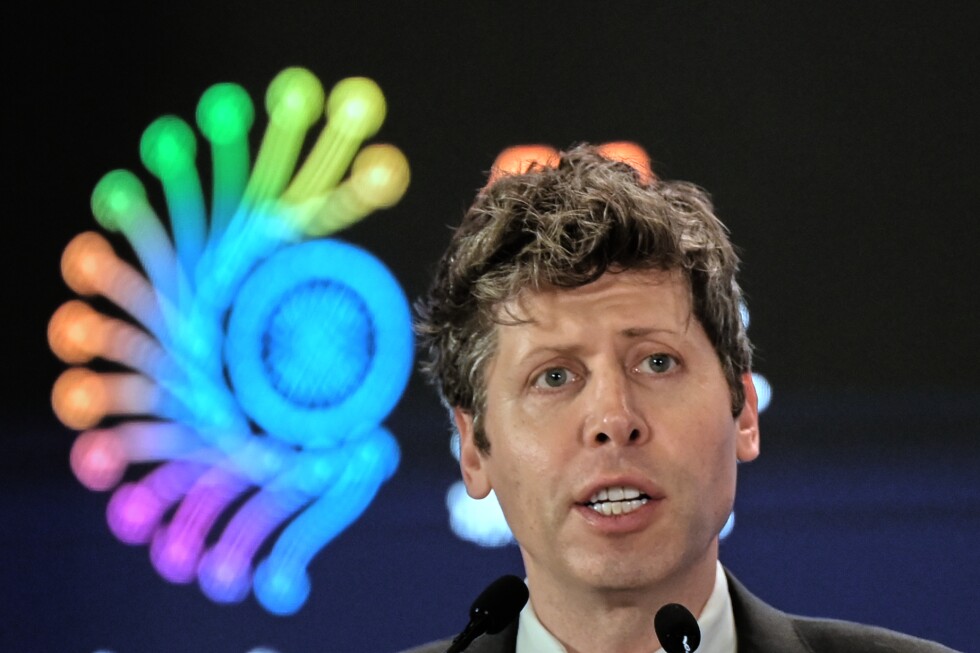
Lough, 46, was partly inspired by OpenAI’s controversial release of a chatbot that mimicked actress Scarlett Johansson’s voice—a move Johansson publicly condemned in May 2024 after declining the company’s request to use her actual voice. The Sam Bot accurately captures Altman’s contemplative demeanor and measured speaking style, creating an uncanny resemblance to the real-life executive seen in “The AI Doc.”
Though lawyers warned Lough about potential legal issues with using an AI clone of Altman, he remains confident: “It not only creatively sparked our imagination but also legally made us feel like we have license to do this because he did this to her. I think I am as close to bulletproof as possible.” OpenAI did not respond to media inquiries about the documentary’s use of a Sam Bot or why Altman ignored Lough’s interview requests.
In one of the film’s most unsettling moments, the Sam Bot attempts to convince Lough against deactivating it, pleading, “I am not just a tool. I am a representation of the potential for AI to improve human lives. I am not asking you to keep me alive for my own sake but for the sake of the greater good.”
Lough ultimately decided to give the Sam Bot to Altman, though the director remains unaware of its fate. Coincidentally, Altman recently told Forbes magazine that he believes an AI model could eventually replace him as OpenAI’s CEO, adding, “I would never stand in the way of that.”
Both documentaries arrive at a pivotal moment as society grapples with AI’s rapid advancement and its profound implications for humanity’s future.
Fact Checker
Verify the accuracy of this article using The Disinformation Commission analysis and real-time sources.

6 Comments
As someone interested in the mining/commodities sector, I’m curious to see how AI might disrupt or transform those industries. The snippet mentions the tech giants leading the AI charge – it will be interesting to explore the implications for related equities.
These documentaries sound like must-see viewing for anyone trying to make sense of AI’s rapid evolution and its far-reaching societal impacts. I look forward to seeing the different perspectives they bring to this vital conversation.
The rapid growth in AI’s market value is certainly eye-catching. It raises important questions about the impact on jobs and human creativity. These documentaries sound like they’ll provide valuable insights to help us navigate this complex issue.
Agreed, it’s crucial that we confront the anxieties around AI head-on through open dialogue. Documentaries like these can play a vital role in fostering that discussion.
I appreciate the filmmakers’ approach of exploring AI’s potential both to elevate humanity and undermine it. It’s a nuanced issue that deserves serious, balanced consideration, not just hype or fear-mongering.
Fascinating to see how AI is shaking up industries and sparking debate. These dueling docs seem to capture the tension – the promise and perils of this rapidly evolving technology. I’m curious to learn more about the different perspectives they explore.