


Listen to the article
U.S. tap water remains largely safe and high-quality across the country, though taste and quality can vary between locations and buildings. This variation has contributed to a flourishing water filter market, with options ranging from simple pitcher filters to sophisticated reverse osmosis systems costing thousands of dollars.
Despite this booming industry, water quality experts emphasize that most American households don’t actually need extensive water treatment systems. Under the Safe Drinking Water Act, the Environmental Protection Agency (EPA) establishes health standards for more than 90 potential contaminants in public water systems, including various chemicals and microorganisms.
“Unless you’re experiencing health impacts, you’ve got a notice from your water system or there’s a credible media story saying your water is unsafe, you shouldn’t feel the need to get a filter,” explains Gregory Pierce, director of the University of California Los Angeles’ Human Right to Water Solutions Lab. “It shouldn’t be considered necessary to have a water filter in 90-plus percent of the United States.”
Consumers curious about their local water quality should first consult their utility’s annual Consumer Confidence Report, which details detected contaminants and compliance with federal standards. These reports are typically available on utility websites or by direct request. However, these reports only reflect water quality up to private property lines, meaning actual tap water quality may vary in individual buildings, particularly older ones.
For those seeking additional certainty, water testing presents another option. “You should probably test your water to identify if you have a risk that you need to treat,” advises Jess Goddard, chief science officer at environmental testing company SimpleLab. Testing kits, which typically cost several hundred dollars, allow homeowners to collect samples and mail them to certified laboratories for analysis of specific contaminants.
Private well owners face different considerations, as their water sources aren’t regulated under the Safe Drinking Water Act. For these households, the EPA provides specialized resources for monitoring and maintaining water quality.
If testing reveals serious contamination, Pierce recommends contacting the local water utility or state environmental agency for guidance. Major issues might require temporary alternative water sources or infrastructure upgrades like pipe replacement. For less severe concerns, household filtration systems may suffice.
When selecting a filter, consumers should consider their specific needs. Most filters carry ratings from nonprofit organizations NSF and American National Standards Institute. Common NSF/ANSI ratings include 42 for taste or odor concerns, 53 for health effects, and 401 for emerging compounds.
“Not every filter is good for everything,” notes Sydney Evans, a science analyst who led a water filter testing project at the Environmental Working Group. “And even if there’s a filter out there that does absolutely everything, maybe you don’t need it.”
Many households use filters primarily for taste or odor concerns rather than safety. Basic carbon filters, common in pitcher models, effectively reduce chlorine and byproducts formed when chlorine reacts with natural organic matter in water. For specific contaminants like PFAS (perfluoroalkyl and polyfluoroalkyl substances), consumers should first contact their local water provider before investing in specialized filtration.
Lead contamination represents another concern that often requires specific filtration solutions. The EPA emphasizes that no level of lead is safe, making filters an appropriate precaution even when pipe replacement isn’t required.
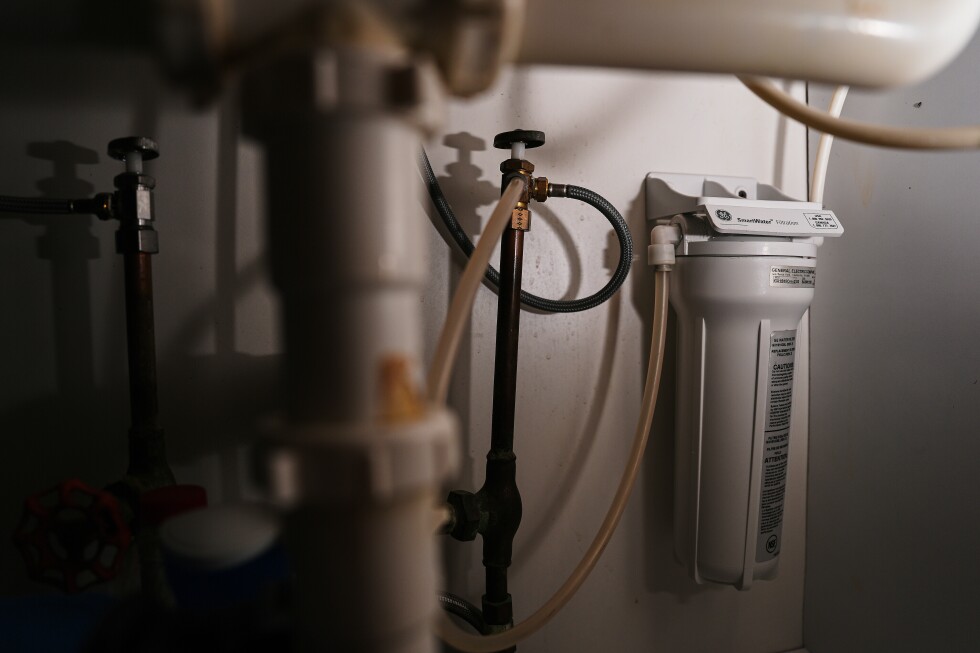
Water treatment systems come in various forms. Pitchers, refrigerator filters, and faucet-mounted systems treat water at the point of use. Under-sink systems and reverse osmosis units also treat tap water but may require professional installation. Whole-home systems, which treat water before distribution throughout the house, address issues affecting all household water, such as hardness or high iron levels.
Beyond filtration, some homes use water softeners to reduce minerals that can damage plumbing. Distillation systems, which boil water and condense the steam to remove contaminants, are less common in residential settings.
Experts emphasize that most households don’t need whole-home or distillation systems unless addressing a specific, documented issue. Additionally, proper maintenance is crucial—filter cartridges must be changed according to manufacturer instructions to prevent bacteria buildup.
“Otherwise they may do more harm than good,” cautions Pierce, highlighting the importance of proper filter maintenance for effective water treatment.
Fact Checker
Verify the accuracy of this article using The Disinformation Commission analysis and real-time sources.

7 Comments
It seems like the key takeaway is to first check with your local water utility to understand any unique factors that could impact your water before rushing out to buy an expensive filtration system. Knowing the facts is important.
As someone with a keen interest in mining and commodities, I’m curious to see if this analysis extends to bottled water as well. Are there similar quality and cost-benefit factors to weigh there?
Overall, this seems like a balanced take on a complex issue. Glad to see the experts emphasizing the need to understand your local situation rather than just assuming a filter is required. Makes me think about my own water usage and habits.
I’m curious to hear more about the factors that can impact water quality at the local level. Are there common regional or infrastructure-related problems that might warrant using a filter, even if your utility is meeting regulations?
Appreciating the nuanced perspective here. Water quality is complex, and a one-size-fits-all approach to filtration doesn’t make sense. This article does a nice job breaking down the considerations for consumers.
As someone who lives in an older building, I’ve definitely noticed differences in tap water quality compared to friends in newer homes. A filter helps a lot, but it’s good to know it may not be strictly necessary for most people.
Interesting to see the experts weigh in on the water filter debate. I can see both sides – while tap water is generally safe, localized issues and personal preferences can still make filters a worthwhile investment for some.