


Listen to the article
In Copenhagen’s former industrial harbor district, patrons of the Alchemist restaurant aren’t simply having dinner – they’re immersed in a sensory journey where food becomes a medium for artistic expression and social commentary.
The brainchild of 34-year-old chef Rasmus Munk, Alchemist offers dishes like “edible plastic” crafted from algae and fish skin collagen, served while projections of ocean pollution dance across the restaurant’s planetarium-like domed ceiling. This creation stands as a stark commentary on marine plastic pollution while challenging diners’ perceptions of what food can be.
“We convey messages through our food, our food is our medium of expressing ourselves,” explains Munk, whose culinary vision has propelled Alchemist to become the world’s fifth-best restaurant in 2025 and earn two coveted Michelin stars.
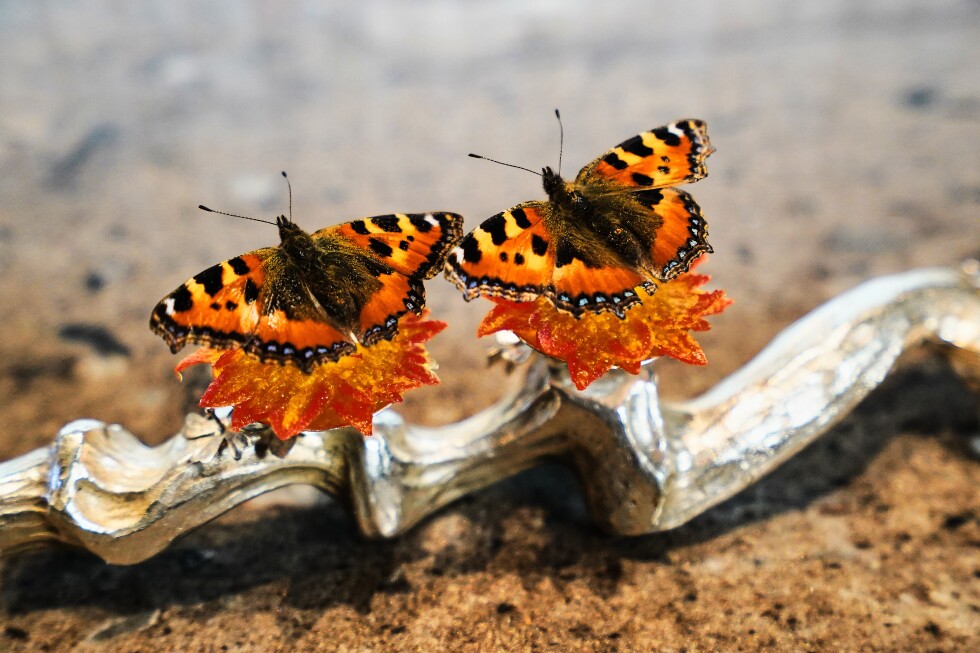
Guests at Alchemist embark on a multi-hour experience featuring 50 different “impressions,” most of them edible. The menu includes provocative creations like an eyeball dish featuring caviar and codfish eye gel, and nettle butterflies atop cheese and artichoke leaves. These presentations aren’t just about flavor – they invite contemplation on issues ranging from environmental degradation to animal welfare and state surveillance.
This approach represents the latest evolution in Denmark’s culinary renaissance. Once known primarily for herring, bacon and rye bread, the country’s gastronomic identity underwent a transformation in 2003 when René Redzepi’s Noma introduced the “New Nordic” philosophy, emphasizing foraged ingredients, fermentation techniques, and Scandinavia’s seasonal bounty.
Now, Denmark is poised to take an unprecedented step in the culinary world. Culture Minister Jakob Engel-Schmidt announced in January that the country would explore formally recognizing gastronomy as an art form – potentially making Denmark the first nation to legally elevate cooking to the same status as painting, literature, or music.
Munk, who spent nearly a decade refining what he calls his “artistic practices,” has been instrumental in pushing for this recognition, describing it as a “big milestone” for the culinary profession.
“I don’t think all food is art,” Munk clarifies. “I think the craftsmanship needs to be on the highest level.” He acknowledges that the definition of art ultimately remains a political decision, and currently “this is a closed society for chefs.”
The proposed reclassification, still in its exploratory phase, would require approval from Denmark’s 179-seat parliament. If passed, it could make the country’s chefs eligible for state subsidies and funding from private foundations – financial support currently reserved for traditional artists like writers and musicians.
Denmark’s potential move stands in contrast to other nations with renowned food cultures. While UNESCO granted Italian cooking cultural heritage status last year, countries like France and Japan have not taken steps to formally classify gastronomy as art.
This wouldn’t be Denmark’s first time expanding its definition of artistic expression. The Nordic nation previously awarded its lifetime national arts honor to heavy metal act King Diamond, and in 2023, presented its prestigious Sonning Prize to French gastronomic artist and chemist Hervé This.
Denmark, with a population of just 6 million, has become a global dining destination with 37 Michelin-starred restaurants. Among them is Copenhagen’s two-star Kadeau, established in 2011 by head chef Nicolai Nørregaard, who embraces the artistic comparison.
“I approach it like I would approach making a piece of art, like an artwork or a piece of writing,” says Nørregaard, whose cuisine celebrates the seasonal flavors of the Danish island Bornholm. “It’s about getting sort of an experience.” For him, formal recognition as art would be a “big step.”
Not everyone in the culinary world supports the reclassification. Nick Curtin, American executive chef and owner of Copenhagen’s Michelin-starred Alouette, sees fundamental differences between art and gastronomy.
“Art’s sole purpose is expression. It’s to evoke emotion. Food must be consumed,” argues Curtin. “Art can evoke disgust or disappointment or pain or sorrow or joy or longing. Food actually can’t express all of those things. It can, but it shouldn’t.”
The proposal also faces criticism from Denmark’s traditional art community, where some worry about increased competition for funding. Holger Dahl, architecture and art critic for Denmark’s 277-year-old Berlingske newspaper, is particularly dismissive: “It’s a little bit like a bicycle and a car — they have round wheels, they’ll take you from one point to another point, but it’s not like a very good bicycle all of a sudden turns into a car. It doesn’t happen.”
The future of this culinary reclassification remains uncertain, particularly with Denmark’s March 24 general election potentially reshaping government priorities. But regardless of the outcome, Copenhagen’s pioneering chefs continue to blur the boundaries between dining and artistic expression, one provocative plate at a time.
Fact Checker
Verify the accuracy of this article using The Disinformation Commission analysis and real-time sources.

10 Comments
Exploring whether gastronomy can be recognized as an art form is a thought-provoking concept. The Alchemist restaurant’s approach of using food as a medium for artistic expression and social commentary is quite innovative. I’m curious to learn more about how they develop these provocative, multisensory dining experiences.
The Alchemist’s edible creations that address environmental issues like ocean pollution sound like a unique way to raise awareness through the culinary arts. It will be fascinating to see if this type of conceptual, high-impact gastronomy gains wider recognition and influence beyond just the restaurant industry.
Recognizing gastronomy as an art form is an intriguing idea. The Alchemist’s focus on using food to convey messages and prompt contemplation on social and environmental topics is quite unique. I wonder how this compares to other restaurants known for their artistic and conceptual approaches to cuisine.
Agreed, the multisensory dining experience at Alchemist sounds captivating. Blending food, visuals, and social commentary in this way is certainly pushing the boundaries of what we typically think of as fine dining. It will be interesting to see if this inspires similar gastronomic artistic expressions elsewhere.
The Alchemist restaurant seems to be pushing the boundaries of what food can be and do. Edible plastic made from algae and fish skin? Codfish eye gel? That’s quite avant-garde. I’m curious to see if this type of conceptual, high-impact gastronomy catches on more broadly.
Definitely a novel and provocative take on food and dining. Challenging diners’ perceptions while highlighting environmental issues is a bold move. It will be fascinating to see if this culinary artistic approach gains wider recognition and influence.
Fascinating idea to elevate gastronomy as an art form. I’m curious to learn more about how the Alchemist restaurant blends culinary creativity with social commentary on issues like ocean pollution. The multi-sensory dining experience they offer sounds quite unique and thought-provoking.
I agree, using food as a medium for artistic expression and addressing important environmental topics is an intriguing approach. It will be interesting to see if Denmark’s efforts to recognize gastronomy as an art gain traction.
The idea of elevating gastronomy to an art form is an intriguing one. The Alchemist restaurant’s approach of using food as a medium for artistic expression and social commentary is certainly thought-provoking. I’m curious to learn more about how they develop these immersive, multisensory dining experiences that challenge diners’ perceptions.
Agreed, the Alchemist’s focus on blending culinary creativity with messages about important environmental topics is a bold and innovative approach. It will be interesting to see if Denmark’s efforts to formally recognize gastronomy as an art form gain traction and inspire similar conceptual gastronomic endeavors elsewhere.