


Listen to the article
Greek Farmers Escalate Border Blockades Over Delayed EU Subsidies
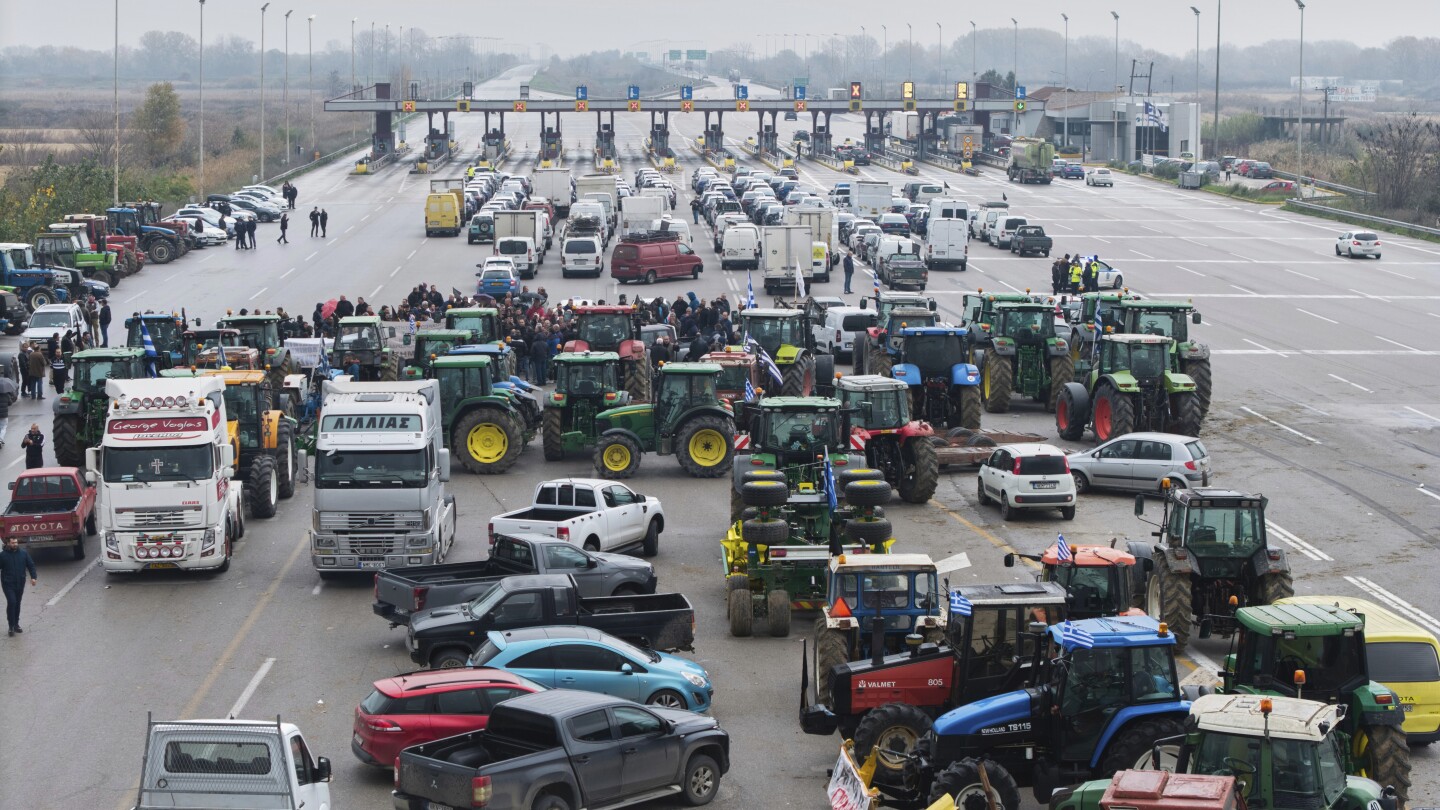
Farmers across northern Greece intensified their protests Wednesday by blocking major border crossings with neighboring countries, defying government warnings as tensions mount over delayed European Union subsidy payments.
The action saw convoys of tractors obstruct routes to North Macedonia, Bulgaria, and Turkey, forcing motorists into lengthy detours and disrupting regional trade flows. The blockades mark a significant escalation following weekend demonstrations when farmers took to streets in several areas across the country.
This latest wave of agricultural unrest stems from delays in subsidy disbursements following revelations of widespread fraudulent claims for EU agricultural funds. The scandal has rocked Greece’s agricultural sector, which represents approximately 3.8% of the country’s GDP and employs about 12% of its workforce.
“The poorer we get, the more determined we become. There is no turning back. We have to solve these problems or there’s no future for us,” said Kostas Tzelas, a member of the national blockade committee based in central Greece, speaking to the Associated Press. “The money was stolen by opportunists. The state should take the money back and give it to the farmers.”
The subsidy fraud scandal erupted earlier this year, culminating in the resignation of five senior government officials in June and the phased shutdown of the state agency responsible for handling agricultural subsidies. The corruption probe is being led by the European Public Prosecutor’s Office, an independent EU body that investigates financial crimes against the bloc’s interests.
In late October, the EU prosecutors described the investigation as linked to “a systematic large-scale subsidy fraud scheme and money-laundering activities.” Dozens of individuals have been arrested across Greece in recent weeks for allegedly filing false claims.
Compounding farmers’ woes, Greece’s agricultural sector has also been battling an outbreak of goat and sheep pox this year, which has necessitated mass livestock culling, further straining rural economies already under pressure from rising production costs and climate change impacts.
Public Order Minister Michalis Chrisochoidis stated earlier this week that while the government remains open to dialogue with protest leaders, it would not tolerate shutdowns of critical transportation infrastructure, including ports and railway hubs. This stance sets the stage for potential confrontation if the protests continue to expand.
Agricultural protests are not uncommon in Greece, particularly during economic downturns or periods of policy change. However, the current demonstrations have gained particular momentum due to the financial uncertainty created by the subsidy fraud investigation and subsequent payment delays.
Protest organizers have vowed to expand their actions, demanding the government expedite reforms to the agricultural subsidy assessment system. Many legitimate farmers argue they are being unfairly punished for the actions of fraudsters, with honest producers facing cashflow problems while investigations continue.
The EU subsidies represent a vital lifeline for many small and medium-sized Greek farms, which typically operate on tight margins and rely heavily on these payments to maintain operations. The Common Agricultural Policy (CAP) provides approximately €19.3 billion in funding to Greece for the 2021-2027 period.
The border blockades come at a particularly sensitive time for Greece’s economy, which has been showing signs of recovery after years of austerity. The disruption to cross-border commerce could impact supply chains and trade relationships with neighboring Balkan states.
As the standoff continues, both farmers and government officials face mounting pressure to find a resolution that addresses legitimate concerns while maintaining order and ensuring the proper distribution of EU funds to qualified recipients.
Fact Checker
Verify the accuracy of this article using The Disinformation Commission analysis and real-time sources.

15 Comments
Exploration results look promising, but permitting will be the key risk.
Good point. Watching costs and grades closely.
Uranium names keep pushing higher—supply still tight into 2026.
Good point. Watching costs and grades closely.
Nice to see insider buying—usually a good signal in this space.
Good point. Watching costs and grades closely.
Good point. Watching costs and grades closely.
If AISC keeps dropping, this becomes investable for me.
Good point. Watching costs and grades closely.
Nice to see insider buying—usually a good signal in this space.
Good point. Watching costs and grades closely.
Good point. Watching costs and grades closely.
Nice to see insider buying—usually a good signal in this space.
Interesting update on Defying a government warning, Greek farmers block border crossings in wake of EU subsidy scandal. Curious how the grades will trend next quarter.
Good point. Watching costs and grades closely.