


Listen to the article
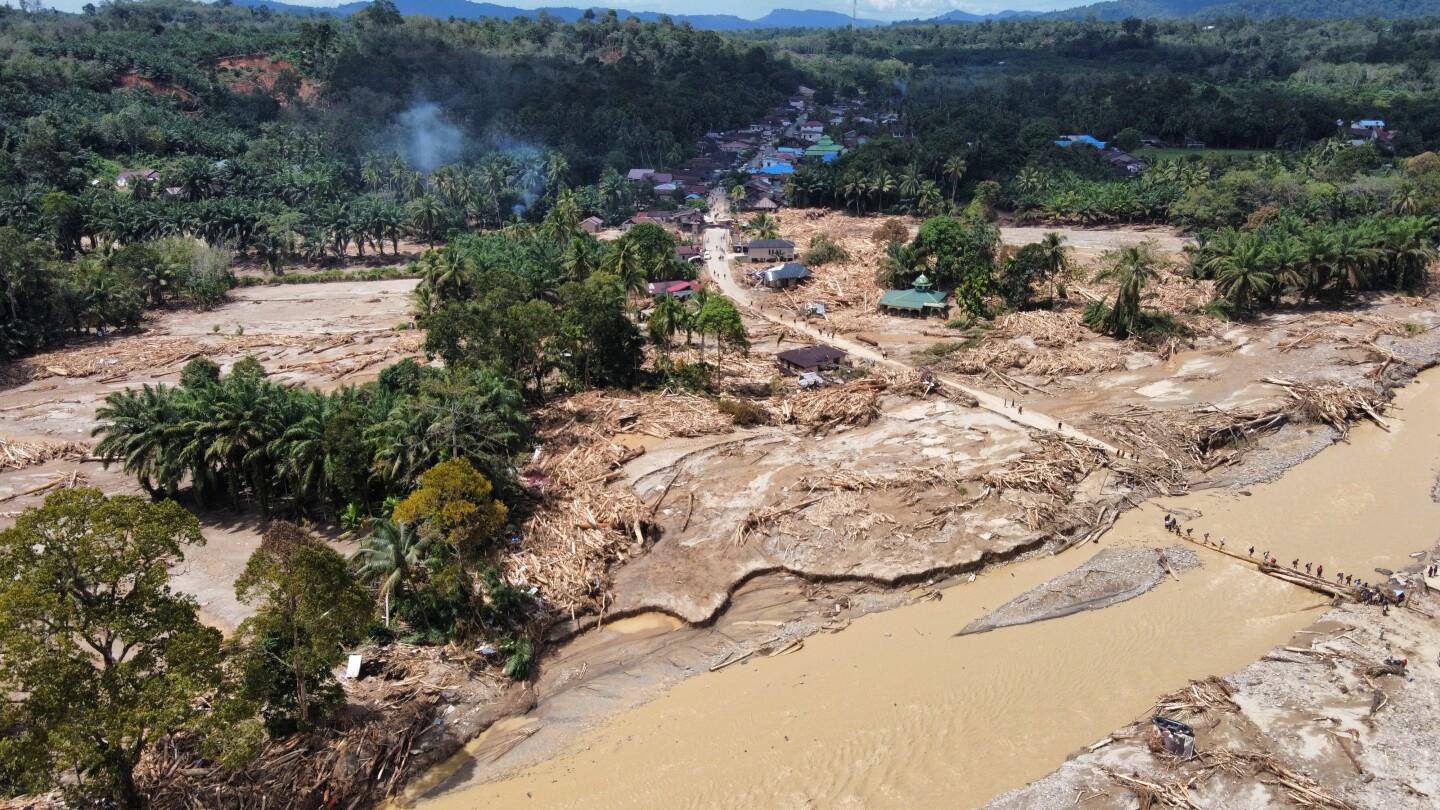
Southeast Asian nations are experiencing catastrophic flooding this year, with unusually late and severe storms causing widespread devastation across multiple countries. The death toll has surpassed 1,400 across Indonesia, Sri Lanka, and Thailand, with more than 1,000 people still missing in the aftermath of floods and landslides.
In Indonesia, entire communities remain isolated after critical infrastructure was destroyed. Thousands in Sri Lanka lack access to clean water, while Thailand’s government has publicly acknowledged failures in its disaster response. Malaysia is still recovering from one of its worst flooding events, which claimed three lives and displaced thousands of residents.
Vietnam and the Philippines have endured a year of relentless storms that have killed hundreds, part of a devastating pattern that climate scientists warn is becoming the new normal for the region.
“Southeast Asia should brace for a likely continuation and potential worsening of extreme weather in 2026 and for many years immediately following that,” said Jemilah Mahmood, who leads the Sunway Centre for Planetary Health in Kuala Lumpur.
Climate conditions in 2024 helped set the stage for this year’s extreme weather events. Atmospheric carbon dioxide levels experienced their largest recorded annual increase, “turbocharging” the climate according to the UN’s World Meteorological Organization. This has resulted in more frequent and severe weather events throughout the region.
Asia is particularly vulnerable, warming at nearly twice the global average rate. Benjamin Horton, a professor of earth science at the City University of Hong Kong, explains that warmer ocean temperatures provide more energy for storms, making them stronger and wetter, while rising sea levels amplify storm surges.
Climate change is also altering the timing of the monsoon season. Storms are arriving later in the year as shifting air and ocean currents, including El Niño patterns, keep ocean waters warmer for longer periods and extend the typhoon season. With increased atmospheric moisture and changing wind patterns, powerful storms can develop rapidly and with little warning.
“While the total number of storms may not dramatically increase, their severity and unpredictability will,” Horton noted.
The unpredictability and intensity of these weather events are overwhelming Southeast Asian governments, according to Aslam Perwaiz of the Bangkok-based Asian Disaster Preparedness Center. He points to a reactive rather than proactive approach to disaster management as a significant issue.
“Future disasters will give us even less lead time to prepare,” Perwaiz warned.
In Sri Lanka’s most affected regions, Sarala Emmanuel, a human-rights researcher in Batticaloa, observed that little has changed since the 2004 Indian Ocean tsunami that killed 230,000 people. “When a disaster like this happens, the poor and marginalized communities are the worst affected,” Emmanuel said, highlighting the vulnerability of tea plantation workers living in landslide-prone areas.
Environmental degradation has compounded the damage. In Indonesia, videos showing logs swept downstream suggested that deforestation may have exacerbated flooding, though officials denied claims of illegal logging. Since 2000, the flood-affected Indonesian provinces of Aceh, North Sumatra, and West Sumatra have lost over 19,600 square kilometers of forest—an area larger than New Jersey—according to Global Forest Watch.
The economic toll is staggering. Vietnam estimates losses exceeding $3 billion in the first 11 months of this year due to floods, landslides, and storms. Thailand’s Kasikorn Research Center calculates that November floods in the southern region alone caused approximately $781 million in damages, potentially reducing national GDP by 0.1%.
Indonesia’s finance ministry reports average annual losses from natural disasters at $1.37 billion, while Sri Lanka—which contributes minimally to global carbon emissions but faces severe climate impacts—struggles with disaster costs while managing its foreign debt obligations.
At last month’s COP30 climate conference in Brazil, nations pledged to triple funding for climate adaptation and make $1.3 trillion in annual climate financing available by 2035. However, this falls far short of what developing nations requested, and uncertainty remains about whether these funds will materialize.
“There is an urgent need for vulnerable countries like ours to get compensated for loss and damages we suffer because of global warming,” said Sandun Thudugala of Sri Lanka’s Law and Society Trust.
Southeast Asia stands at a critical juncture for climate action, according to Thomas Houlie of Climate Analytics. While renewable energy adoption is growing in the region, many countries remain dependent on fossil fuels.
“What we’re seeing in the region is dramatic and it’s unfortunately a stark reminder of the consequences of the climate crisis,” Houlie said.
Fact Checker
Verify the accuracy of this article using The Disinformation Commission analysis and real-time sources.

24 Comments
Production mix shifting toward Business might help margins if metals stay firm.
Good point. Watching costs and grades closely.
Good point. Watching costs and grades closely.
Production mix shifting toward Business might help margins if metals stay firm.
Interesting update on Deadly Asian floods are no fluke. They’re a climate warning, scientists say. Curious how the grades will trend next quarter.
Good point. Watching costs and grades closely.
Good point. Watching costs and grades closely.
If AISC keeps dropping, this becomes investable for me.
Good point. Watching costs and grades closely.
Good point. Watching costs and grades closely.
Silver leverage is strong here; beta cuts both ways though.
The cost guidance is better than expected. If they deliver, the stock could rerate.
Good point. Watching costs and grades closely.
Silver leverage is strong here; beta cuts both ways though.
If AISC keeps dropping, this becomes investable for me.
Good point. Watching costs and grades closely.
Good point. Watching costs and grades closely.
Exploration results look promising, but permitting will be the key risk.
Good point. Watching costs and grades closely.
Good point. Watching costs and grades closely.
The cost guidance is better than expected. If they deliver, the stock could rerate.
Good point. Watching costs and grades closely.
The cost guidance is better than expected. If they deliver, the stock could rerate.
Uranium names keep pushing higher—supply still tight into 2026.