


Listen to the article
Nine ICC Officials Living Under Same Sanctions as Putin After Trump Targets Court
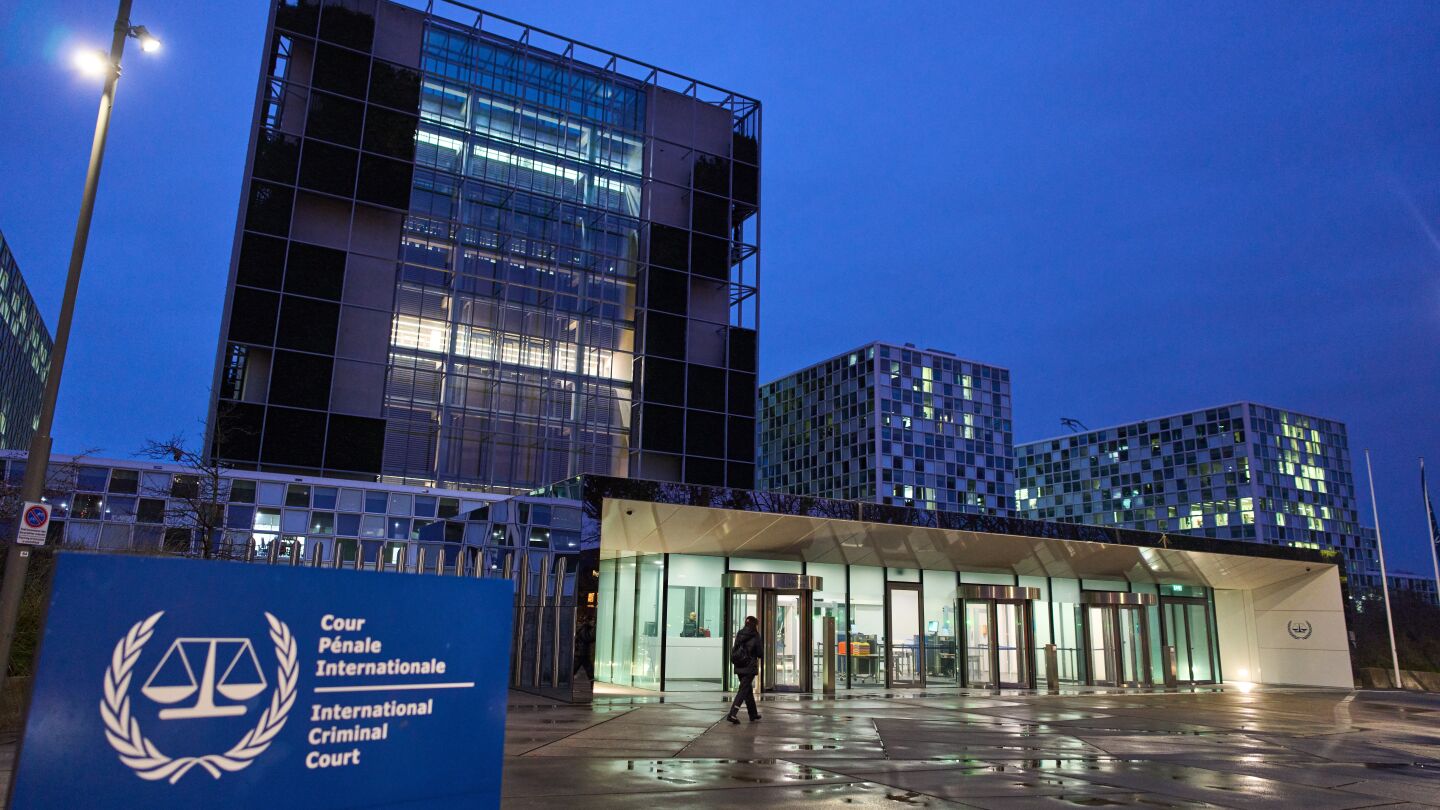
Judges and prosecutors at the International Criminal Court are facing unprecedented challenges as they work under the same stringent U.S. financial and travel restrictions typically reserved for individuals like Russian President Vladimir Putin and the late terrorist leader Osama bin Laden.
Nine ICC staff members, including six judges and the court’s chief prosecutor, were sanctioned by former U.S. President Donald Trump’s administration for pursuing investigations into officials from the United States and Israel – two nations that have not joined the 125 member states of the Hague-based court.
The sanctions have caused immediate and far-reaching disruptions to the officials’ personal and professional lives. For British national Karim Khan, the court’s top prosecutor, the impact was swift and severe: his bank accounts were closed, his U.S. visa revoked, and his official ICC email address through Microsoft was canceled.
Canadian Judge Kimberly Prost, named in the latest round of sanctions imposed in August, experienced similar hardships. “Your whole world is restricted,” Prost told The Associated Press. She immediately lost access to her credit cards, and even her Amazon Alexa device stopped responding to her commands.
The irony of her situation is not lost on Prost, who worked on sanctions for the U.N. Security Council before joining the ICC in 2017. “I’ve worked all my life in criminal justice, and now I’m on a list with those implicated in terrorism and organized crime,” she remarked.
Prost was targeted specifically for voting to allow the court’s investigation into alleged war crimes and crimes against humanity committed in Afghanistan, including those potentially perpetrated by American troops and intelligence operatives.
The ripple effects of the sanctions extend far beyond professional limitations. Peruvian Judge Luz del Carmen Ibáñez Carranza, who was involved in the same Afghanistan decision as Prost, expressed concern for her family: “The problems are not only for me, but also for my daughters,” who can no longer attend work conferences in the United States.
Even the most mundane aspects of daily life have been affected. Prost described how an e-book she purchased, “The Queen’s Necklace” by Antál Szerb, mysteriously disappeared from her device. “It’s the uncertainty,” she explained. “They are small annoyances, but they accumulate.”
Deputy prosecutor Nazhat Shameem Khan highlighted the persistent uncertainty: “You’re never quite sure when your card is not working somewhere, whether this is just a glitch or whether this is the sanction.”
The ICC officials face a precarious situation with few remedies. Some staff members also face arrest warrants in Russia, and many worry that Washington might eventually sanction the entire ICC institution, which could prevent the court from paying employees, providing financial assistance to protected witnesses, or maintaining basic operations.
Founded in 2002, the ICC serves as the world’s permanent court of last resort for prosecuting individuals responsible for war crimes, crimes against humanity, genocide, and aggression. The court only intervenes when nations are unable or unwilling to prosecute these crimes within their territories.
Without its own police force, the ICC relies on member states to execute arrest warrants, making it highly unlikely that any U.S. or Israeli official would actually face trial. However, those wanted by the court, like Putin, risk arrest when traveling abroad or after leaving office – as demonstrated earlier this year when the ICC took custody of former Philippine President Rodrigo Duterte, accused of crimes against humanity for his deadly anti-drug campaigns.
The Trump administration justified the sanctions by claiming they were a response to the ICC’s “illegitimate and baseless actions targeting America and our close ally Israel.” Tommy Pigott, a State Department spokesman, maintained that position, stating, “The United States will not tolerate efforts to violate our sovereignty or to wrongfully subject U.S. or Israeli persons to the ICC’s unjust jurisdiction.”
The situation is further complicated by a leadership crisis at the court. Khan stepped aside earlier this year pending an investigation into allegations of sexual misconduct, which he denies.
Despite these challenges, the sanctioned officials remain resolute. Ibáñez, who previously prosecuted terrorists and drug lords in Peru, vowed that the sanctions would not impact her judicial activities in The Hague. “I will continue my work,” she declared.
Prost echoed this defiance, affirming that the sanctioned staff are “absolutely undeterred and unfettered.” Similar sanctions imposed during Trump’s first administration against former prosecutor Fatou Bensouda were only lifted when Joe Biden became president, suggesting the current officials may face a lengthy wait for relief.
Fact Checker
Verify the accuracy of this article using The Disinformation Commission analysis and real-time sources.

6 Comments
It’s troubling to see the ICC officials facing such severe sanctions and disruptions to their work. They should be able to carry out their duties without political interference. I hope this situation can be resolved through diplomatic channels.
I’m curious to know more about the legal and diplomatic reasoning behind these sanctions. It’s troubling to see government officials facing such severe personal and professional consequences for doing their jobs at an international court.
That’s a good point. The sanctions do seem to go beyond what is typically seen, even for high-profile targets. I wonder if there are concerns about the ICC’s jurisdiction or investigative methods that are driving this.
This is a complex issue with valid arguments on both sides. While the U.S. may have its reasons for targeting the ICC, denying access to basic financial and communication services seems heavy-handed. I hope a pragmatic solution can be found.
This situation highlights the complex geopolitics surrounding the ICC and its work. While I can understand the U.S. wanting to protect its interests, sanctioning court officials seems like a dangerous precedent that could undermine the institution’s integrity.
The sanctions against ICC staff seem like a concerning overreach, especially given the court’s mandate to investigate war crimes and crimes against humanity. I wonder what the long-term implications will be for the ICC’s ability to function effectively.