


Listen to the article
Former Crypto Tycoon Do Kwon Sentenced to 15 Years for $40 Billion Fraud
Do Kwon, once hailed as “the cryptocurrency king,” was sentenced to 15 years in prison on Thursday for orchestrating what a federal judge called “a fraud on an epic, generational scale” that resulted in $40 billion in losses.
Judge Paul A. Engelmayer delivered the sentence in Manhattan federal court, calling the government’s recommendation of 12 years “unreasonably lenient” while rejecting the defense’s request for five years as “utterly unthinkable.” Kwon, a 34-year-old Stanford graduate who appeared in court wearing a yellow jail suit, faced a maximum sentence of 25 years.
“Your offense caused real people to lose $40 billion in real money, not some paper loss,” Engelmayer told Kwon during the daylong hearing. The judge emphasized Kwon’s “almost mystical hold” over investors and the incalculable “human wreckage” his actions caused, estimating the fraud may have affected up to a million victims.
The collapse of Kwon’s Singapore-based Terraform Labs in 2022 sent shockwaves through the cryptocurrency industry. Prosecutors noted the losses exceeded the combined damages from the frauds perpetrated by FTX founder Sam Bankman-Fried and OneCoin co-founder Karl Sebastian Greenwood, making it one of the largest financial frauds in recent history.
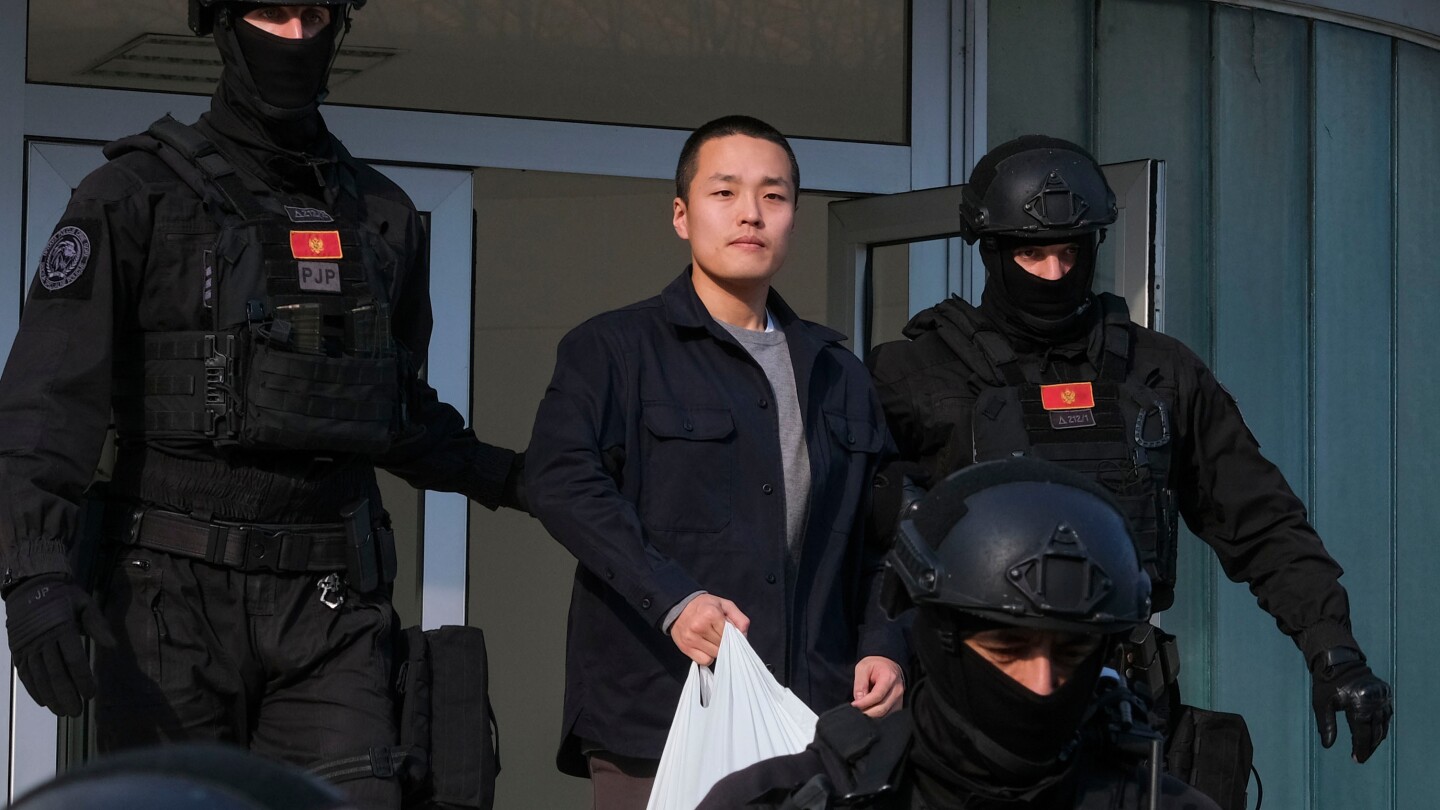
Kwon pleaded guilty in August to fraud charges after initially fleeing to the Balkans on a false passport following his company’s collapse. He has been incarcerated since his March 2023 arrest in Montenegro and was credited with the 17 months he spent in jail there before extradition to the United States.
At the core of the fraud was TerraUSD, which Kwon marketed as a reliable “stablecoin” — typically a cryptocurrency pegged to stable assets to prevent dramatic price fluctuations. However, prosecutors revealed it was merely an illusion backed by outside cash infusions that ultimately collapsed when the coin plunged far below its $1 peg.
The crash devastated investors in both TerraUSD and its sister currency Luna, triggering what prosecutors described as “a cascade of crises that swept through cryptocurrency markets” and significantly damaged public confidence in the broader digital asset ecosystem.
During the hearing, victims detailed the devastating personal impact of Kwon’s fraud. One victim, speaking by telephone, described how the collapse led to his divorce, forced his sons to forego college, and compelled him to return to Croatia to live with his parents after his family’s life savings evaporated.
Stanislav Trofimchuk testified that his family’s investment plummeted from $190,000 to just $13,000 — “17 years of our life, gone” during what he described as “two weeks of sheer terror.”
Chauncey St. John, who appeared in court, revealed that nonprofits he worked with lost more than $2 million while a church group lost approximately $900,000. Despite these losses, St. John expressed forgiveness toward Kwon, saying, “I pray to God to have mercy on his soul.”
A prosecutor read excerpts from some of the more than 300 victim letters submitted to the court. One person who lost nearly $11,400 wrote: “To some that is just a number on a page, but to me it was years of effort. Watching it evaporate, literally overnight, was one of the most terrifying experiences of my life.”
In addressing the court, Kwon expressed remorse, saying he had spent “almost every waking moment of the last few years thinking of what I could have done different and what I can do now to make things right.” He acknowledged that hearing from victims was “harrowing and reminded me again of the great losses that I have caused.”
As part of his plea deal, Kwon agreed to forfeit over $19 million. His lawyers argued that his conduct stemmed not from greed but from hubris and desperation, a characterization Assistant U.S. Attorney Sarah Mortazavi rejected, stating Kwon created an “illusion of resilience while covering up systemic failure.”
Kwon also faces prosecution in his native South Korea, where his wife and 4-year-old daughter live. Judge Engelmayer denied his request to serve his sentence there.
The case stands as a stark reminder of the potential risks in cryptocurrency investments and the devastating human toll that can result from financial fraud on such a massive scale.
Fact Checker
Verify the accuracy of this article using The Disinformation Commission analysis and real-time sources.

19 Comments
If AISC keeps dropping, this becomes investable for me.
Good point. Watching costs and grades closely.
Good point. Watching costs and grades closely.
Nice to see insider buying—usually a good signal in this space.
Good point. Watching costs and grades closely.
Good point. Watching costs and grades closely.
Exploration results look promising, but permitting will be the key risk.
Good point. Watching costs and grades closely.
Uranium names keep pushing higher—supply still tight into 2026.
Good point. Watching costs and grades closely.
Good point. Watching costs and grades closely.
Nice to see insider buying—usually a good signal in this space.
Good point. Watching costs and grades closely.
Good point. Watching costs and grades closely.
I like the balance sheet here—less leverage than peers.
Good point. Watching costs and grades closely.
Good point. Watching costs and grades closely.
The cost guidance is better than expected. If they deliver, the stock could rerate.
Good point. Watching costs and grades closely.