


Listen to the article
Cracker Barrel reported disappointing financial results Tuesday as the restaurant chain continues to grapple with fallout from its controversial rebranding attempt earlier this year. The Tennessee-based company saw revenue decline 5.7% to $797.2 million in its fiscal first quarter ending October 31, falling short of the $800 million analysts had expected.
The company’s same-store restaurant sales dropped 4.7%, while retail shop sales plummeted even further at 8.5%. Both figures exceeded analyst forecasts, signaling deeper troubles for the comfort food chain known for its country-style restaurants and gift shops.
In response to the weaker performance, Cracker Barrel has significantly reduced its financial outlook for fiscal year 2026. The company now projects total revenue between $3.2 billion and $3.3 billion, down from its previous estimate of $3.35 billion to $3.45 billion. Additionally, adjusted pre-tax earnings expectations have been slashed to between $70 million and $110 million, less than half the previously forecasted range of $150 million to $190 million.
Investors responded swiftly to the news, with Cracker Barrel shares tumbling more than 10% in after-hours trading Tuesday.
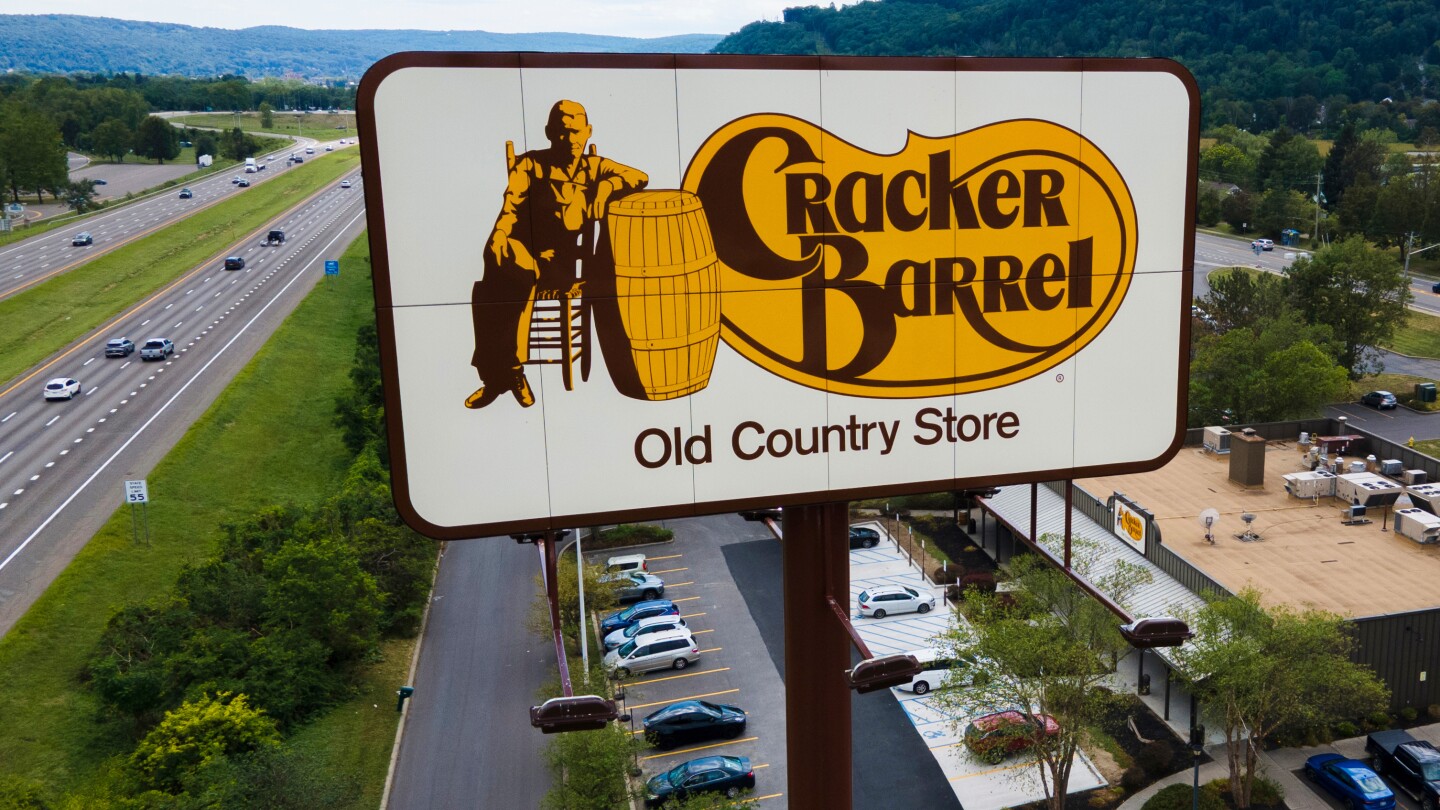
The disappointing results come in the wake of a rebranding effort that backfired dramatically. In August, Cracker Barrel announced plans to modernize its restaurants and simplify its iconic logo as part of a broader strategy to attract new customers. The redesign removed the brand’s longtime mascot – an overall-clad man leaning on a barrel – and eliminated the words “Old Country Store” from the logo.
The changes sparked immediate backlash from loyal customers who viewed the rebranding as an abandonment of the chain’s heritage and charm. The negative reaction on social media was swift and intense, with many longtime patrons expressing disappointment and threatening to boycott the restaurant.
Just one week later, facing mounting criticism, Cracker Barrel was forced to reverse course, announcing it would retain its original logo. By September, the company had suspended its ambitious store remodeling plans that would have updated the chain’s rustic, antique-filled interiors across its approximately 650 locations nationwide. The chain has a particularly strong presence in southern states, with significant concentrations in Texas, Florida, and Tennessee.
Despite the rebranding debacle, CEO Julie Felss Masino managed to retain her position after shareholders voted to keep her at the helm during a meeting last month. Masino, who joined the company in 2023, has faced significant pressure to steer the chain back to stability following the misstep.
However, not all leadership escaped unscathed. Board member Gilbert Davila resigned last Thursday after preliminary voting results indicated shareholders had rejected his reelection. Davila, who had served on Cracker Barrel’s board since 2020 and is the president and CEO of multicultural marketing firm DMI Consulting, had oversight responsibilities for the company’s advertising as part of his board duties.
The rebranding controversy highlights the delicate balance restaurant chains face when attempting to modernize while maintaining the heritage that resonates with their core customer base. For Cracker Barrel, founded in 1969 and known for its nostalgic appeal, the failed rebranding serves as a cautionary tale about the risks of straying too far from established brand identity.
Industry analysts note that Cracker Barrel faces additional headwinds beyond the logo controversy, including inflationary pressures affecting restaurant operations and changing consumer dining habits in the post-pandemic landscape. The chain must now focus on rebuilding customer trust while addressing the operational challenges reflected in its disappointing quarterly results.
Fact Checker
Verify the accuracy of this article using The Disinformation Commission analysis and real-time sources.

6 Comments
The Cracker Barrel situation underscores how important it is for companies to deeply understand their brand identity and what resonates with their customers. Significant changes can backfire if not executed thoughtfully and with strong customer buy-in. Hopefully they can recover from this misstep.
The revenue and earnings forecast cuts are quite significant for Cracker Barrel. This suggests the logo change really backfired and severely disrupted their business. It will take time and effort to rebuild trust with their loyal customer base.
You’re right, the brand misstep seems to have had a major financial impact. Cracker Barrel will need to carefully re-evaluate their strategy and reconnect with their core customers to turn things around.
This is a cautionary tale about the risks of major rebranding efforts. Cracker Barrel’s loyal customers clearly didn’t appreciate the logo change, leading to a sharp decline in traffic and sales. They’ll need to focus on getting back to their country-style roots to regain momentum.
Interesting to see how the Cracker Barrel rebranding has impacted their financials. It’s a challenging time for the company as they navigate consumer perceptions and preferences. I wonder what steps they’ll take to win back customers and regain their footing.
Cracker Barrel’s sharp earnings downgrade is a stark reminder that even well-established brands can stumble when they stray too far from what made them successful in the first place. Reconnecting with their core customer base will be critical for the company going forward.