


Listen to the article
Nearly half of commercial truck driving schools in the United States have been flagged as noncompliant by the Trump administration, though industry experts believe the immediate impact on the trucking sector will be limited. However, the increased scrutiny of immigrant drivers could have more significant consequences.
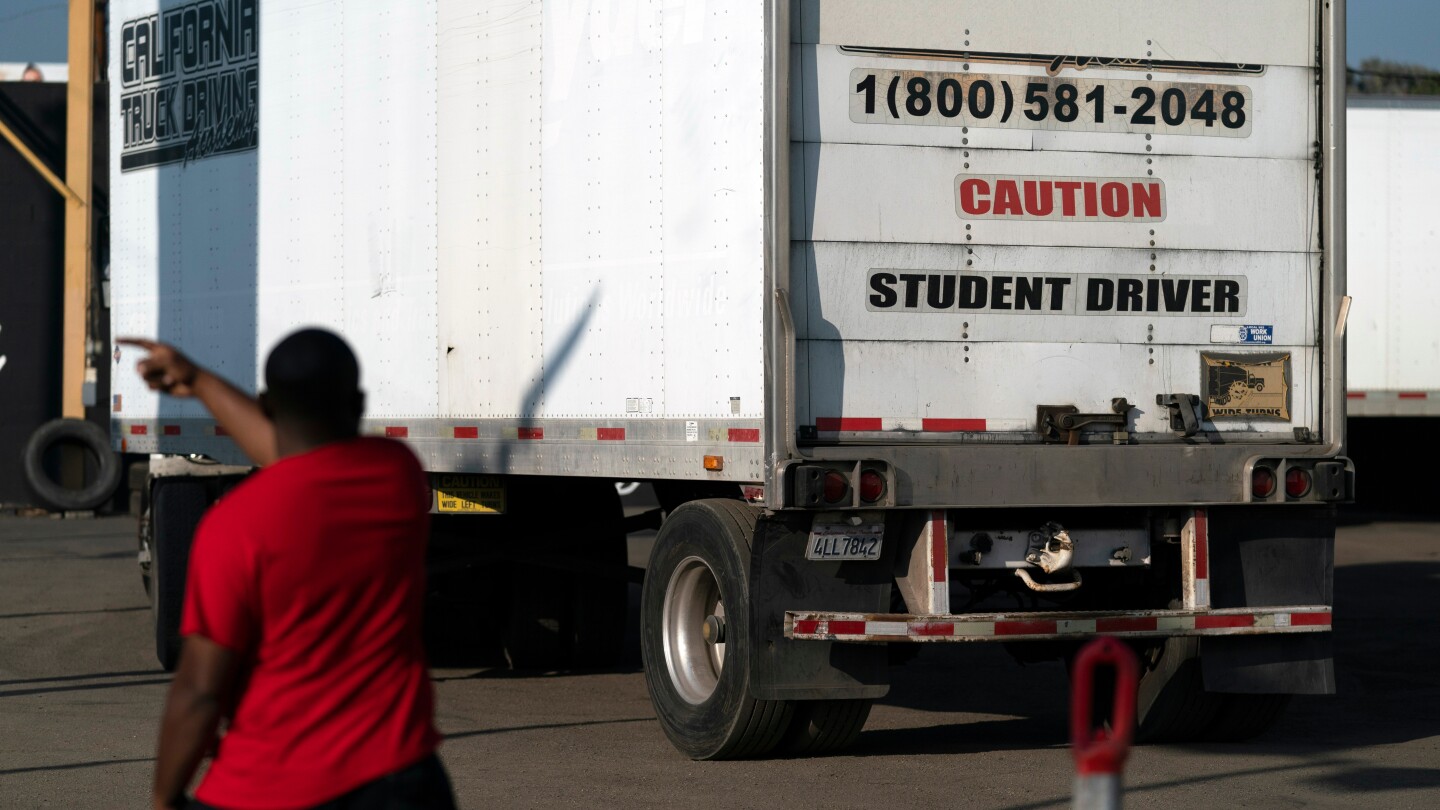
The Transportation Department’s crackdown targets approximately 7,500 driving schools that have failed to meet federal standards established in 2022. Many larger, established schools remain in good standing, and officials note that numerous flagged institutions were already inactive prior to the enforcement action.
“For the legitimate schools it’s not a problem. We welcome it. For the illegitimate schools, it’s a bad thing for them,” said Jeffery Burkhardt, chair of the national trucking schools group and senior director of operations at Ancora, which provides commercial driver’s license (CDL) training at educational institutions and companies.
The enforcement comes amid a 10% decline in shipping volume since 2022, creating a temporary surplus of drivers despite ongoing industry challenges to recruit and retain qualified personnel with clean driving records.
Transportation Secretary Sean Duffy has placed particular emphasis on immigrant drivers, who represent approximately 20% of the nation’s trucking workforce. This focus intensified following an August crash in Florida involving a driver whom Duffy claimed was unauthorized to be in the U.S. The incident, which resulted in three fatalities, prompted the Transportation Department to audit commercial driver’s license programs nationwide.
Duffy subsequently proposed new restrictions that would significantly limit noncitizens’ ability to obtain commercial licenses. While these rules were temporarily blocked by court action, the administration has applied pressure on states with problematic licensing practices. This led California to revoke 17,000 commercial licenses, affecting many immigrant drivers whose work permits had expired while their licenses remained valid.
The impact on immigrant drivers has been substantial. Dave Atwal, owner of Diamond Transportation in Lodi, California, reported losing over 40 drivers who either abandoned their positions or couldn’t renew their licenses despite years of safe driving records. “They’re just afraid to go to some of these other states where they might get harassed,” Atwal explained.
Dave Laut, who operates FBT Inc. with approximately 300 trucks, noted that Sikh drivers in particular are leaving the industry. “A lot of Sikhs are quitting truck driving,” he said. “They feel people target them, and they feel insulted and they are quitting jobs. They are hardworking guys. They stand out more.”
The enforcement of training standards is expected to unfold gradually as licenses come up for renewal and new drivers complete their education. Most schools facing decertification either failed to submit required biannual reports or haven’t issued any course completion certificates in the past year.
Industry stakeholders generally support the federal government’s efforts to enforce rigorous training standards. Dane Rogers, CEO of Western Pacific Truck School in California and a leader in the Commercial Vehicle Training Association, emphasized the importance of quality training: “Do you want more truck drivers that are dangerous, or do you want less truck drivers that are more competent? I would go with the latter.”
However, the decertification of so many schools could create bottlenecks in the driver training pipeline. Antonio Yates, who works at Detroit’s 100 Placement Truck Driving School, reported that classes are already booked two to three months in advance, with many immigrants willing to pay $3,000-$5,000 for training.
“They’re from all over, South America, Africa. They’re from everywhere,” Yates said, while acknowledging that language barriers can present challenges. “If I can’t communicate with you, I can’t even train you properly. We turn people away all of the time.”
Logan Cooper, who coordinates container deliveries for OEC Group, believes the industry has “some room to absorb this,” though long-term effects are anticipated. Blair Robbins, a transportation consultant with EisnerAmper, estimates that only 5-10% of the workforce might be affected, with changes occurring incrementally rather than causing immediate disruption.
For now, the trucking industry appears positioned to weather these regulatory changes, especially given current market conditions. However, the combined impact of school decertifications and immigrant driver scrutiny will likely reshape the sector’s labor dynamics in the coming years.
Fact Checker
Verify the accuracy of this article using The Disinformation Commission analysis and real-time sources.

8 Comments
The trucking industry has faced ongoing challenges with driver shortages, so I’m glad to see efforts to ensure quality training programs. However, the potential impact on immigrant drivers is concerning and could exacerbate labor issues. Curious to learn more about the specifics of the new regulations and how they’ll be implemented.
Good point. Maintaining a diverse driver pool is important for meeting demand, so the effects on immigrant workers will be an important factor to monitor.
The increased scrutiny on immigrant truck drivers is a concerning angle to this story. Diversity in the workforce is important for meeting labor demands, so I hope policymakers can find a way to maintain high safety standards without unfairly targeting certain groups. Overall, it will be important to monitor the real-world impacts of this crackdown on the broader transportation sector.
Interesting to see the crackdown on non-compliant trucking schools. While it may create some short-term disruption, it sounds like the legitimate, established schools should be able to handle the increased demand. Curious to see how the scrutiny of immigrant drivers plays out – could have more significant impacts on the industry.
Agreed, the increased oversight of driving schools is probably a necessary step, even if there are some growing pains. Maintaining quality and safety standards is crucial for the industry.
As someone with an interest in the mining and commodities sectors, I’m curious to see how this plays out for the trucking industry. Reliable transportation is so vital for moving raw materials and finished products. Hopefully the transition to higher-quality training programs can be managed without too much disruption.
Absolutely. The mining and energy industries rely heavily on efficient freight logistics, so any significant shakeups in the trucking sector could have ripple effects. Looking forward to seeing how this situation develops.
This crackdown on non-compliant trucking schools seems like a mixed bag. On one hand, upholding training standards is crucial for safety. But the potential disruption to the labor supply is worrying, especially given the existing driver shortage. I hope officials can strike the right balance as they roll out these new regulations.