


Listen to the article
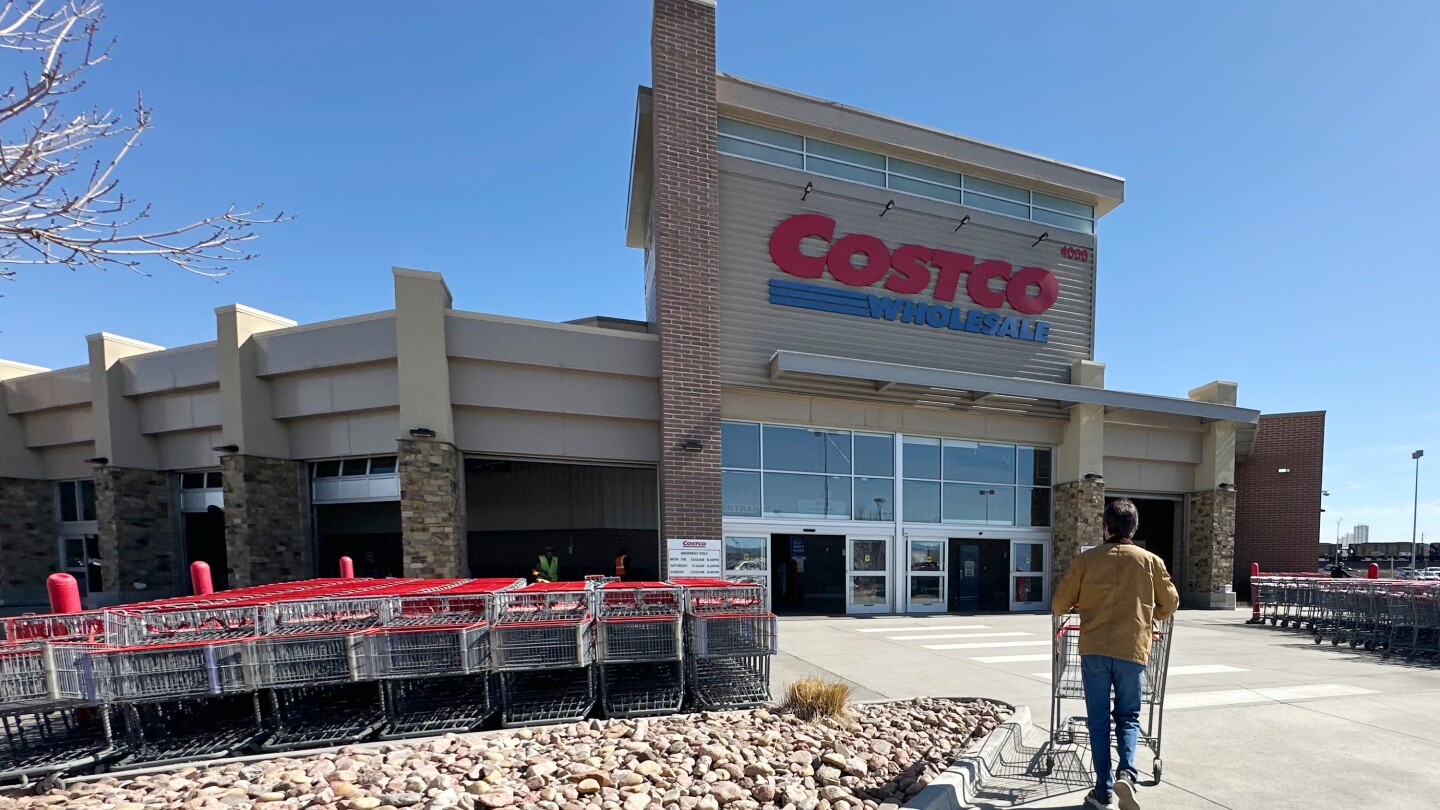
Costco has joined a growing list of U.S. companies seeking refunds on import taxes imposed by former President Donald Trump, filing a complaint with the U.S. Court of International Trade in New York last week. The retail giant is taking this preemptive action rather than waiting for the Supreme Court to rule on the legality of Trump’s tariffs.
Earlier this year, both the U.S. Court of International Trade in New York and the U.S. Court of Appeals for the Federal Circuit in Washington ruled that Trump’s broadest import taxes were illegal. The case has since moved to the Supreme Court, where several justices expressed skepticism during a November 5 hearing about presidential authority to declare national emergencies as justification for imposing widespread tariffs.
In its court filing, Costco stated it is demanding refunds now “to ensure that its right to a complete refund is not jeopardized.” The company specifically cited concerns about the timing of the “liquidation” process – the finalization of tariff bills by the Customs and Border Protection agency – which Costco claims will begin December 15.
Joyce Adetutu, a partner at the Vinson & Elkins law firm specializing in trade law, explained Costco’s strategy: “They want to make sure that if and when the Supreme Court overturns the IEEPA tariffs, which could come as late as the summertime, they have the judgment in place” to collect a refund.
Under current regulations, importers have a 180-day window after liquidation to protest tariff bills. Costco fears this timeline could expire depending on how long the Supreme Court takes to issue its decision, potentially leaving the company unable to reclaim millions in paid tariffs.
Costco isn’t alone in this preemptive approach. Revlon and Bumble Bee Foods, a producer of canned seafood and chicken products, have filed similar requests with the trade court, positioning themselves to recover tariff payments should the Supreme Court rule against the Trump-era import taxes.
The legal battle centers on the 1977 International Emergency Economic Powers Act (IEEPA), which Trump cited as giving him authority to impose tariffs. Critics argue the Constitution explicitly grants tariff powers to Congress, not the executive branch. Trump has maintained he possesses “almost unlimited right” to impose such taxes, but has now lost two significant court rulings on this issue.
The financial stakes are substantial. The tariffs under court challenge have generated approximately $90 billion in revenue thus far. A ruling against these tariffs could trigger an unprecedented wave of refund requests from thousands of importers across various industries.
“This is a substantial amount of tariff income that has been collected. And really there hasn’t been a case where there’s been an influx of refund requests,” Adetutu noted, highlighting the potential administrative challenge of processing what could be billions in refund claims.
Brent Skorup, a legal fellow at the libertarian Cato Institute, described the situation as uncertain: “It’s unclear whether refunds will be granted and, if so, how much. But the possibility has prompted many companies — including Costco — to file actions in the U.S. Court of International Trade to get in line, so to speak, for potential refunds.”
The court battle comes amid heated political rhetoric around tariffs. Trump warned in August that eliminating his tariffs would devastate the American economy, going so far as to predict “1929 all over again, a GREAT DEPRESSION!” Many economists dispute this claim, arguing that targeted trade policies rather than sweeping tariffs would better serve U.S. economic interests.
A Supreme Court decision is expected by summer 2024, with significant implications for U.S. trade policy, federal revenue, and the business operations of thousands of American importers.
Fact Checker
Verify the accuracy of this article using The Disinformation Commission analysis and real-time sources.
