


Listen to the article
Climate change is ravaging Asia’s water and power infrastructure, forcing nations to grapple with devastating consequences while scrambling to finance critical adaptation measures, according to two recently published reports.
Water-related disasters are escalating across the region at an alarming rate, with the Asian Development Bank (ADB) estimating that Asian nations will need approximately $4 trillion for water and sanitation infrastructure between 2025 and 2040. This translates to an annual investment of about $250 billion, according to the report released Monday.
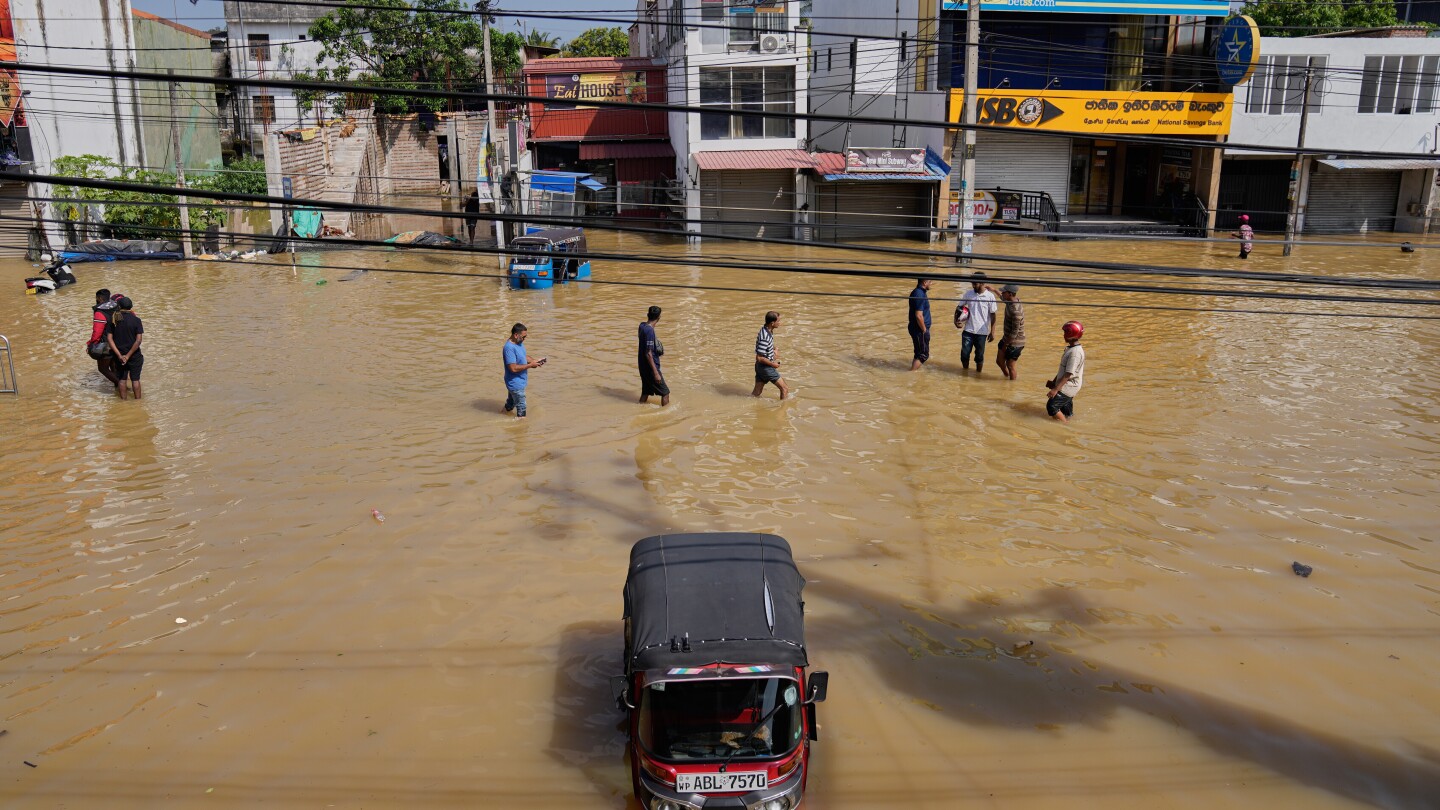
The impacts of these climate threats have been vividly demonstrated across Asia this year. In central Vietnam’s coastal city of Quy Nhon, Typhoon Kalmaegi recently brought destructive winds and torrential rain, snapping power lines and submerging streets under chest-high water. The flooding transformed entire neighborhoods into isolated islands, leaving residents like 29-year-old Hai Duong desperate to reach safety and contact loved ones.
“I can’t go back because my home is underwater. I just want to see if my relatives are safe,” Duong said after rushing to a mall that still had electricity to charge her phone.
The ADB report reveals a stark disparity in water security across the region. While 2.7 billion people—approximately 60% of Asia-Pacific’s population—have access to water for most basic needs, more than 4 billion remain exposed to unsafe water, degraded ecosystems, and escalating climate hazards. Some progress has been made since 2013, particularly with 800 million more rural residents now having piped water access, with India making significant contributions to this improvement.
However, Asia faces what Vivek Raman, principal urban development specialist at ADB and lead author of the report, calls “a triple threat” of environmental pressures, insufficient investment, and climate change. “It’s a tale of two realities,” Raman noted.
The region’s water ecosystems are deteriorating rapidly in 30 of the 50 Asian countries studied, primarily due to unchecked development, pollution, and land conversion. Asia accounts for 41% of global flooding, with coastal megacities and Pacific islands increasingly threatened by storm surges, rising sea levels, and saltwater intrusion. Between 2013 and 2023, the Asia-Pacific region experienced 244 major floods, 104 droughts, and 101 severe storms—events that undermined development gains and caused widespread destruction.
Currently, governments are only meeting about 40% of the estimated funding needs for water and sanitation, leaving an annual shortfall exceeding $150 billion.
Amit Prothi, director general of the New Delhi-based Coalition for Disaster Resilient Infrastructure, sees Asia’s rapid growth as both an opportunity and challenge. “The amount of infrastructure we’ll build in Asia in the next three decades will be as much as what was built in the last two centuries. So, this is an opportunity to rethink and build in a new way,” Prothi said. The coalition’s research indicates that globally, about $800 billion in infrastructure—approximately a third of it in Asia—is exposed to disasters each year.
The power sector is similarly vulnerable. Research by the Asia Investor Group on Climate Change and the MSCI Institute shows that extreme weather events are already costing Asia’s power utilities $6.3 billion annually. This figure is projected to rise to $8.4 billion by 2050 if companies fail to strengthen adaptation measures.
Asia, which accounts for 60% of the world’s power generation capacity and remains heavily dependent on coal, faces serious threats to energy security and economic growth. The region houses over 4 billion people who need reliable electricity.
“Overall, if you were looking at the types of impacts and the preparedness of companies, most companies are at very early stages,” said Anjali Viswamohanan, director of policy at the Asia Investor Group on Climate Change.
The study examined 2,422 power plants across China, Hong Kong, India, Indonesia, Japan, Malaysia, and South Korea. It identified extreme heat as the costliest hazard, responsible for over half of all projected losses by 2050. Heatwaves reduce power plant efficiency and strain transmission networks. Major utilities like India’s NTPC, Indonesia’s PLN, and Malaysia’s Tenaga Nasional all face high risks from rising temperatures.
Declining river flows in Asia’s major basins present another significant challenge, affecting water supplies needed for coal and gas plants as well as hydropower dams. Meanwhile, heavy rainfall and flooding threaten coastal and riverine regions. Malaysia’s Tenaga Nasional faces particularly high coastal flood exposure due to power plants built in low-lying areas.
Despite these mounting hazards, most utilities lack detailed, funded plans for adapting to climate impacts. The report found that while nine of the 11 companies studied assessed climate change impacts, only seven examined risks at individual plants. Just five calculated and disclosed how future climate impacts could raise costs or hurt earnings.
Jakob Steiner, a geoscientist affiliated with the University of Graz, notes that rapidly shifting climate risks make it difficult to predict costs and insurance needs for energy infrastructure. He suggests that financing gaps in the power sector may be easier to close than those in water and sanitation, given stronger industry interest in energy projects.
“For energy infrastructure, I see more hope that the financing gap can be closed,” Steiner said. “But that can also come at a cost.”
Fact Checker
Verify the accuracy of this article using The Disinformation Commission analysis and real-time sources.

11 Comments
With an estimated $4 trillion in investment needed, the scale of the adaptation challenge facing Asia’s water and power systems is immense. Innovative financing solutions will be crucial.
The Asian Development Bank’s estimate of $250 billion in annual investment needed for water and sanitation infrastructure is staggering. Securing the necessary financing will be a major challenge for many countries.
Incidents like the flooding that stranded residents in Quy Nhon demonstrate the human toll of these climate-driven disasters. Safeguarding lives and livelihoods must be a top priority for policymakers.
Improving early warning systems and emergency response capabilities could help mitigate the impacts of future extreme weather events in the region.
This is a concerning report on the devastating impacts of climate change on Asia’s critical water and power infrastructure. The massive investment required to adapt these systems highlights the scale of the challenge facing the region.
Typhoons, flooding, and other water-related disasters are already disrupting lives and infrastructure. Governments will need to prioritize climate adaptation measures to build resilience in the years ahead.
This report underscores the cascading impacts of climate change, with water-related disasters disrupting power systems and isolating entire communities. Comprehensive adaptation strategies will be essential.
Climate change is clearly taking a heavy toll on Asia’s critical infrastructure and vulnerable populations. Urgent action is needed to build resilience and adapt to these mounting threats.
The flooding in Quy Nhon is a harrowing example of the human cost of these climate-driven disasters. Protecting lives and livelihoods must be at the forefront of adaptation efforts.
The $4 trillion price tag for water and sanitation infrastructure improvements in Asia is staggering. Financing these vital upgrades will be a major challenge for many developing countries in the region.
International cooperation and support will likely be needed to help the most vulnerable nations adapt to the mounting threats posed by climate change.