


Listen to the article
China’s Electric Truck Revolution Reshapes Global Transport and Energy Markets
China is rapidly transitioning from diesel to electric trucks, potentially transforming global fuel demand and redefining the future of heavy transport far ahead of previous projections.
In 2020, diesel trucks dominated China’s new commercial vehicle market. By mid-2025, however, battery-powered models captured 22% of new heavy truck sales, up dramatically from 9.2% during the same period in 2024, according to data from Beijing-based Commercial Vehicle World. British research firm BMI forecasts even more dramatic growth, with electric trucks projected to reach nearly 46% of new sales this year and 60% by next year.
Heavy trucks are vital to modern economies but pose significant environmental challenges. In 2019, road freight generated approximately one-third of all transport-related carbon emissions worldwide. The sector has traditionally been considered difficult to decarbonize because electric trucks with heavy batteries typically carry less cargo than vehicles using energy-dense diesel.
The rapid electrification of China’s trucking fleet, the world’s second-largest after the United States, signals a major shift in global transport trends. While China’s fleet still predominantly runs on diesel, transport fuel demand appears to be plateauing, according to the International Energy Agency. Christopher Doleman, an analyst at the Institute for Energy Economics and Financial Analysis, suggests diesel consumption in China could decline faster than many analysts anticipate.
Notably, electric trucks now consistently outsell liquefied natural gas (LNG) models in China. LNG, which is natural gas cooled to liquid state for easier storage and transport, had been viewed as a cleaner transitional fuel while electric vehicle technology matured.
The surge in electric truck adoption corresponds directly with falling prices. The share of electric vehicles in new truck sales more than tripled from 8% in 2024 to 28% by August 2025. Electric trucks have outsold LNG-powered vehicles in China for five consecutive months this year.
While electric trucks initially cost two to three times more than diesel models and approximately 18% more than LNG trucks, their higher energy efficiency and lower operational costs deliver estimated savings of 10% to 26% over the vehicle’s lifetime, according to research published by Chinese scientists.
“When it comes to heavy trucks, the fleet owners in China are very bottom-line driven,” notes Doleman.
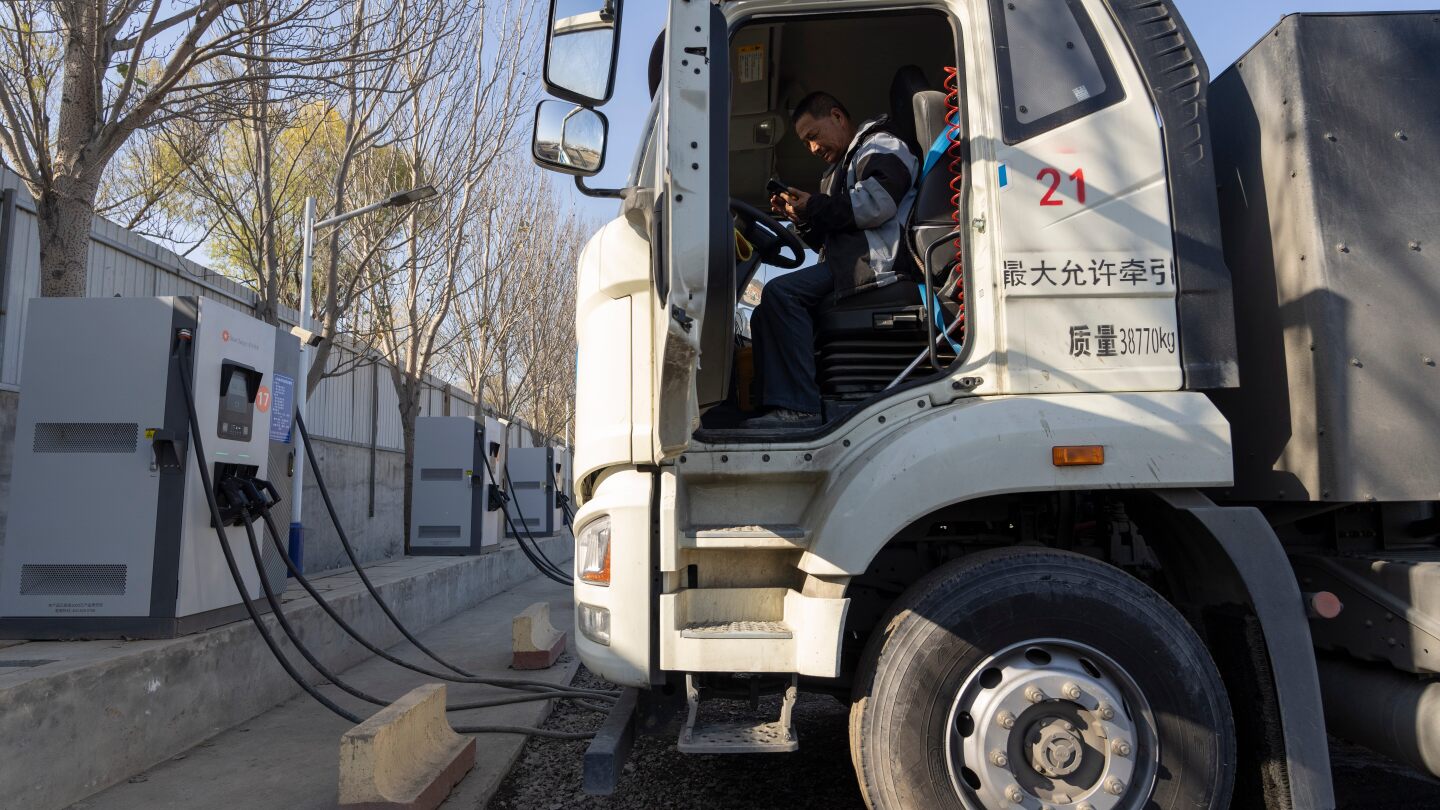
Government incentives have accelerated adoption, with owners eligible for up to $19,000 to replace older trucks with newer or electric models. Simultaneously, infrastructure investments have expanded rapidly. Major logistics hubs in regions like the Yangtze River Delta have established dedicated charging stations along key freight routes, while cities such as Beijing and Shanghai have constructed heavy-duty charging facilities capable of rapid charging.
CATL, the world’s largest electric vehicle battery manufacturer, launched a battery-swapping system for heavy trucks in May and announced plans for a nationwide network of swap stations covering approximately 93,000 miles of China’s 114,000-mile expressway system.
The impact on global energy markets is becoming increasingly apparent. Diesel consumption in China, the second-largest consumer after the U.S., fell to 3.9 million barrels per day in June 2024—an 11% year-on-year decrease representing the largest drop since mid-2021. This decline partly reflects the shift to LNG and electric trucks, according to the U.S. Energy Information Administration.
“The rise of China’s electric truck sector is one of the more under-reported stories in the global energy transition, especially given its potential impact on regional diesel trade flows,” said Tim Daiss of APAC Energy Consultancy.
LNG truck sales peaked between September 2023 and March 2024 following China’s relaxation of COVID-19 transport restrictions, according to Liuhanzi Yang of the International Council on Clean Transportation Beijing. By June 2025, sales had declined 6% as electric trucks gained market share.
The New York-based Rhodium Group estimates China’s electric trucks are already reducing oil demand by the equivalent of more than one million barrels daily. Looking ahead, China plans new emission standards that will make compliance “almost impossible” for manufacturers relying solely on fossil-fuel vehicles, according to Yang.
Having established dominance in domestic markets, Chinese manufacturers are now targeting global expansion. Between 2021 and 2023, exports of Chinese heavy-duty trucks, including electric vehicles, grew by approximately 73% annually to the Middle East and North Africa, while shipments to Latin America increased by 46%, according to McKinsey & Company.
Sany Heavy Industry plans to begin exporting electric trucks to Europe in 2026, having already shipped units to the United States, Thailand, India, and the United Arab Emirates. Meanwhile, Chinese EV maker BYD broke ground on an electric truck and bus factory in Hungary, positioning itself for Europe’s mandatory target of reducing carbon emissions from new trucks by 90% by 2040 compared to 2019 levels.
As Daiss succinctly puts it: “Things are shaking up.”
Fact Checker
Verify the accuracy of this article using The Disinformation Commission analysis and real-time sources.

18 Comments
China’s electric truck revolution is a fascinating development. The environmental and economic implications could be far-reaching, especially if this trend accelerates in other major markets. I’m curious to see how global energy and transport dynamics evolve as a result.
The shift from diesel to electric trucks is an important step in decarbonizing the heavy transport sector. It will be interesting to see if this helps drive further innovations and cost reductions in battery-electric commercial vehicles.
China’s electric truck revolution is a fascinating development with potentially far-reaching implications. I’m curious to see how this trend unfolds and what it means for global energy and transport markets. The scale and pace of change are quite remarkable.
This transition underscores the growing momentum behind commercial vehicle electrification worldwide. It will be important to monitor how other major truck markets respond in the years ahead.
The rapid electrification of China’s truck fleet is a significant development that could reshape global energy and transport dynamics. I wonder how this will impact demand for traditional fuels like LNG and diesel, as well as the broader transition to sustainable mobility solutions.
The environmental benefits of this shift are quite substantial. Electrifying heavy trucks could help China make major strides in reducing transport-related emissions and improving urban air quality.
This news highlights the rapid pace of change in China’s commercial vehicle market. The transition to electric trucks could have significant consequences for global fuel demand and the energy landscape more broadly. It will be crucial to track how this evolves in the coming years.
The environmental benefits of electrifying heavy trucks are quite substantial. This shift could help China make meaningful progress in reducing transport-related emissions and improving urban air quality.
The scale and pace of China’s electric truck adoption is quite impressive. It will be interesting to see how this affects global LNG and diesel markets in the coming years. A significant shift in demand could have ripple effects across the energy industry.
This trend underscores the growing momentum behind commercial vehicle electrification globally. It will be crucial to monitor how other major truck markets respond in the years ahead.
This news about China’s electric truck revolution is quite fascinating. The scale and pace of change in their commercial vehicle market are quite remarkable. I’m curious to see how this trend evolves and what it means for global energy and transport dynamics.
The transition from diesel to electric trucks is an important step in decarbonizing the heavy transport sector. It will be interesting to see if this helps drive further innovations and cost reductions in battery-electric commercial vehicles.
China’s rapid adoption of electric trucks is a significant development that could have far-reaching implications for global energy and transport markets. I’m curious to see how this trend unfolds and what it means for the future of heavy-duty commercial vehicles.
The environmental benefits of electrifying China’s truck fleet are quite substantial. This transition could help the country make meaningful progress in reducing transport-related emissions and improving urban air quality.
Fascinating to see China’s rapid shift to electric trucks. This could have a significant impact on global energy demand and the transport sector. I wonder how quickly other major markets will follow suit.
The environmental benefits of electrifying heavy trucks are substantial. This transition could help China make major strides in reducing transport-related emissions.
The news about China’s electric truck revolution is quite intriguing. The scale and pace of change in their commercial vehicle market are quite remarkable. I wonder how this trend will evolve and what it means for the future of global energy and transport dynamics.
This transition underscores the growing momentum behind commercial vehicle electrification worldwide. It will be crucial to monitor how other major truck markets respond in the coming years.