


Listen to the article
Ford Explorer Edges Out Chevrolet Traverse in Head-to-Head Comparison
In the competitive three-row SUV market, American automotive giants Chevrolet and Ford continue their long-standing rivalry with their latest offerings. After extensive testing of the 2026 Chevrolet Traverse and 2026 Ford Explorer, auto experts at Edmunds have determined that while both vehicles serve well as family haulers, the Explorer emerges as the stronger overall package despite the Traverse’s spacious interior.
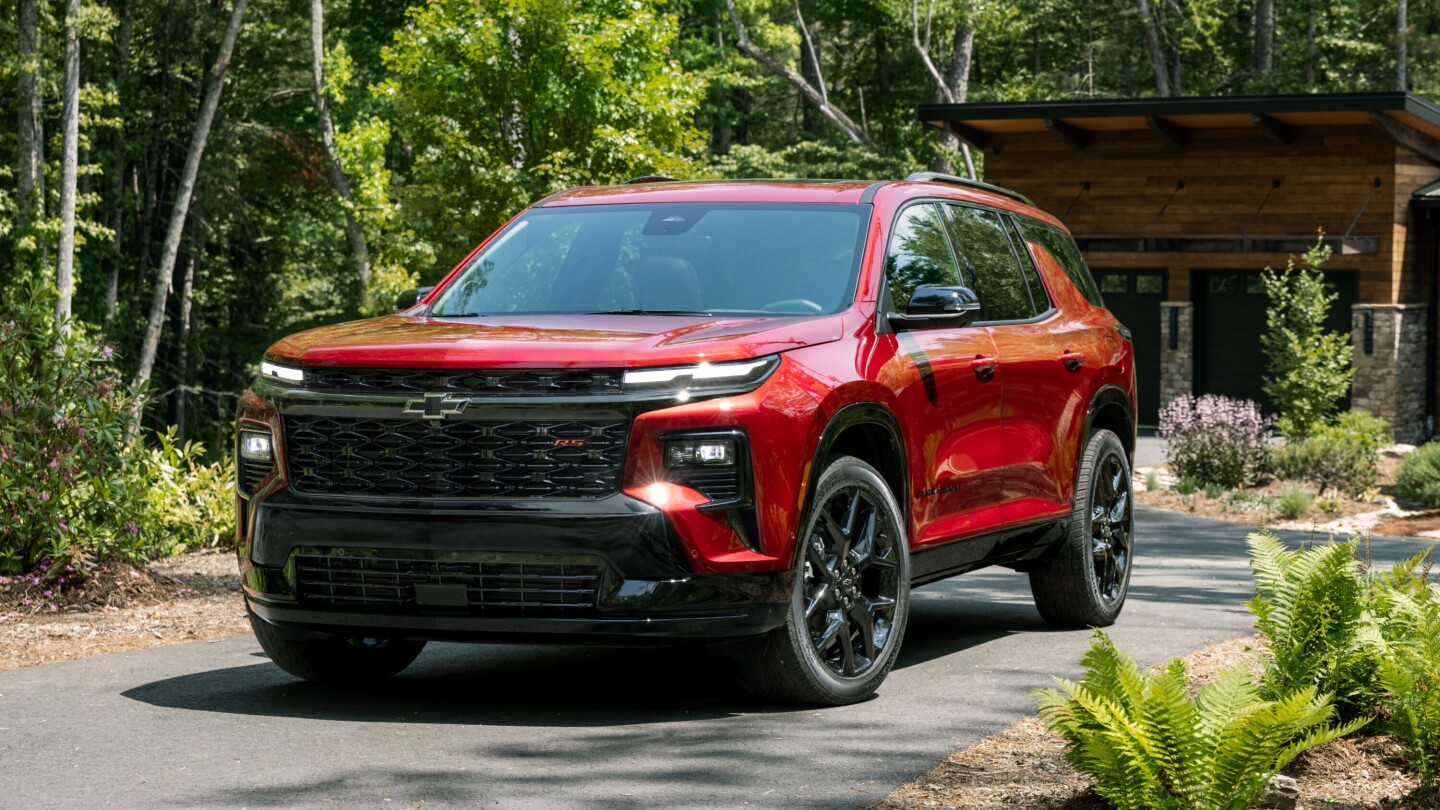
The Chevrolet Traverse stands out primarily for its exceptional passenger and cargo capacity. With room for up to eight occupants, the Traverse provides generous space even in its third row, where adults can sit comfortably—a rare feature in the segment. Though reviewers noted the rear seats are somewhat firm and flat, the sheer volume of the cabin makes the Traverse ideal for larger families who regularly utilize all three rows.
Storage capacity also favors the Chevrolet, with significantly more luggage space behind the third row compared to its Ford rival. For families requiring maximum interior volume, the Traverse offers a compelling advantage that shouldn’t be overlooked.
The Ford Explorer, limited to seven passengers, can’t match the Traverse’s spaciousness. Its second row offers less legroom, and the third row is practical only for younger passengers. However, the Explorer compensates with thoughtful design elements, including an expandable underfloor storage area that provides more utility than raw specifications might suggest.
Where Ford pulls ahead is in driving dynamics, an area where the Traverse notably falters. Experts described the Explorer as “surprisingly agile yet also smooth and comfortable,” delivering better acceleration, handling, and overall driving pleasure. The base Explorer comes equipped with a 300-horsepower engine, while performance enthusiasts can opt for the ST variant featuring a robust 400-horsepower V6.
In comparison, despite having a 328-horsepower engine that outmuscles the standard Explorer on paper, the Traverse recorded slower acceleration times during testing. Reviewers were particularly critical of its “overly firm ride and ponderous handling,” describing the driving experience as “disappointing.”
Fuel efficiency also favors the Explorer, which achieves an EPA-estimated 24 mpg combined with rear-wheel drive and 23 mpg with all-wheel drive. The Traverse lags slightly behind at 22 mpg combined with front-wheel drive and 21 mpg with all-wheel drive—a small but noteworthy difference for budget-conscious families.
Technology implementation gives another edge to the Ford. While the Traverse boasts a larger 17.7-inch touchscreen compared to the Explorer’s 13.2-inch display, reviewers preferred the “look, layout and functionality” of Ford’s interface. Both vehicles feature Google Built-in capability with integrated Google Maps and voice commands, plus wireless Apple CarPlay and Android Auto connectivity.
Driver assistance features come more generously equipped on the Explorer’s base model, including lane-centering steering assistance with adaptive cruise control—a feature that requires upgrading in the Traverse. Both manufacturers offer comparable hands-free highway driving systems (Ford’s BlueCruise versus Chevrolet’s Super Cruise) on higher trims.
From a pricing perspective, the vehicles start nearly identically—$42,280 for the Explorer and $42,695 for the Traverse. All-wheel drive adds $2,000 to either model. While mid-range trim pricing remains competitive between the two, the Traverse’s top configurations become significantly more expensive than equivalent Explorer models. Notably, even the performance-oriented Explorer ST costs less than the Traverse RS, which offers sportier styling but no performance enhancements.
The battle between these American SUVs reflects broader industry trends toward improved technology integration and driver assistance features while balancing passenger space and driving dynamics. For consumers, the choice ultimately comes down to priorities—maximum space versus a more refined driving experience and better fuel economy.
For shoppers seeking the absolute most passenger and cargo room in the segment, the Traverse remains a compelling option. However, for most family SUV buyers, the Explorer’s superior driving characteristics, technology implementation, and overall value proposition make it the more well-rounded choice according to Edmunds’ evaluation.
Fact Checker
Verify the accuracy of this article using The Disinformation Commission analysis and real-time sources.

5 Comments
The Traverse’s cargo capacity is certainly impressive, especially for families who need the extra room. However, the Explorer’s overall performance could be a deciding factor for some buyers. I wonder how the driving dynamics and available safety tech compare between these two models.
Good point. Factors like handling, ride quality, and advanced safety systems can make a big difference in the SUV buying decision. It will be interesting to see how the two stack up in real-world testing.
Interesting comparison between these two popular family SUVs. The Traverse’s spacious interior could be a big draw for larger households, while the Explorer may offer a more well-rounded package. Curious to see how other factors like performance, fuel efficiency, and technology features stack up between the two.
As an SUV owner myself, I know interior space and versatility are key considerations. The Traverse’s spacious third row is a notable advantage, but the Explorer’s reputation for performance and capability is also appealing. I’d want to test drive both to get a feel for the tradeoffs.
This is a tough call between two well-established models. The Traverse’s people-moving abilities are impressive, but the Explorer’s potential edge in driving dynamics and features could sway some buyers. I’ll be curious to see how consumer preferences play out between these two American SUV rivals.