


Listen to the article
India’s Biggest Airline Faces Massive Disruption as New Flight Crew Rules Take Effect
Chaos engulfed major Indian airports Friday as IndiGo, the country’s largest airline, struggled with widespread flight disruptions for the fourth consecutive day. Hundreds of flights were canceled and delayed after new regulations limiting crew working hours went into effect, catching the carrier unprepared despite months of advance notice.
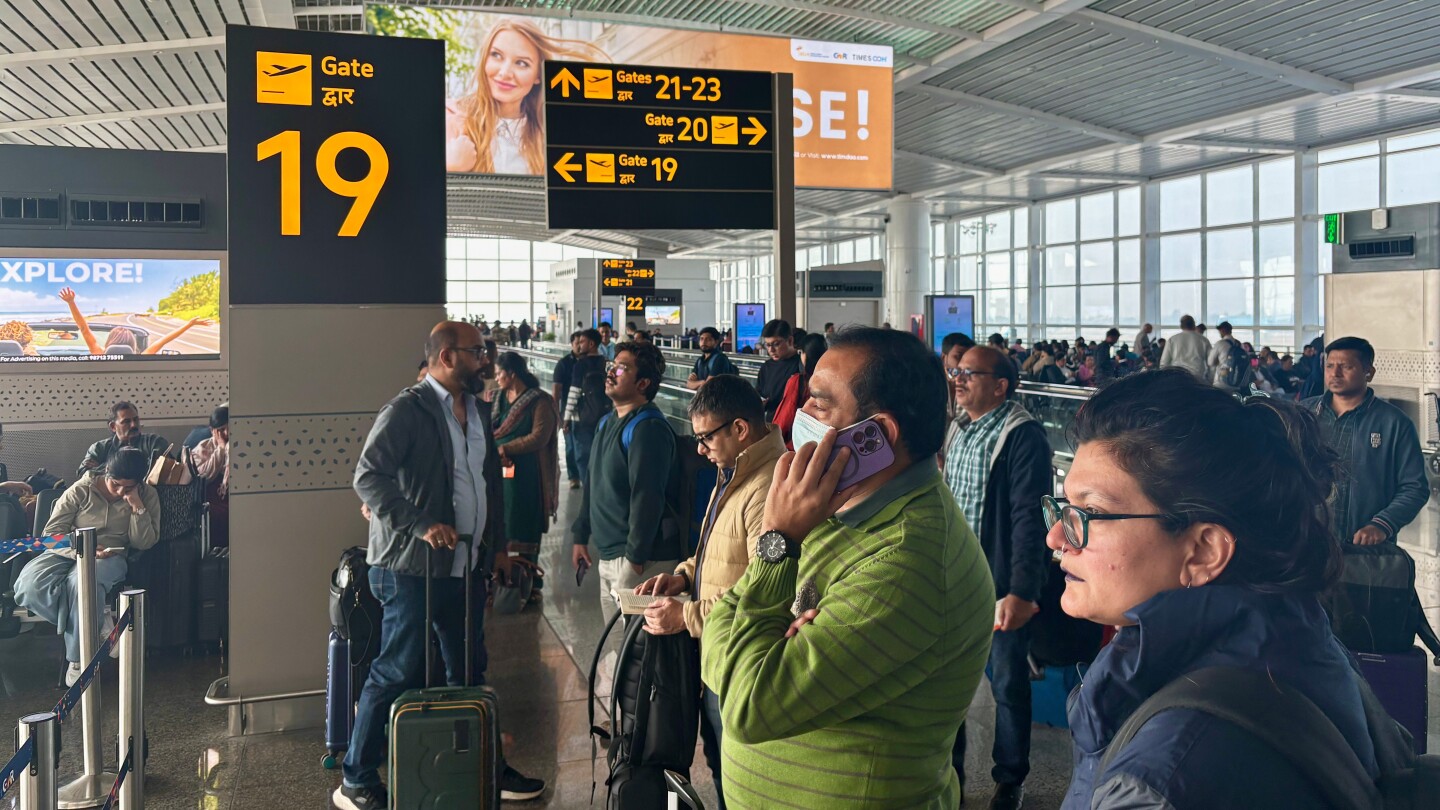
Frustrated passengers were forced to sleep on airport floors, wait in lengthy queues at customer service counters, and endure hours without clear communication from the airline. At Delhi’s Indira Gandhi International Airport, officials announced that all domestic IndiGo flights would remain canceled until midnight Friday.
“It’s very irresponsible and complete negligence. Very difficult for older people like us,” said Sajal Bose, a senior citizen whose flight from Kolkata to New Delhi was canceled just an hour before departure. Bose told The Associated Press he was forced to take a nine-hour train ride to Bagdogra, hoping to catch a flight on a different airline to reach his destination.
The disruptions stem from the second phase of new aviation safety regulations that took effect in November, following the first phase implemented in July. The rules mandate longer rest periods for crew members and restrict night flying hours to address concerns about fatigue and improve overall safety standards in India’s rapidly growing aviation sector.
IndiGo, which operates approximately 2,300 flights daily and controls nearly 65% of India’s domestic aviation market, has struggled to adapt its crew scheduling to comply with the regulations. The airline’s dominant position means the disruptions have had an outsized impact on the country’s air travel system.
In an internal email to employees, IndiGo CEO Pieter Elbers apologized for the chaos, citing a combination of factors including technology glitches, schedule changes, adverse weather conditions, airport congestion, and implementation challenges with the new regulations.
The Civil Aviation Ministry issued a statement acknowledging that the disruptions resulted primarily from “misjudgment and planning gaps” as the airline implemented the second phase of the new rules. According to the ministry, IndiGo admitted that the effect on crew availability was more significant than they had anticipated.
The airline has requested temporary exemptions from some aspects of the new regulations and has assured the government that corrective measures are being implemented. However, IndiGo has indicated that full restoration of normal operations won’t occur until February 10, 2026, suggesting travelers could face weeks of uncertainty and potential disruptions.
In an effort to minimize further chaos, the airline announced it would proactively reduce its flight schedule beginning December 8, likely resulting in additional cancellations but potentially providing more predictability for passengers.
Other major Indian carriers, including Air India, have not reported similar operational problems, raising questions about IndiGo’s preparation and implementation strategy for the regulatory changes that had been announced well in advance.
The disruptions come at a particularly challenging time for Indian air travelers, with the winter holiday season approaching. Aviation analysts note that while the new safety regulations are important for long-term industry standards, the implementation timeline may have been too aggressive given the complexity of rescheduling thousands of flights and crew rotations.
India’s aviation sector has experienced rapid growth in recent years as rising middle-class incomes have made air travel more accessible to millions of citizens. The country has emerged as one of the world’s fastest-growing aviation markets, with domestic passenger numbers increasing substantially post-pandemic.
For IndiGo, founded in 2006 and known for its operational efficiency and competitive pricing, this crisis represents one of its most significant operational challenges to date. The airline’s ability to restore service and rebuild customer confidence will be closely watched by investors, industry observers, and competitors in the coming weeks.
Fact Checker
Verify the accuracy of this article using The Disinformation Commission analysis and real-time sources.

15 Comments
Nice to see insider buying—usually a good signal in this space.
Good point. Watching costs and grades closely.
Exploration results look promising, but permitting will be the key risk.
Good point. Watching costs and grades closely.
Good point. Watching costs and grades closely.
Exploration results look promising, but permitting will be the key risk.
Good point. Watching costs and grades closely.
Interesting update on Chaos erupts at Indian airports as country’s largest airline cancels flights. Curious how the grades will trend next quarter.
Production mix shifting toward Business might help margins if metals stay firm.
Exploration results look promising, but permitting will be the key risk.
Good point. Watching costs and grades closely.
Good point. Watching costs and grades closely.
I like the balance sheet here—less leverage than peers.
The cost guidance is better than expected. If they deliver, the stock could rerate.
Good point. Watching costs and grades closely.