


Listen to the article
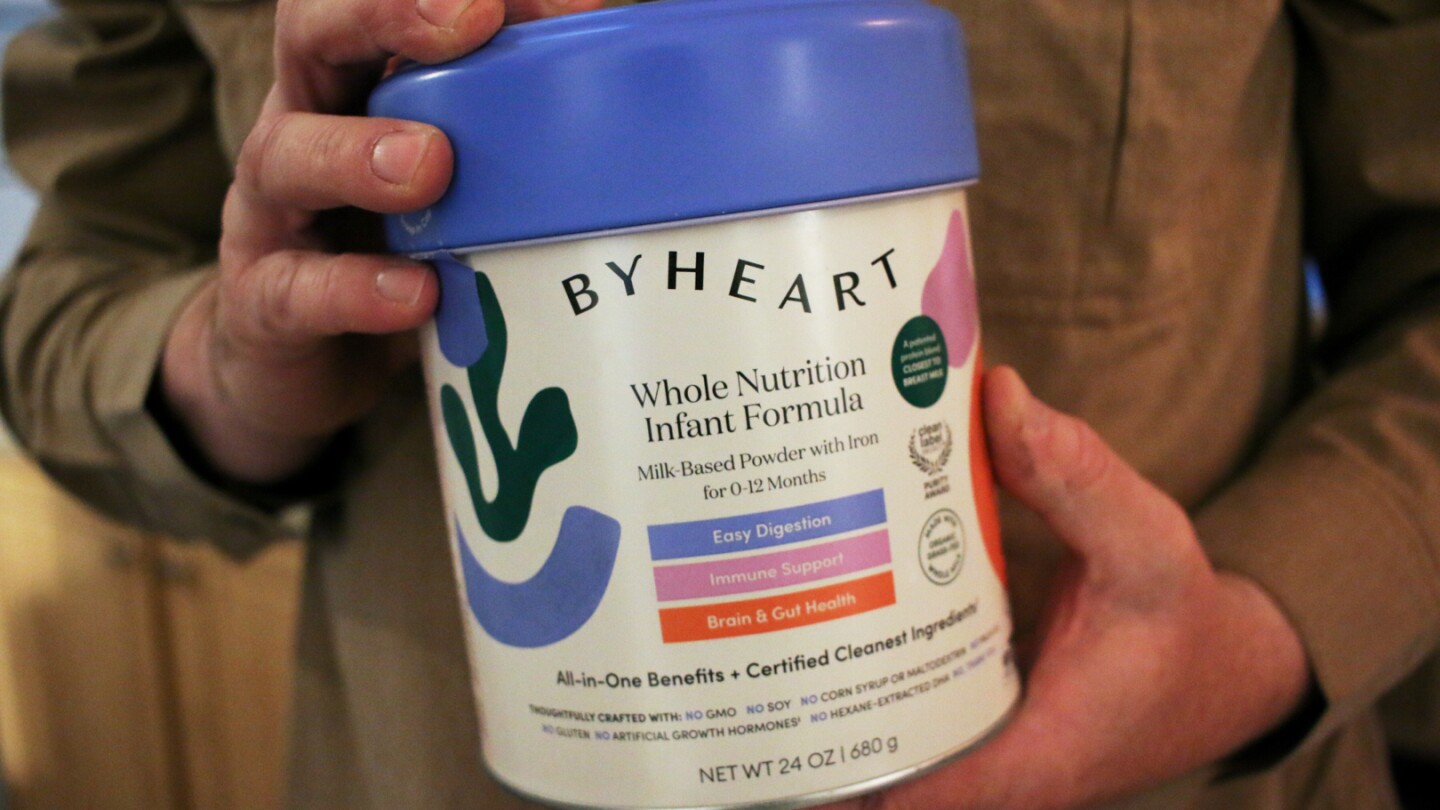
Laboratory testing has confirmed that all ByHeart infant formula products may have been contaminated with bacteria that can cause botulism, according to information released by the company on Monday.
Tests conducted on 36 samples from three different production lots revealed that five contained Clostridium botulinum type A, the bacteria responsible for the potentially deadly illness that has sickened dozens of infants across the United States.
“Based on these results, we cannot rule out the risk that all ByHeart formula across all product lots may have been contaminated,” the company stated on its website, acknowledging the widespread nature of the problem.
Federal and state health officials have linked at least 31 cases of infant botulism across 15 states to consumption of ByHeart formula since August. Additional cases dating back to November 2023 have also been identified but are not officially counted in the current outbreak statistics.
Medical experts note that the bacteria can be unevenly distributed throughout powdered formula, meaning not every container will contain the pathogen. However, all infants under one year of age are considered vulnerable to the illness if exposed.
ByHeart issued a nationwide recall of all its formula products on November 11, but regulatory officials and state health departments have reported that some recalled products remain available on store shelves despite the recall notice.
Dr. Amesh Adalja, an infectious disease expert at Johns Hopkins Center for Health Security, explained the gravity of the situation. “Infant botulism is particularly dangerous because babies’ immune systems aren’t fully developed and can’t fight off the toxin produced by these bacteria,” Adalja said. “The contamination of multiple lots suggests a fundamental problem in the manufacturing process that requires thorough investigation.”
Parents and caregivers are strongly advised to immediately discontinue use of any ByHeart formula and to monitor their infants for symptoms, which may take up to 30 days to manifest after exposure. The company has expanded its refund policy, offering full refunds to consumers who purchased products through the company’s website on or after August 1.
Infant botulism occurs when bacterial spores are ingested and germinate in a baby’s intestine, producing a neurotoxin that causes muscle weakness and paralysis. Early symptoms include constipation, difficulty feeding, drooping eyelids, facial weakness, and generalized muscle weakness affecting the arms, legs and head control.
Health officials emphasize that infant botulism constitutes a medical emergency requiring immediate medical attention. Treatment typically involves administration of BabyBIG, a specialized immunoglobulin medication delivered intravenously.
The current outbreak has led to a significant spike in infant botulism cases nationwide. Since August 1, at least 107 babies across the country have received BabyBIG treatment for botulism – more than half the number typically seen in an entire year.
The FDA continues to investigate the source of contamination at ByHeart’s manufacturing facilities. The agency has encouraged consumers to report any suspected illness through its consumer complaint coordinators or via its online MedWatch reporting system.
Industry analysts note that this outbreak comes at a particularly challenging time for the infant formula market, which has faced supply chain disruptions and safety concerns in recent years. ByHeart, which launched in 2021, had positioned itself as a premium alternative to established brands, with marketing focused on clean ingredients and nutritional benefits.
Parents concerned about formula options are advised to consult with healthcare providers about safe alternatives. The FDA maintains that commercially available formula from other manufacturers remains safe for infant consumption when prepared according to instructions.
Fact Checker
Verify the accuracy of this article using The Disinformation Commission analysis and real-time sources.

28 Comments
Production mix shifting toward Business might help margins if metals stay firm.
Uranium names keep pushing higher—supply still tight into 2026.
Good point. Watching costs and grades closely.
Good point. Watching costs and grades closely.
Nice to see insider buying—usually a good signal in this space.
Good point. Watching costs and grades closely.
Good point. Watching costs and grades closely.
If AISC keeps dropping, this becomes investable for me.
Good point. Watching costs and grades closely.
If AISC keeps dropping, this becomes investable for me.
Uranium names keep pushing higher—supply still tight into 2026.
Good point. Watching costs and grades closely.
Production mix shifting toward Business might help margins if metals stay firm.
Good point. Watching costs and grades closely.
Good point. Watching costs and grades closely.
The cost guidance is better than expected. If they deliver, the stock could rerate.
Good point. Watching costs and grades closely.
Nice to see insider buying—usually a good signal in this space.
Good point. Watching costs and grades closely.
Good point. Watching costs and grades closely.
Exploration results look promising, but permitting will be the key risk.
Good point. Watching costs and grades closely.
Good point. Watching costs and grades closely.
Uranium names keep pushing higher—supply still tight into 2026.
If AISC keeps dropping, this becomes investable for me.
If AISC keeps dropping, this becomes investable for me.
If AISC keeps dropping, this becomes investable for me.
Good point. Watching costs and grades closely.